
Creatures
Ratatosk
The squirrel carrying hostile messages
Ratatosk runs along Yggdrasil, the great ash tree around which important parts of the mythic cosmos are described. He is a memorable example of how small animals can occupy meaningful places in stories about an immense world.
Explore the stories ↓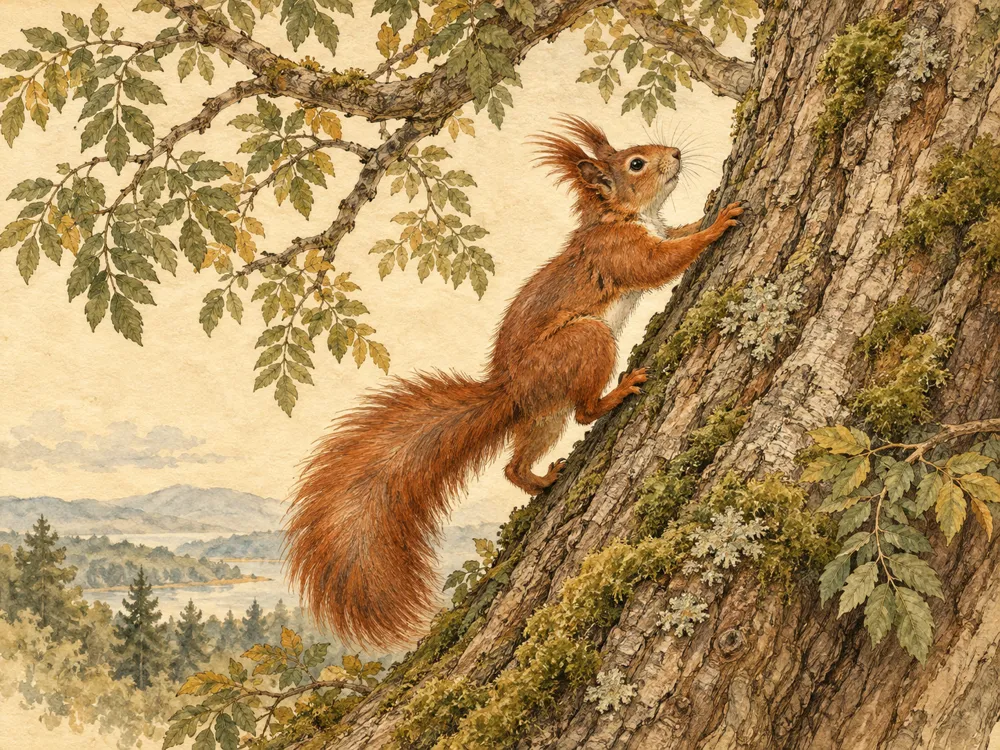
Between eagle and serpent
Grímnismál names the squirrel in its account of the tree. Gylfaginning describes him carrying hostile words between the eagle above and Níðhöggr below. The image places communication, and specifically antagonistic communication, inside the same living structure that supports gods and other beings.
What survives and what does not
There is no surviving Eddic cycle of Ratatosk’s adventures, and the sources do not supply a detailed origin, family or final battle for him. His profile therefore rests on a brief description rather than an invented life story. Modern retellings can develop his character, but those developments should be labelled as new storytelling. The old passage is already striking: damage to the world tree comes through words as well as through animals feeding on it.
One messenger among many inhabitants
Grímnismál names Ratatosk in its description of Yggdrasil, close to verses about deer and serpents. His task connects the eagle above with Nidhogg below. Snorri describes the exchanged words as hostile. The tree is therefore not merely a backdrop with a squirrel sitting in it: vertical movement carries antagonism between beings that occupy different levels. The texts do not preserve the wording of their insults.
Where the evidence stops
The eagle also has a hawk, Vedrfölnir, positioned between its eyes in Snorri’s account. Ratatosk should not be confused with that bird or presented as its owner. No surviving episode in these passages tells how the squirrel acquired his task, whether he changes the messages, or what happens to him at Ragnarök. Those are useful questions for modern storytelling, but answers would be new inventions rather than recovered Norse narratives.
Read behind the retelling
Sources & limits
Calling him a god of messages or a guardian of all nine worlds goes beyond the cited passages.
- Prose Edda: Gylfaginning (Brodeur, 1916)
- Poetic Edda: Grímnismál (Bellows, 1923)
- Poetic Edda: Grímnismál, public-domain Bellows translation
- Prose Edda: Gylfaginning, Brodeur translation (1916)
Retold in contemporary English. Dialogue is summarized, not presented as a translation. How to read our sources and versions.
Follow the thread
Stories & related reading: Ratatosk
No substantial independent adventure is preserved in the sources used for this profile. The account above brings together the surviving references; we have not invented a missing story.