
A Norse story · 2 min read
Grotti: the mill that ground disaster
Two enslaved giant women and a king who would not let them rest
Frodi demands endless wealth from Fenja and Menja. Their labour finally produces something his kingdom cannot control.
A machine and the people who turn it
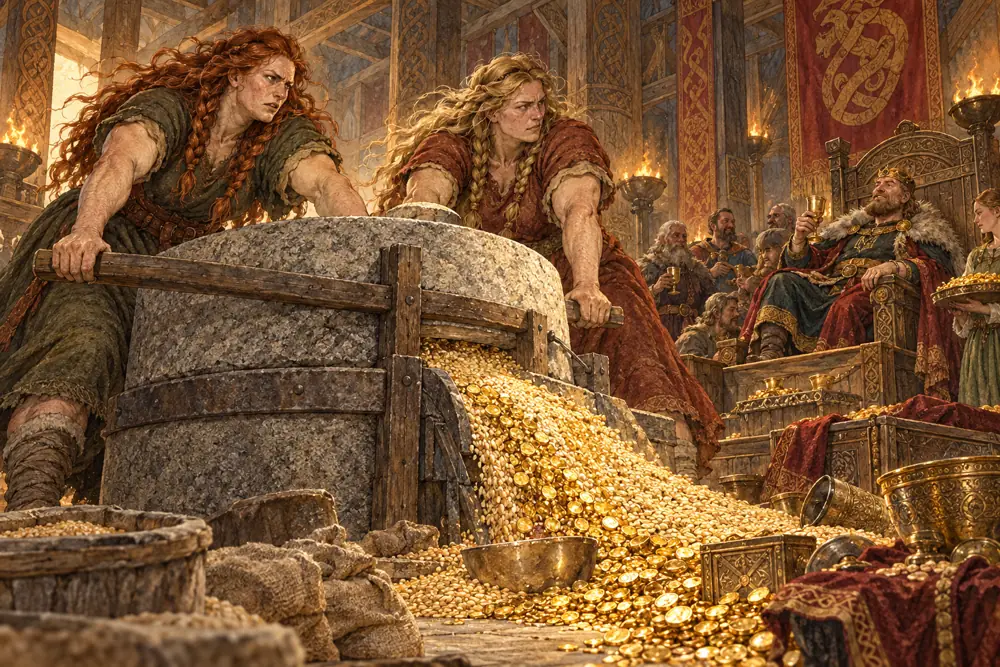
King Frodi possesses the remarkable mill Grotti. Its stones can grind out what the workers ask for, but they are so heavy that ordinary people cannot move them. Frodi buys two exceptionally strong enslaved women, Fenja and Menja, and sets them to work. In the prose account accompanying the poem, they first produce gold, peace, and prosperity. A golden age appears to be possible. Yet its foundation is forced labour. The king values the results while denying the workers the rest that would make their lives tolerable.
The workers tell their history
The song gives Fenja and Menja voices. They recall their giant ancestry and earlier feats of strength, fighting, and the overturning of rulers. Frodi has bought them for their power without understanding who they are. Their demands for rest receive almost nothing in return: only the tiny pause that a song or a bird’s silence might measure. The contrast grows sharper as everyone else sleeps while the women continue to turn the stones. What looks like royal prosperity from the hall looks very different from beside the mill.
A new product from the stones
The women change what they grind. Rather than endless wealth for Frodi, they bring forth an army that will end his peace. The mill’s destructive force matches the king’s refusal to recognise limits. Snorri’s prose frame then carries the story beyond the song: the sea-king Mysing kills Frodi and takes the mill and its workers away on a ship. He orders them to grind salt. When they ask whether he has enough, he demands more. The ship sinks under its load, leaving a whirlpool where the millstone draws water. The frame explains the sea’s salt through the consequences of another ruler’s greed.
Legend, song, and explanation
Grottasöngr stands at the meeting of giant lore, royal legend, and an explanation of the natural world. Frodi is a legendary king, not one of the gods. The women’s song and the surrounding prose should remain distinguishable: the memorable salt-sea ending belongs to the prose narrative that frames the poem. Read together, they expose a promise of peace and abundance that excludes the people compelled to create it. The lesson about overwork and unchecked demands is a reasonable modern interpretation, but the tale’s form is richer than a simple warning about a magical machine. Its workers know their own history and ultimately act upon it.
Read behind the retelling
Sources & limits
Legend with supernatural figures. The salt-sea ending is in the prose frame; it should not be presented as the last stanza of Grottasöngr.
Retold in contemporary English. Dialogue is summarized, not presented as a translation. How to read our sources and versions.