
A Norse story · 2 min read
Volund: the captive smith
A heroic legend of craftsmanship, captivity, and terrible revenge
An extraordinary smith is captured and disabled by a king. His escape does not undo the violence he inflicts on others.
A smith left behind
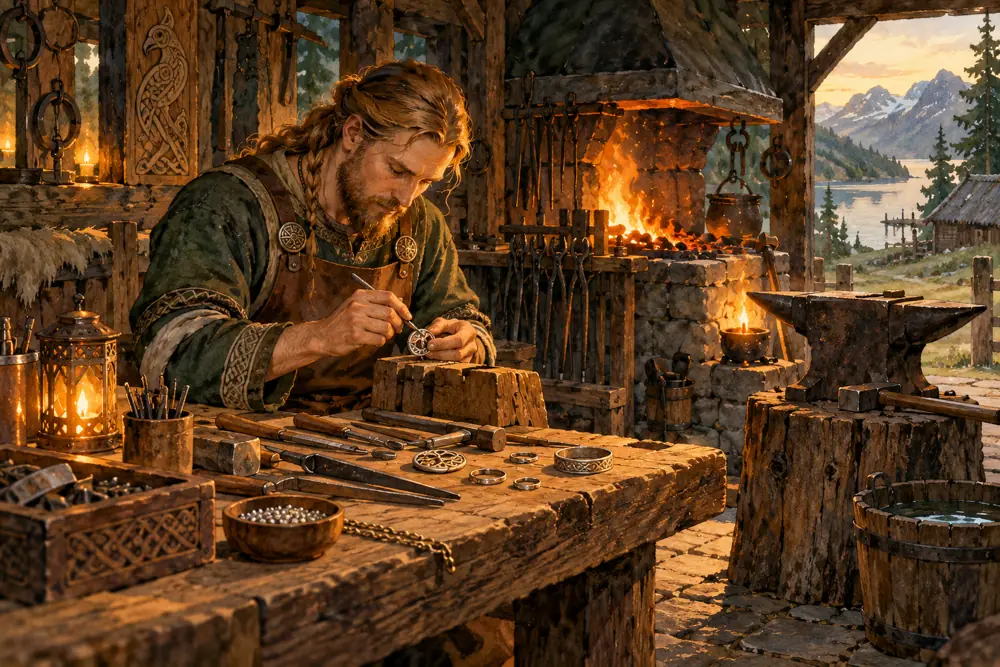
Völundarkviða begins with three brothers and three women associated with swan garments and valkyries. After years together the women leave. Two brothers go searching, but Volund remains and works precious metal, waiting. King Nidud learns of him and sends men to seize him while he sleeps. The king takes his sword, and a ring reaches the king’s daughter Bodvild. Volund is then hamstrung and confined on an island to work for his captor. His skill is valuable enough to steal, while his freedom is treated as an obstacle to the king’s possession of it.
Revenge reaches the innocent
The king’s sons come to see Volund’s treasures. He persuades them to return secretly, kills them, and turns parts of their bodies into costly objects for their parents and sister. The poem makes the royal household unknowingly receive its own destruction as beautiful craftsmanship. Bodvild later comes to have a broken ring repaired. Volund gives her drink, and she is sexually assaulted; the later exchange makes clear that she could not resist him. This should not be disguised as a courtship. The king’s abuse of Volund begins the revenge plot, but does not make the harm done to his children just.
Escape without restoration
Volund rises into the air and speaks to the king from beyond his reach. The poem gives the flight without the detailed engineering that some later tellings supply. He reveals the fate of the boys and Bodvild’s pregnancy, after demanding protection for her. The king calls his daughter and hears her confirm what happened. The smith has escaped, but the story does not restore the lives or dignity damaged during his captivity and retaliation. It leaves a grieving household and a survivor who has also become an aggressor.
Where legend meets mythology
Volund is often called Wayland in English tradition. He belongs to a wider world of heroic legend rather than being one of the familiar gods of Asgard. Eddic language associates him with elves, while other versions elaborate his human relationships and technical inventions. Those versions should not all be merged into this poem. Its importance here is the boundary between supernatural skill and human violence: the maker of beautiful objects can also make instruments of terror. The preserved text has gaps, and modern translations differ in how they arrange some lines. This retelling follows the main narrative without filling the missing passages with invented scenes.
Read behind the retelling
Sources & limits
Heroic legend, not a cheerful god tale. Includes captivity, mutilation, child murder, and sexual assault, described without graphic detail.
Retold in contemporary English. Dialogue is summarized, not presented as a translation. How to read our sources and versions.