
Reign conventionally dated c. 995–1022
Olof Skötkonung
Christian kingship and the beginning of Swedish royal coinage at Sigtuna
The person and the story

Olof Skötkonung is a historical ruler whose coins offer unusually direct evidence of royal claims around the year 1000. He is generally described as Sweden’s first Christian king and the first Swedish ruler to commission coinage. Those descriptions are useful starting points, but neither means that a fully unified modern Sweden or a uniformly Christian population suddenly appeared.
A king’s message in silver
A silver penny in the Swedish History Museum, object 3001089, was struck at Sigtuna around 995 using an English model. Its lettering names Olof as king of the Swedes and includes a Christian invocation. Here the argument does not begin with a saga adventure: the object itself carries a royal name. Its discovery in a Gotland hoard also illustrates why a coin’s place of manufacture and its findspot must be distinguished.
A portrait is not a photograph
The coin design follows a model, so its face should not be treated as a dependable likeness of Olof. Its stronger evidence concerns authority, inscription and minting practice. Sigtuna Museum describes the early type’s connection to Æthelred II’s English crux coinage. A small object thus opens a wider story about the movement of designs and the choices of a royal mint.
What does “first Christian king” mean?
The Swedish History Museum treats Olof as an important figure in the relationship between the Mälar region and Götaland while cautioning against calling his realm a united Sweden in the later sense. A ruler’s baptism and Christian coin imagery concern the ruler and his public claims. They do not establish the private belief of every household. Christianity’s spread and the consolidation of political power need their own timelines.
What happened to the minting project?
Sigtuna Museum notes that minting under Olof and Anund Jakob ended in the 1030s. The beginning of royal coin production was therefore not the start of an uninterrupted modern monetary system. Following the evidence beyond the first coin helps avoid a familiar historical shortcut: treating a notable innovation as an immediate, permanent transformation.
Where to follow his story
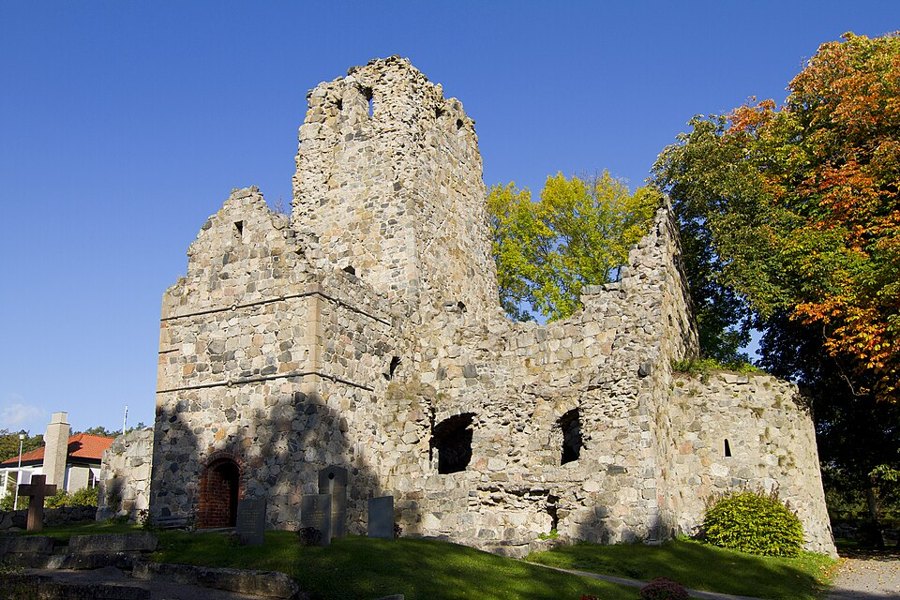
Read the Sigtuna material alongside the museum’s coin record. Ask who issued the object, what its inscription claims and where it was later found. Those questions provide a firmer route into Olof’s reign than attaching certainty to every later anecdote about his life. Surviving medieval church ruins in Sigtuna belong to a later townscape and should not be mistaken for buildings he personally commissioned.
Follow the connected lives
Follow the evidence
Source check: October 17, 2026. The links below explain the evidence and interpretations behind this introductory profile.