
Journeys & Encounters · Place profile
Borg in Lofoten: A Northern Chieftain’s Household
In Brief
Borg on Vestvågøy places the Viking world well north of the familiar royal centers of southern Scandinavia. The excavated chieftain’s farm, now interpreted by Lofotr Viking Museum, shows that a northern agricultural community could support a conspicuously large household and an impressive architectural statement.
Present-day location: Norway · Lofoten
Names and search variants: Borg in Lofoten · Borg · Lofotr · Vestvågøy · Vestvagoy
Browse places by country →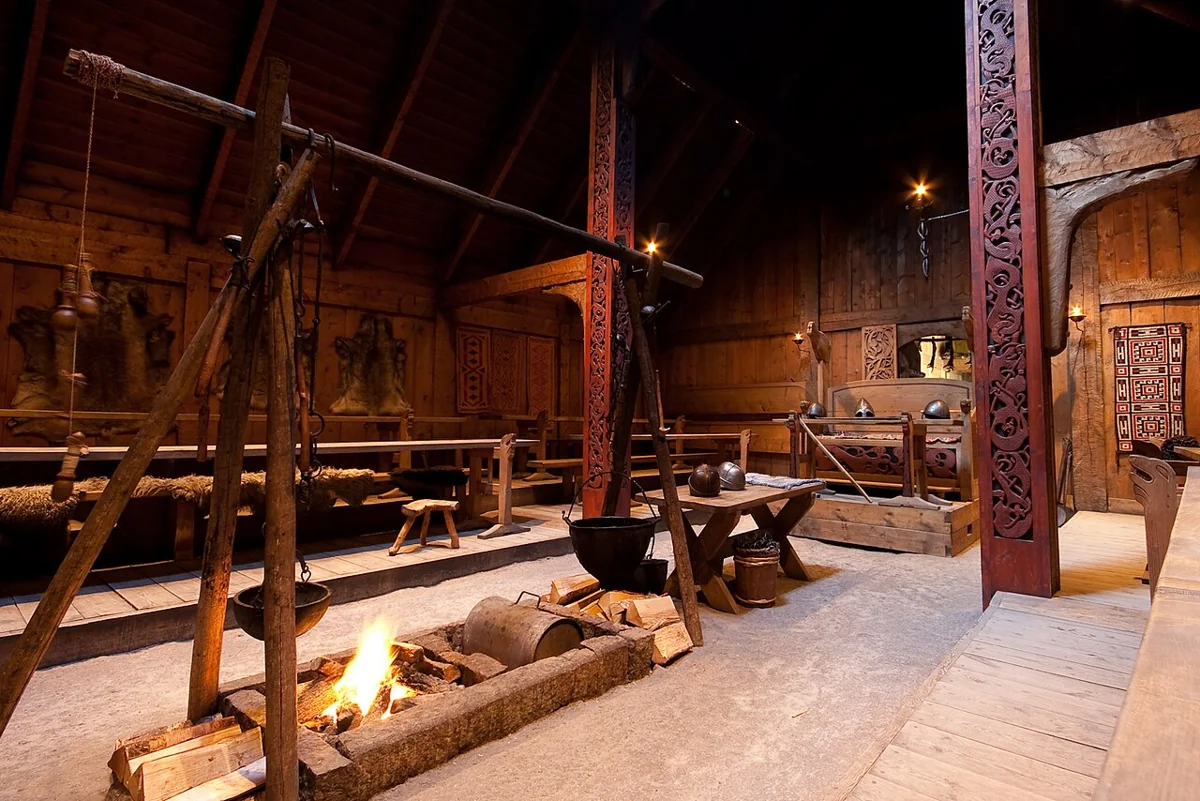

The historical setting
The settlement belonged to a landscape where farming and access to the sea worked together rather than representing separate economies. Borg is especially useful for understanding power rooted in a household: people had to feed its inhabitants, maintain its buildings, and sustain the relationships that made a great farm influential.
What the evidence shows
Excavations in 1986–1989 identified the ground plan of a very large longhouse. Archaeologists recovered traces of roof-bearing posts, outer turf walls, and interior wooden divisions. These surviving elements informed the museum reconstruction; the complete standing building is modern, and elements no longer preserved had to be interpreted using comparative research.
How to read this place
Compare the archaeological plan with the reconstructed interior before treating either as a complete account of daily life. Which features are fixed by postholes, and which depend on assumptions about height, light, movement, and furnishings? That distinction turns a dramatic museum building into an introduction to how architectural reconstruction actually works. A hall can demonstrate investment and gathering capacity without identifying every occupant or proving a particular political title.
Explore more Viking-Age places →
The Evidence
The sources below support this article. Interpretations and limits are explained in the text; this is not an exhaustive research review.