
Journeys & Encounters · Place profile
Eiríksstaðir: Excavated buildings and remembered people
In Brief
Eiríksstaðir in western Iceland combines excavated settlement-period buildings with a modern longhouse reconstruction. Its association with Erik the Red makes it famous, but the most secure evidence concerns the work and construction of an early Icelandic farm.
On this page
Excavated buildings and remembered peopleSmall finds, substantial workWhat the reconstruction can teachSourcesPresent-day location: Iceland · North Atlantic
Names and search variants: Eiríksstaðir · Eiriksstadir · Erik the Red farm
Browse places by country →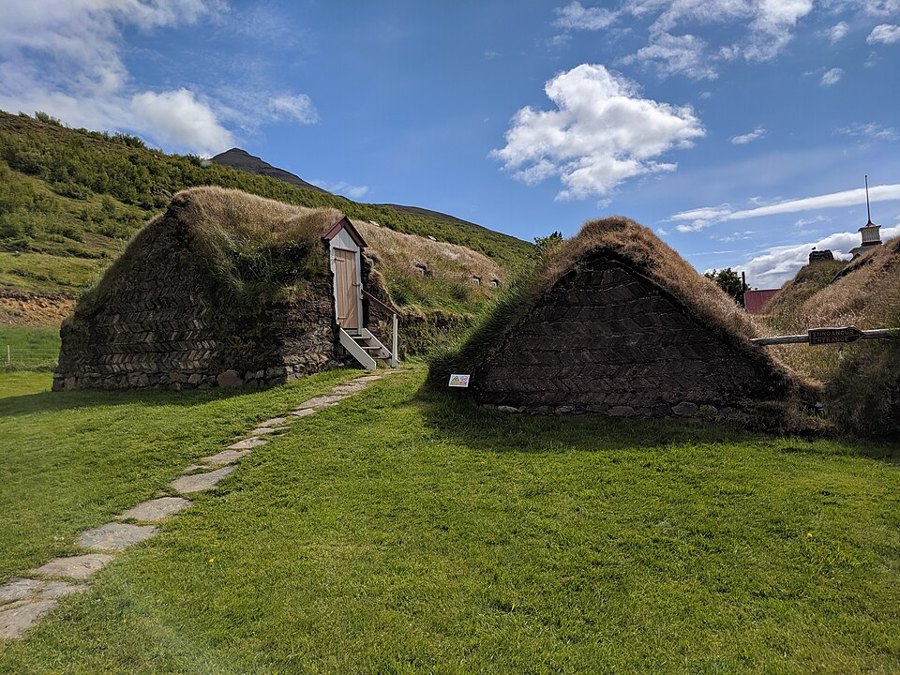

Excavated buildings and remembered people
The museum describes a longhouse and a sunken building dated broadly between the ninth and tenth centuries. Excavations in different periods gradually clarified their outlines. Later accounts connect the farm with Erik and his family; archaeology provides a separate test of when buildings existed, rather than a name label for each inhabitant.
Small finds, substantial work
Loom weights, a spindle whorl, whetstones and nails point to textile production, maintenance and building. Evidence associated with ironworking widens the picture beyond a household dependent only on imported finished objects. Such modest finds are important because daily tasks leave different traces from the voyages that dominate written stories. A spindle whorl is evidence of spinning, not proof that a named saga character used it.
What the reconstruction can teach
The standing turf house is a modern interpretation informed by excavation and comparable structures. It helps visitors consider darkness, smoke, roof weight and the amount of labour required to maintain a turf building. Compare its complete interior with the incomplete ground plan nearby. This distinction allows the reconstruction to be useful without treating every decorative detail as an archaeological certainty.
Explore more Viking-Age places →
The Evidence
The sources below support this article. Interpretations and limits are explained in the text; this is not an exhaustive research review.