
Journeys & Encounters · Place profile
Fröjel: A working harbor community
In Brief
Fröjel on western Gotland was a harbor and trading settlement whose history extends across the Viking Age into the Middle Ages. Excavation makes it more than an attractive coastal place: workshops, burials, and occupation remains help reconstruct a community involved in Baltic exchange.
On this page
A working harbor communityBurials and changing religious practiceA crystal with several possible usesSourcesPresent-day location: Sweden · Gotland
Names and search variants: Fröjel · Frojel
Browse places by country →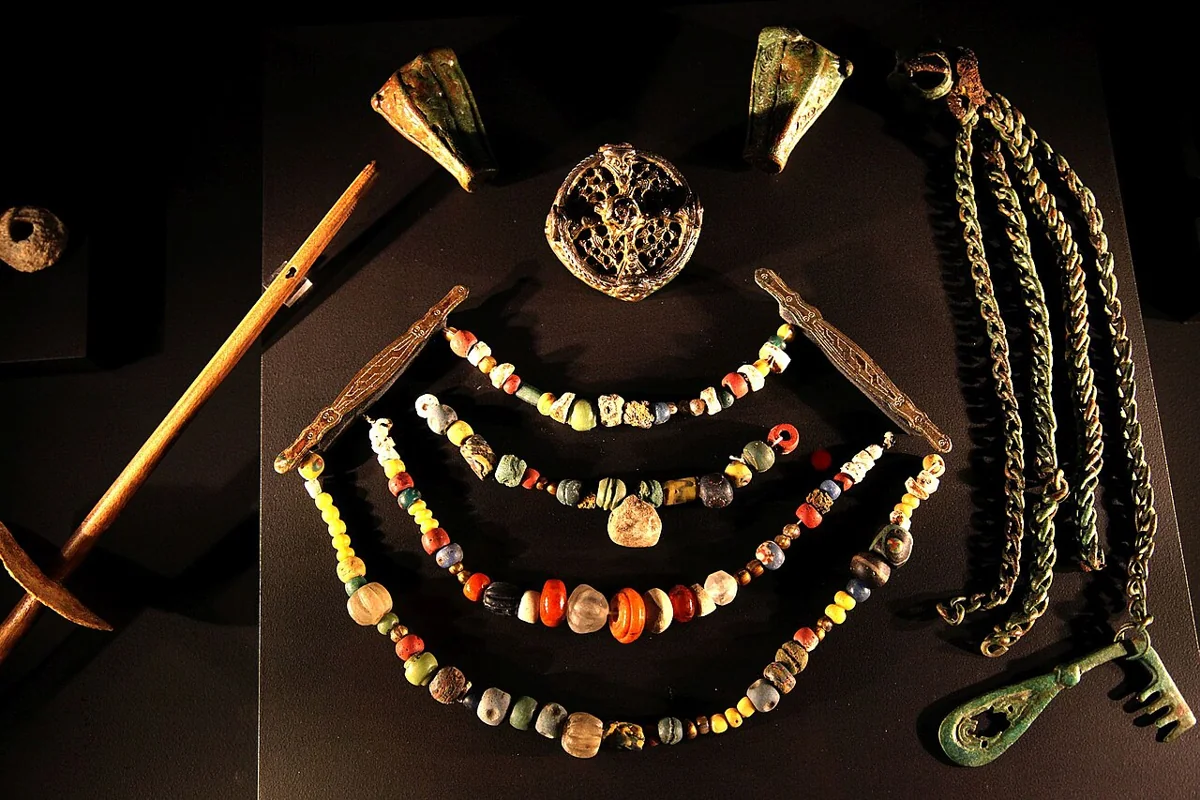

A working harbor community
The archaeological field-school account dates the harbor and trading site broadly from the eighth to the twelfth century. Excavated areas represent only a small part of the whole settlement. This matters because even a large artifact collection is a sample, and absence from a trench does not necessarily mean absence from the town.
Burials and changing religious practice
Researchers distinguish successive burial areas and evidence for an early Christian community near the later church. The changes offer a way to study religion through local practice rather than assuming one conversion date for everyone on Gotland. The standing church belongs to the later landscape and is not itself an intact Viking-Age building.
A crystal with several possible uses
Gotlands Museum discusses a remarkable silver-mounted crystal from Fröjel and related lens-shaped finds. Some crystals may have assisted detailed craftwork; others were jewelry. That variety is a warning against treating every polished crystal as a navigation device. The object is especially useful for asking how an attractive material could carry practical, ornamental, and social value at the same time.
Explore more Viking-Age places →
The Evidence
The sources below support this article. Interpretations and limits are explained in the text; this is not an exhaustive research review.