
Journeys & Encounters · Place profile

Gainsborough: A Place in the Viking World

In Brief

Gainsborough on the Trent belongs to the final phase of Viking conquest in England. Its association with Sweyn Forkbeard in 1013–1014 places a riverside town within a struggle that reached across the North Sea.

On this page

The Viking-Age connectionReading the evidenceUnderstanding the placeSources

Present-day location: England · Britain and Ireland

Browse places by country →
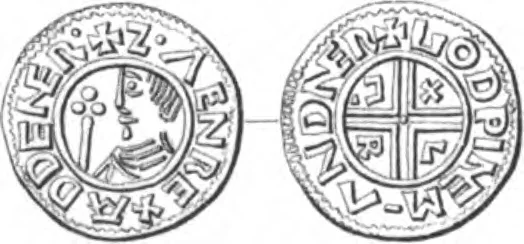
Two line drawings showing the faces of a coin attributed to Sweyn Forkbeard.
Later drawings of a coin attributed to Sweyn Forkbeard, by numismatist Peter Christian Hauberg (1844–1928). These are illustrations of coin designs, not a contemporary portrait from life or a photograph of the campaigns. Coin of Sweyn Forkbeard, shown as royal context rather than a find from his Gainsborough base.Image: Peter Christian Hauberg (1844-1928) · Public domain

The Viking-Age connection

Sweyn used Gainsborough as a base during the campaign that drove King Æthelred from England. The river provided access inland from the Humber. His death early in 1014 prevented a stable settlement of power, and his son Cnut’s eventual English kingship followed renewed conflict rather than an automatic succession.

Reading the evidence

Local interpretation often calls Gainsborough a brief capital of England. That phrase is memorable but potentially misleading: early medieval royal government was mobile and did not work like a modern capital city. The historical importance of the base does not establish a permanent national bureaucracy or an excavated royal palace.

Understanding the place

The surviving Old Hall belongs to the fifteenth century. It can introduce visitors to the town’s wider history, but it should not be used as a photograph of Sweyn’s residence. The stronger Viking-Age question is why this stretch of river mattered to a fleet and a ruler seeking submissions from English regional leaders.

Explore more Viking-Age places →

The Evidence

The sources below support this article. Interpretations and limits are explained in the text; this is not an exhaustive research review.

  1. Site history and archaeological evidence ↗
FacebookPinterestXEmail

Places & evidence

Locations and coordinate sources

These points identify the places described in the source notes. A regional, historical or museum reference is not a surveyed entrance, parking place or guarantee of public access. Check the linked institution or visitor information before traveling.

Gainsborough

No verified coordinate supplied

The chronicles name Gainsborough. The position of Sweyn’s base within the settlement beside the Trent remains uncertain.

No verified object-reference coordinate is supplied. A separately verified visitor destination, if available, is listed below.

Original findspot: The county survey relates the Anglo-Saxon Chronicle’s account of Sweyn’s arrival in 1013 to the settlement on the Trent. Lincolnshire County Council

Current location: The early settlement probably lies beneath the later town. Gainsborough Old Hall is a separate, largely fifteenth-century building. Lincolnshire County Council · English Heritage

Access information: English Heritage welcomes visitors to the Old Hall on Parnell Street. It provides a way to see the later town and the Trent. English Heritage · English Heritage

Location-source review: 2026-11-20. This is a source check, not a field survey.

Visitor / navigation point: English Heritage’s destination for the fifteenth-century Old Hall, where visitors can see the later development of Gainsborough beside the Trent. The location of Sweyn’s base remains unknown.

53.400775, -0.777857 · WGS84 latitude, longitude

Open visitor location in Google Maps ↗

Visitor source: English Heritage. Last source check: 2026-11-20.

Visitor context: English Heritage — Gainsborough Old Hall.

Coordinate source: Lincolnshire County Council — Gainsborough Extensive Urban Survey, early medieval period and discussion ↗

Open Gainsborough in Interactive Viking Map →