
Journeys & Encounters · Place profile
Gosforth: A Place in the Viking World
In Brief
Gosforth in Cumbria preserves a remarkable early tenth-century stone cross. Its carved scenes place Christian imagery beside figures commonly interpreted through Norse mythology, making it one of the most intriguing monuments of Anglo-Scandinavian religious culture.
Present-day location: England · Britain and Ireland
Names and search variants: Gosforth · Gosforth Cross
Browse places by country →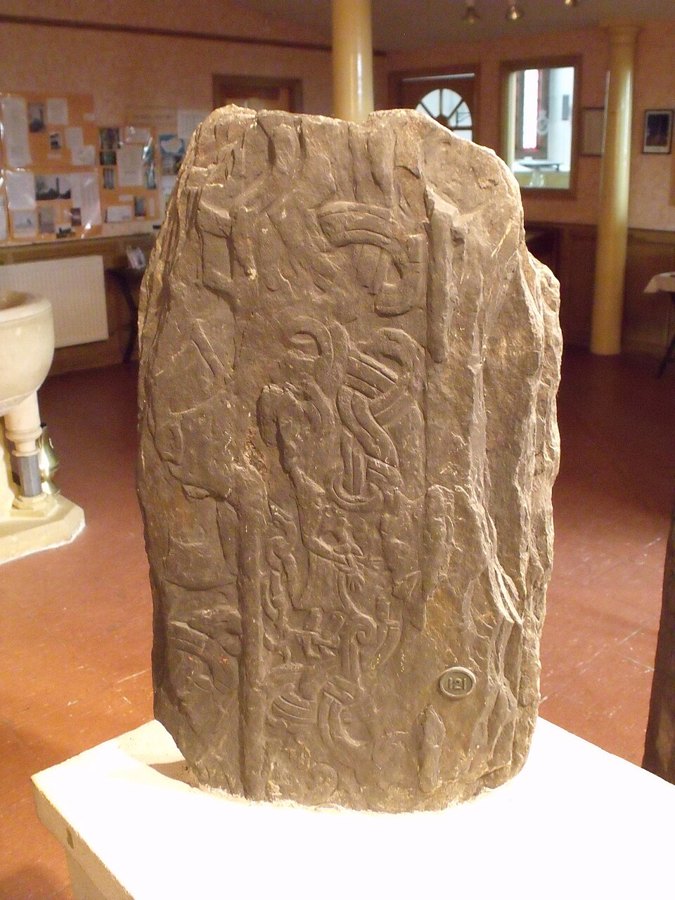

The Viking-Age connection
The cross stands in St Mary’s churchyard and rises more than four meters. A Crucifixion scene is clearly Christian. Other panels have been connected with Loki and Sigyn, Heimdall and events associated with Ragnarök, although the certainty of individual identifications varies.
Reading the evidence
The interpretations compare carved details with Scandinavian stories preserved in later manuscripts. That comparison is powerful but not automatic: the stone is older than those written versions, and damaged or compressed images can carry more than one reading. The cross is not an illustrated copy of a surviving Edda.
Understanding the place
Rather than treating the monument as a simple clash between two religions, ask how a Christian patron and audience might have recognized familiar stories. Artists could create parallels, contrasts or warnings without explaining them in writing. Gosforth’s value lies partly in the questions it poses about shared visual language and religious change.
Explore more Viking-Age places →
The Evidence
The sources below support this article. Interpretations and limits are explained in the text; this is not an exhaustive research review.