
Journeys & Encounters · Place profile
Grobiņa: A connected coastal region
In Brief
Grobiņa in western Latvia is important for the interaction of Curonian and Scandinavian communities before and during the early Viking Age. Its archaeological landscape includes settlement and burial places rather than one surviving Viking fortress.
On this page
A connected coastal regionSeparate the medieval castleContact is not one simple identitySourcesPresent-day location: Latvia · Courland
Names and search variants: Grobiņa · Grobina · Seeburg
Browse places by country →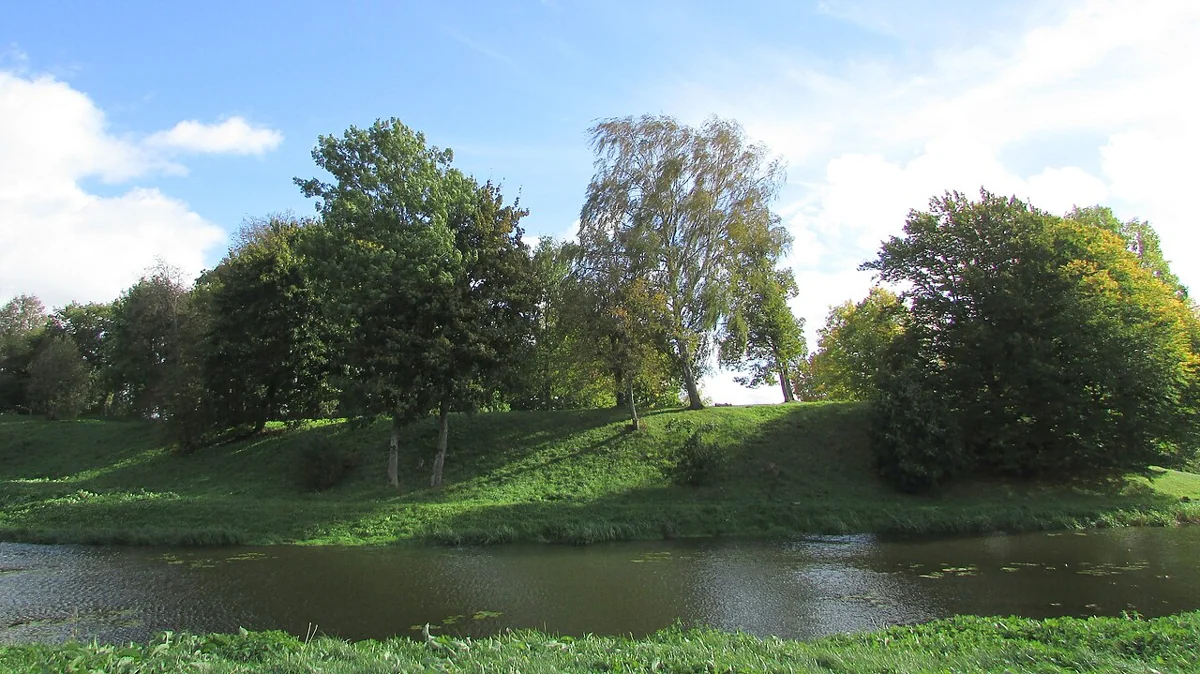

A connected coastal region
Regional heritage interpretation describes a substantial early settlement associated with both local Curonians and Scandinavians. Cemeteries and the hillfort are essential to that picture. The traditional identification with Seeburg connects the landscape with written history, but individual claims should be assessed against the archaeological sequence.
Separate the medieval castle
The conspicuous ruined masonry castle belongs to much later centuries. It should not be used without qualification as a picture of Viking Grobiņa. The hillfort, burial areas, and river setting offer more appropriate points of reference for the early history, even where they look less spectacular.
Contact is not one simple identity
Artifacts and burial traditions can reveal connections without sorting every individual into an unambiguous modern nationality. Migration, local participation, and changing customs may all be relevant. The most useful comparison asks how different kinds of evidence fit together across the settlement and cemeteries. Avoid describing the whole place as an exclusively Swedish colony or a uniform Curonian population on the strength of one object type. Burial grounds and settlement remains should be considered together.
Explore more Viking-Age places →
Explore this record and its sources in the map collection →
This entry is searchable by place and country. No verified burial-site coordinate is supplied, so it has no map marker or directions.
The Evidence
The sources below support this article. Interpretations and limits are explained in the text; this is not an exhaustive research review.