
Journeys & Encounters · Place profile
Hofstaðir in Garðabær: A substantial settlement-period hall
In Brief
A major early farm survives as an archaeological site within modern Garðabær. This Hofstaðir is in southwest Iceland and must not be confused with the better-known research site of the same name near Mývatn in the north.
On this page
A substantial settlement-period hallHeat, food and clothAn urban archaeological visitSourcesPresent-day location: Iceland · North Atlantic
Names and search variants: Hofstaðir in Garðabær · Hofsstadir · Hofstadir Gardabaer · Garðabær longhouse
Browse places by country →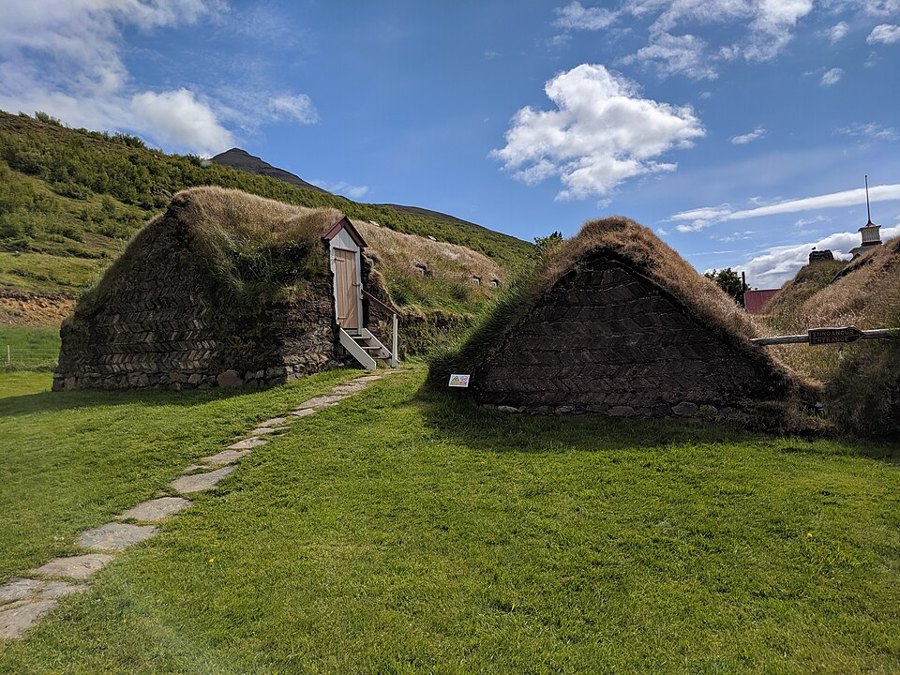

A substantial settlement-period hall
The longhouse measured about thirty metres by eight metres externally, with a much smaller usable floor area inside its thick walls. Turf and stone enclosed a timber-supported interior. The municipal interpretation places the site among Iceland’s largest known Viking-Age halls. Its discovery during modern construction illustrates how early farm landscapes can survive beneath ordinary residential districts.
Heat, food and cloth
A central elongated hearth, cooking pits and animal bones connect the building to food preparation and livestock. Textile-related objects, including spindle whorls and loom weights, indicate another essential household industry. These different activities make the house more than an impressive outline. Its scale suggests a substantial community, although estimates of twenty to thirty inhabitants are interpretations rather than a preserved census.
An urban archaeological visit
The outdoor heritage area and local interpretation offer a way to connect the excavated plan with daily life. Begin with the original dimensions before imagining the roof, sleeping arrangements or social hierarchy. A large farm could contain people with unequal freedom and authority, but no archaeological floor plan identifies each person’s legal status. Keep this location separate from Hofstaðir in Mývatn when searching or planning a journey.
Explore more Viking-Age places →
The Evidence
The sources below support this article. Interpretations and limits are explained in the text; this is not an exhaustive research review.