
Journeys & Encounters · Place profile
Hofstaðir near Mývatn: A hall built to gather people
In Brief
Hofstaðir near Lake Mývatn is an unusually informative place for studying gatherings, farming and religious change. Its archaeology matters more than a famous saga association: no contemporary narrative describes the Viking-Age household in detail.
Present-day location: Iceland · North Atlantic
Names and search variants: Hofstaðir near Mývatn · Hofstadir Myvatn · Hofstaðir Mývatnssveit
Browse places by country →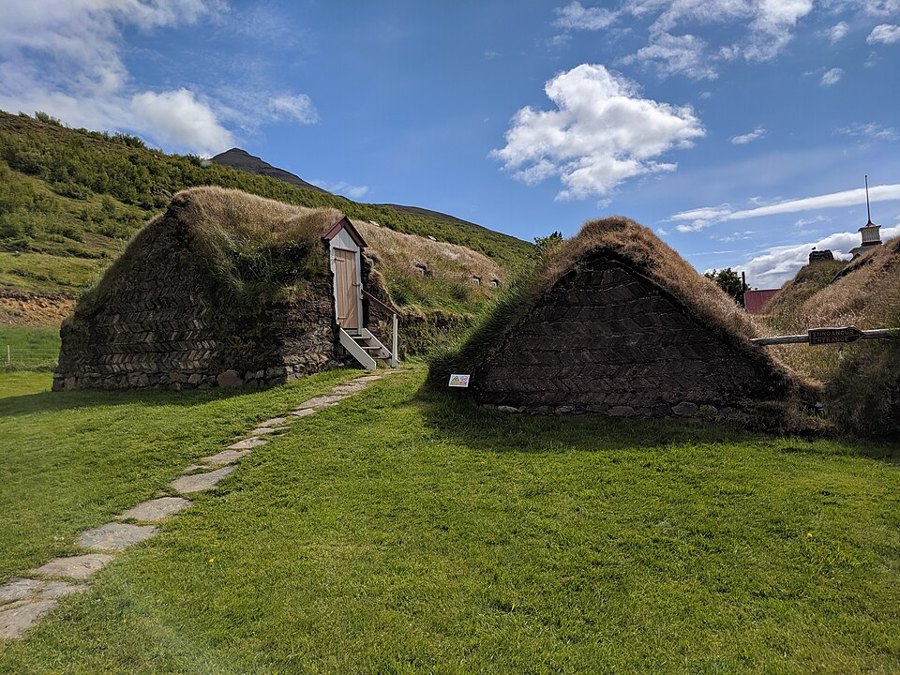

A hall built to gather people
Research places the large hall’s construction after approximately 940, with enlargement during the tenth century and abandonment around 1030. Smaller buildings included spaces for production and storage. The unusually large hall suggests gatherings beyond the needs of a modest household, but size alone does not tell us the exact words, ceremonies or political agreements that took place inside.
More than one farmstead
The site’s research programme identifies several early farmstead locations, complicating the familiar picture of one isolated pioneer farm. Buildings, middens and cemetery evidence allow researchers to investigate relationships within this settlement landscape. A church and burial ground also belong to the early history of the place. Their development must be studied by phase rather than squeezed into a single instant of conversion.
A research landscape
Hofstaðir is particularly useful for asking how archaeology changes interpretation. A building once discussed primarily as a pagan temple can be investigated through domestic activity, communal meals, animal remains and its wider landscape. These possibilities are not mutually exclusive. Read the current research explanations alongside the site rather than assuming that the name, commonly associated with a hof, settles the building’s function.
Explore more Viking-Age places →
The Evidence
The sources below support this article. Interpretations and limits are explained in the text; this is not an exhaustive research review.