
Journeys & Encounters · Place profile
Mästermyr: Tools from a wet landscape
In Brief
Mästermyr on Gotland is famous for a wooden chest and an extraordinary collection of tools. It offers a close view of craft equipment around the transition from the Viking Age to the Middle Ages, but the dating deserves more care than the familiar label “Viking toolbox” sometimes receives.
On this page
Tools from a wet landscapeThe date is not a simple labelWhat an illustrated tool can showSourcesPresent-day location: Sweden · Gotland
Names and search variants: Mästermyr · Mastermyr · Mästermyr tool chest
Browse places by country →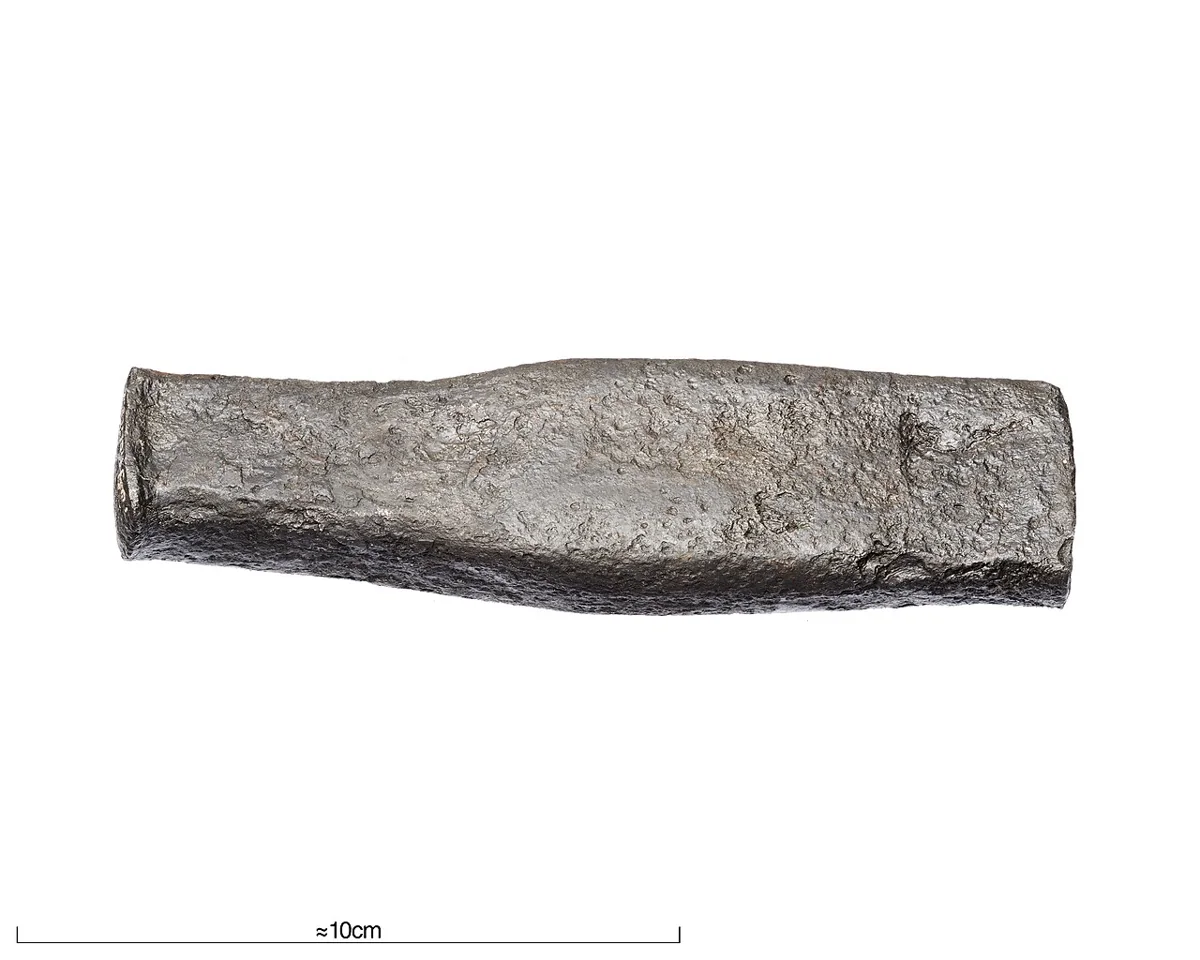

Tools from a wet landscape
The assemblage was found in 1936 in land associated with the former mire. Tools and reusable metal accompanied the chest, while other objects lay nearby. The selection includes equipment relevant to both metalworking and woodworking. It is therefore more informative to discuss an overlapping set of skills than to assume one narrowly specialized modern trade.
The date is not a simple label
The Swedish History Museum connects discussion of the tools with Hemse’s early wooden church and notes possible correspondences between tool damage and marks on church timbers. That opens a possible early-twelfth-century connection. It is not a proven identification of a particular carpenter, nor a reason to place every object confidently in one brief decade.
What an illustrated tool can show
A photograph of one surviving implement helps explain shape and preservation, but it should not stand for the complete assemblage without saying so. Comparing an axe, saw, or drill with the materials it could work makes the site useful beyond treasure hunting. The larger question is how portable equipment allowed craftspeople to move between jobs, repair objects, and conserve valuable iron.
Explore more Viking-Age places →
The Evidence
The sources below support this article. Interpretations and limits are explained in the text; this is not an exhaustive research review.