
Journeys & Encounters · Place profile

Pamplona: A royal captive

In Brief

Pamplona belongs to the Viking-world map because of the reported capture of King García Íñiguez in 859. The episode is striking precisely because this inland location does not fit a simple picture of raiders attacking only coastal monasteries.

On this page

A royal captiveThe route remains uncertainHistory without invented scenerySources

Present-day location: Spain · Iberia

Names and search variants: Pamplona · Iruña · Garcia Iniguez · García Íñiguez · 859

Browse places by country →
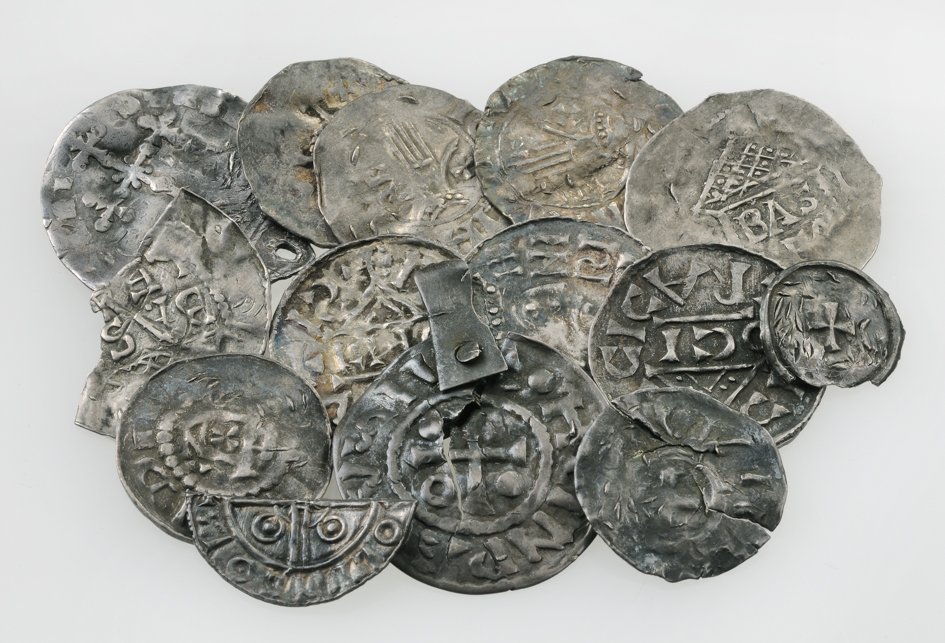
Silver coins from Undrom
Coins Silver The coins are minted in various locations such as present day England and Germany. Hoard find, Undrom, Boteå, Ångermanland, Sweden. SHM 1318 Comparative silver: coins from the Undrom hoard in Sweden, minted in England and Germany. These are not the dinars named in accounts of García Íñiguez’s ransom; the image illustrates portable money rather than documenting that payment.Image: The Swedish History Museum, Stockholm from Sweden · CC BY 2.0

A royal captive

The ninth-century incident is remembered through the capture and ransom of the king. Such a target offered leverage very different from carrying away portable goods. The political consequences could extend beyond the immediate attack, affecting royal resources and relationships. However, the ransom figures transmitted in historical storytelling should not be treated as a modern audited payment record.

The route remains uncertain

How the attackers reached Pamplona is disputed. Popular accounts sometimes present a precise voyage through a chain of rivers as if the route were settled. The regional archive’s own interpretation recognises the mystery. An honest map should therefore mark Pamplona as a place connected with the episode without drawing an unsupported continuous sailing route from the sea.

History without invented scenery

Modern Pamplona does not contain an authenticated standing Viking camp. The value of the location lies in the historical question it raises: how far could mobile armed groups operate through unfamiliar territory, and what local information or cooperation might they require? These are questions, not established answers. The incident also shows why named leaders, exact troop numbers and cinematic details need stronger evidence than their repetition in modern retellings.

Explore more Viking-Age places →

The Evidence

The sources below support this article. Interpretations and limits are explained in the text; this is not an exhaustive research review.

  1. Government of Navarre: archive interpretation of the 859 episode ↗

Take a closer look at the evidence

FacebookPinterestXEmail

Places & evidence

Locations and coordinate sources

These points identify the places described in the source notes. A regional, historical or museum reference is not a surveyed entrance, parking place or guarantee of public access. Check the linked institution or visitor information before traveling.

Pamplona

No verified coordinate supplied

The account associates the capture with Pamplona but gives no locatable capture site.

No verified coordinate is supplied. No map pin or navigation destination has been invented.

Original findspot: Pamplona is the named locality. Neither the place where the ships stopped nor the spot where the king was seized can be identified securely. Biblioteca Navarra Digital

Current location: The record concerns an episode in the history of present-day Pamplona. The source does not identify a surviving building connected to the capture. Biblioteca Navarra Digital

Access information: The historical account offers no identifiable site for a visit. Biblioteca Navarra Digital

Location-source review: 2026-11-20. This is a source check, not a field survey.

Visitor / navigation point: Not yet verified. The reference coordinate above must not be treated as a current visitor destination.

Coordinate source: Biblioteca Navarra Digital — Historia política del reino de Navarra, vol. I: José María Lacarra ↗

Open Pamplona in Interactive Viking Map →