
Journeys & Encounters · Place profile

Reading: A Place in the Viking World

In Brief

Reading became a Viking winter base in 870–871 at the meeting of the Thames and Kennet. The episode places an inland river town at the center of campaigning against Wessex before Alfred became its best-known king.

On this page

The Viking-Age connectionReading the evidenceUnderstanding the placeSources

Present-day location: England · Britain and Ireland

Browse places by country →
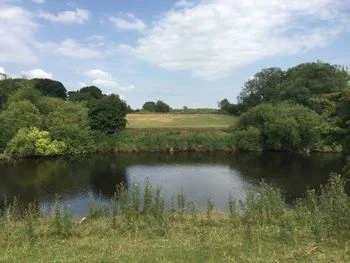
Modern view across the River Ure toward the field containing the Aldwark Viking camp site.
The location of the Viking camp at Aldwark, seen across the River Ure in a modern photograph. The landscape view identifies the site; it does not reconstruct the camp’s buildings, population, or exact duration. Converted to WebP. Aldwark’s riverine camp landscape in Yorkshire, shown only as a comparison; this is not Reading.Image: Julian Richards / Archaeology Data Service · CC BY 4.0

The Viking-Age connection

The Anglo-Saxon Chronicle records the army’s presence, while Asser describes a defensive work between the rivers. The precise camp layout remains uncertain. Reading Museum considers the higher ground east of the modern town center a likely setting, but no complete excavated camp survives to confirm every detail.

Reading the evidence

A sword recovered in the nineteenth century and later river finds form part of the local evidence. The sword cannot securely be assigned to a named warrior from the chronicles. The museum distinguishes such attractive possibilities from what the find history can actually demonstrate.

Understanding the place

The confluence is the key to understanding Reading’s attraction. Rivers connected the base with routes through southern England and could contribute to its defense. Compare the setting with Torksey without assuming identical camps: similarities suggest practical choices, while different preservation and excavation histories limit what can be reconstructed. That distinction also separates historical reconstruction from local commemorative tradition.

Explore more Viking-Age places →

The Evidence

The sources below support this article. Interpretations and limits are explained in the text; this is not an exhaustive research review.

  1. Site history and archaeological evidence ↗
FacebookPinterestXEmail

Places & evidence

Locations and coordinate sources

These points identify the places described in the source notes. A regional, historical or museum reference is not a surveyed entrance, parking place or guarantee of public access. Check the linked institution or visitor information before traveling.

Reading

No verified coordinate supplied

The written descriptions place the army near the Thames and Kennet. The precise campsite has yet to be identified.

No verified coordinate is supplied. No map pin or navigation destination has been invented.

Original findspot: Asser describes a defensive rampart between the rivers. Reading Museum discusses a possible site on higher ground. Reading Museum

Current location: Reading Museum reports that physical remains of the camp have yet to be identified. Its gallery displays finds from the area. Reading Museum

Access information: The Story of Reading Gallery provides interpretation of local finds. No visitor point for the historical camp has been established. Reading Museum

Location-source review: 2026-11-20. This is a source check, not a field survey.

Visitor / navigation point: Not yet verified. The reference coordinate above must not be treated as a current visitor destination.

Coordinate source: Reading Museum — The Vikings in Reading ↗

Open Reading in Interactive Viking Map →