
Journeys & Encounters · Place profile

Seville: A fleet in an Andalusi river

In Brief

Seville was attacked by a Scandinavian fleet in 844 after the raiders entered the Guadalquivir. The episode places the Viking world in direct contact with al-Andalus, far beyond the northern seas most closely associated with Viking voyages.

On this page

A fleet in an Andalusi riverResistance and adaptationA changed urban landscapeSources

Present-day location: Spain · Iberia

Names and search variants: Seville · Sevilla · Ishbiliya · Guadalquivir · Tablada

Browse places by country →
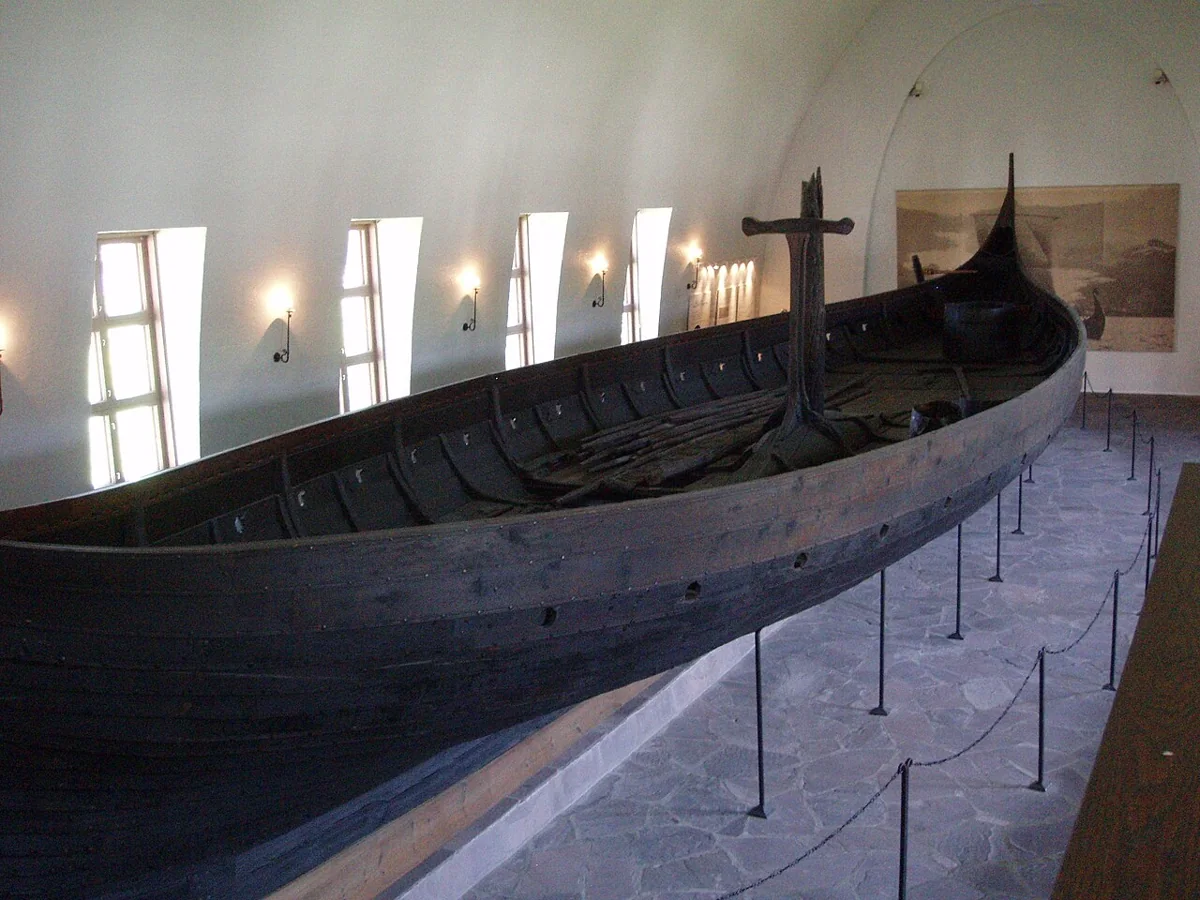
The preserved wooden Gokstad ship displayed indoors
The preserved Gokstad ship, photographed in 2008. Its surviving hull offers evidence for Viking-Age shipbuilding and burial customs. Comparative shipbuilding evidence: the Gokstad ship from Norway, later than the 844 raid. It illustrates Viking-Age construction, not a vessel known to have reached Seville.Image: Skadinaujo · CC BY-SA 2.5

A fleet in an Andalusi river

The expedition approached through the Gulf of Cádiz and moved upriver towards an established city. Arabic historical writing preserves important accounts of the attack and response. These texts require the same scrutiny as northern chronicles: the terminology, date of composition and interests of each writer matter. The word majūs in this setting should be read in context rather than treated as a timeless ethnic label.

Resistance and adaptation

The raid did not establish a durable Scandinavian state in Seville. Andalusi military resistance and subsequent attention to maritime defence belong to the story as much as the initial violence. This is a useful corrective to maps that mark every attacked place as conquered Viking territory. Reaching a city, briefly occupying it and governing it for generations are very different claims.

A changed urban landscape

The modern riverfront and celebrated monuments contain many later phases. They can illustrate the geography of access without pretending to show the ninth-century city unchanged. Seville is best approached through the interaction between fleet, river and organised political response. Its history also reminds us that Viking studies require Arabic and Iberian evidence, not only sagas written in the North Atlantic centuries later.

Explore more Viking-Age places →

The Evidence

The sources below support this article. Interpretations and limits are explained in the text; this is not an exhaustive research review.

  1. Complutense University: Guadalquivir incursion study ↗
  2. University of Cádiz: Vikings in al-Andalus ↗
FacebookPinterestXEmail

Places & evidence

Locations and coordinate sources

These points identify the places described in the source notes. A regional, historical or museum reference is not a surveyed entrance, parking place or guarantee of public access. Check the linked institution or visitor information before traveling.

Seville

No verified coordinate supplied

The accounts locate the attack at Seville on the Guadalquivir. They do not establish a single modern landing or battle coordinate.

No verified coordinate is supplied. No map pin or navigation destination has been invented.

Original findspot: The expedition followed the Guadalquivir and attacked Seville and the surrounding countryside. The accounts describe several places. Sara M. Pons-Sanz, Viking Society for Northern Research · Xavier Ballestín, Routledge

Current location: The historical locality is the city on the Guadalquivir. The cited historical studies give no position for a surviving fleet or camp. Sara M. Pons-Sanz, Viking Society for Northern Research · Xavier Ballestín, Routledge

Access information: The historical accounts do not identify a visitor destination for the landing. Sara M. Pons-Sanz, Viking Society for Northern Research

Location-source review: 2026-11-20. This is a source check, not a field survey.

Visitor / navigation point: Not yet verified. The reference coordinate above must not be treated as a current visitor destination.

Coordinate source: Sara M. Pons-Sanz, Viking Society for Northern Research — Whom did al-Ghazāl meet? An exchange of embassies between the Arabs from al-Andalus and the Vikings (Saga-Book 28, pp. 5–6) ↗

Open Seville in Interactive Viking Map →