
Journeys & Encounters · Place profile

Skálholt: An Icelandic bishop

In Brief

Skálholt became Iceland’s first episcopal centre in 1056, close to the conventional end of the Viking Age. It shows how a society founded by settlers developed institutions that connected local landholding to a wider Christian world.

On this page

An Icelandic bishopA centre that kept changingWhat stands here nowSources

Present-day location: Iceland · North Atlantic

Names and search variants: Skálholt · Skalholt · Ísleifur Gissurarson

Browse places by country →
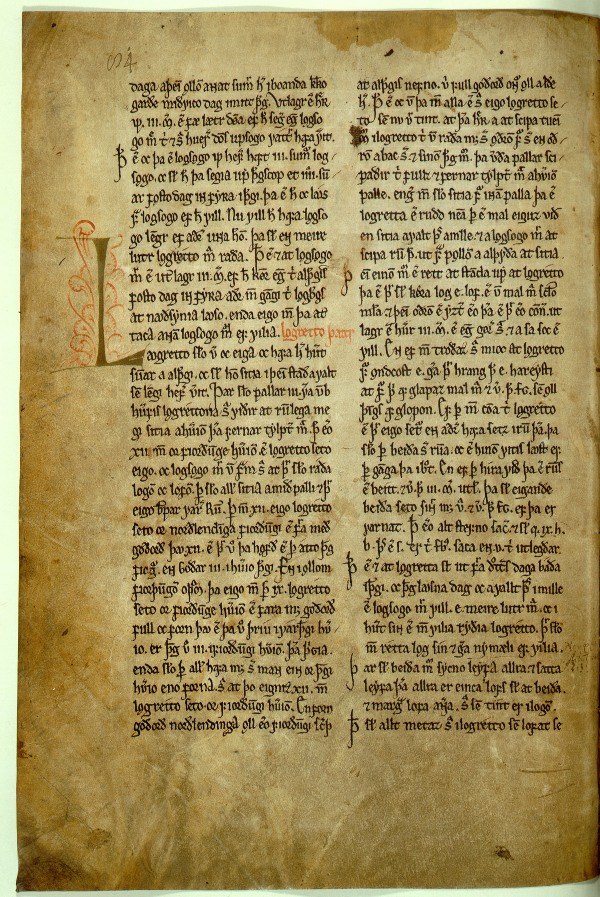
Grágás manuscript
A page of the medieval Icelandic law collection Grágás. Its surviving manuscripts are later than the Viking Age; earlier social arrangements cannot simply be read from them without qualification. Contextual later Icelandic law manuscript; not an eleventh-century object from Skálholt.Image: Gilwellian · Public domain

An Icelandic bishop

Ísleifur Gissurarson was consecrated abroad and established his see at Skálholt. The choice linked ecclesiastical authority to an existing family estate rather than creating a city from nothing. Christianity had already been accepted in Iceland’s legal order around 1000; the bishopric represents a later stage of institutional organisation, not the first moment any Icelander encountered the religion.

A centre that kept changing

Skálholt subsequently became a major place of education, religious administration and manuscript culture. Much of that history is medieval or early modern. Its importance for Viking studies includes the survival and transmission of knowledge, but it would be misleading to place all later scholarship or church wealth in the eleventh century. Institutional continuity is not architectural or social sameness.

What stands here now

The current cathedral was consecrated in 1963. Archaeological remains and objects from earlier churches provide a deeper chronology, including material from centuries after the first bishop. Use the site’s historical sequence to distinguish these phases. Skálholt is best understood as a place where the Viking-Age world was changing into something else, not as a preserved pagan settlement unexpectedly containing a modern church.

Explore more Viking-Age places →

The Evidence

The sources below support this article. Interpretations and limits are explained in the text; this is not an exhaustive research review.

  1. Skálholt: history and heritage ↗
  2. Skálholt: bishops and chronology ↗
FacebookPinterestXEmail

Places & evidence

Locations and coordinate sources

These points identify the places described in the source notes. A regional, historical or museum reference is not a surveyed entrance, parking place or guarantee of public access. Check the linked institution or visitor information before traveling.

Skálholt

No verified coordinate supplied

Skálholt is identifiable as the episcopal centre. The consulted evidence does not give a surveyed point for the first bishop’s residence.

No verified object-reference coordinate is supplied. A separately verified visitor destination, if available, is listed below.

Original findspot: The cited documents establish the location of the episcopal centre at Skálholt. The founding date applies to the institution. Visit South Iceland · Skálholtsdómkirkja

Current location: The present cathedral is a twentieth-century building on the historic church estate. Visit South Iceland · Skálholtsdómkirkja

Access information: The cathedral operator publishes visitor information and arrangements for guided tours. Skálholtsdómkirkja

Location-source review: 2026-11-20. This is a source check, not a field survey.

Visitor / navigation point: The destination in the regional visitor guide is the present Skálholt Cathedral. It is a visitor point for the modern building.

64.126736, -20.525639 · WGS84 latitude, longitude

Open visitor location in Google Maps ↗

Visitor source: Visit South Iceland. Last source check: 2026-11-20.

Visitor context: Skálholtsdómkirkja — Visit Skálholt.

Coordinate source: Skálholtsdómkirkja — History and culture at Skálholt ↗

Open Skálholt in Interactive Viking Map →