
Journeys & Encounters · Place profile

Spånga: Before the medieval church

In Brief

Spånga preserves evidence for Viking-Age settlement and burial within modern Stockholm. It is a useful reminder that the early history of a place can be older than its first surviving written mention and older than the church still standing there.

On this page

Before the medieval churchA Christian inscriptionA village within a citySources

Present-day location: Sweden · Stockholm

Names and search variants: Spånga · Spanga · Spånga by

Browse places by country →
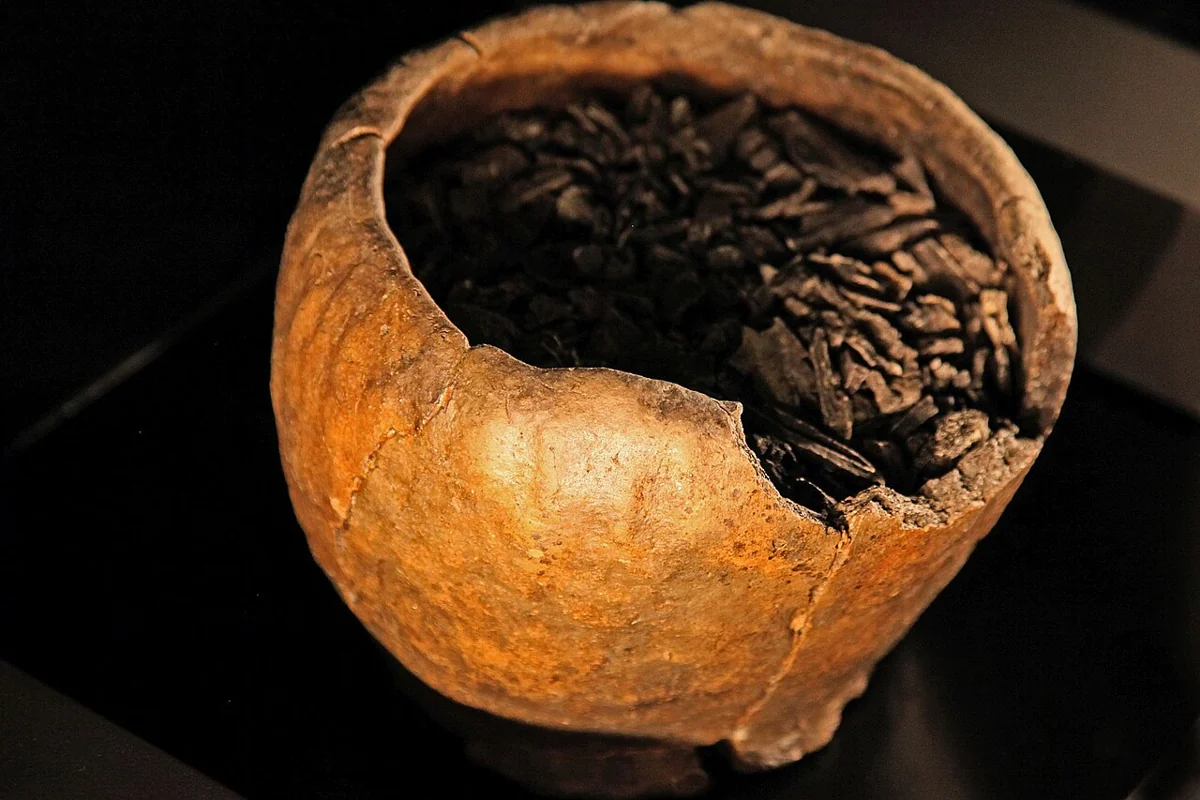
An open ceramic urn containing small fragments of cremated bone.
An urn containing cremated bones from Uppland, Sweden, shown in the Swedish History Museum’s travelling Viking exhibition in Sydney in 2013. It illustrates a burial material, not a sample identified as part of the mobility studies discussed here. Comparative burial evidence: an urn with cremated remains from Uppland in a museum display, not a find from this cemetery. It illustrates cremation material rather than the appearance of this place.Image: JC Merriman · CC BY 2.0

Before the medieval church

Stockholm’s historical resource describes investigated stone settings dated to the Viking Age near Spånga church. The cemetery is interpreted as belonging to a local farm or predecessor of the village. The standing church began much later, in the twelfth century, so its masonry cannot be used as a picture of the earlier settlement.

A Christian inscription

An early-eleventh-century runestone with a cross provides evidence for Christian expression before the stone church was built. The proposed artistic inspiration of a cross is a separate question from the basic observation that it is Christian. A visual resemblance does not demonstrate the carver’s personal travels to the Byzantine Empire.

A village within a city

Modern parks and buildings can obscure the agricultural setting in which the graves were made. Historical interpretation helps reconnect isolated features without inventing an exact village plan. Compare the cemetery, inscription, later church, and written name as distinct kinds of evidence. Together they show continuity of place, but not necessarily an unchanged settlement or one family occupying it continuously.

Explore more Viking-Age places →

The Evidence

The sources below support this article. Interpretations and limits are explained in the text; this is not an exhaustive research review.

  1. Stockholmskällan: Spånga village history ↗
FacebookPinterestXEmail

Places & evidence

Locations and coordinate sources

These points identify the places described in the source notes. A regional, historical or museum reference is not a surveyed entrance, parking place or guarantee of public access. Check the linked institution or visitor information before traveling.

Spånga – excavated settlement by the church

Approximate area — not an exact object location

The map uses the published centre of the registered settlement area. Fornsök describes manual plotting and gives a positional uncertainty of 10 metres for the feature. The centre is for area orientation. This point represents the investigated settlement at Spånga 380:1. The nearby cemetery and the later village are separately situated.

WGS84 · latitude, longitude
59.391940, 17.911650

Original findspot: The city museum excavated the settlement registered as Spånga 380:1. It identified several successive houses, and predominantly Viking Age finds in the occupation layer. Stockholmskällan / Stockholm City Museum · Swedish National Heritage Board (Riksantikvarieämbetet) · John Wändesjö with Magnus Källström, Stockholm City Museum (report copy hosted by Arild Hauge)

Current location: The register lists a fully investigated area measuring about 30 by 25 metres in an extension of the modern churchyard. The original extent of the settlement is unknown. Swedish National Heritage Board (Riksantikvarieämbetet) · John Wändesjö with Magnus Källström, Stockholm City Museum (report copy hosted by Arild Hauge)

Access information: The mapped archaeological area was excavated during a churchyard extension. The sources give no public route to visible remains of the settlement. The park illustration and the church entrance refer to different places. Stockholmskällan / Stockholm City Museum · Swedish National Heritage Board (Riksantikvarieämbetet) · John Wändesjö with Magnus Källström, Stockholm City Museum (report copy hosted by Arild Hauge)

Location-source review: 2026-11-20. This is a source check, not a field survey.

Visitor / navigation point: Not yet verified. The reference coordinate above must not be treated as a current visitor destination.

Coordinate source: Swedish National Heritage Board (Riksantikvarieämbetet) — Fornsök, L2014:8059 (Spånga 380:1) ↗

Open Spånga – excavated settlement by the church in Interactive Viking Map →