
Journeys & Encounters · Place profile
Spillings: Silver beneath a building
In Brief
Spillings in Othem parish became internationally known after the discovery of an enormous Viking-Age silver deposit in 1999. The important place is not simply a treasure label: the silver was associated with a building, connecting long-distance monetary circulation with a local household landscape.
On this page
Silver beneath a buildingCoins did not travel by one routeA local place in a connected islandSourcesPresent-day location: Sweden · Gotland
Names and search variants: Spillings · Spillings hoard · Spillingskatten
Browse places by country →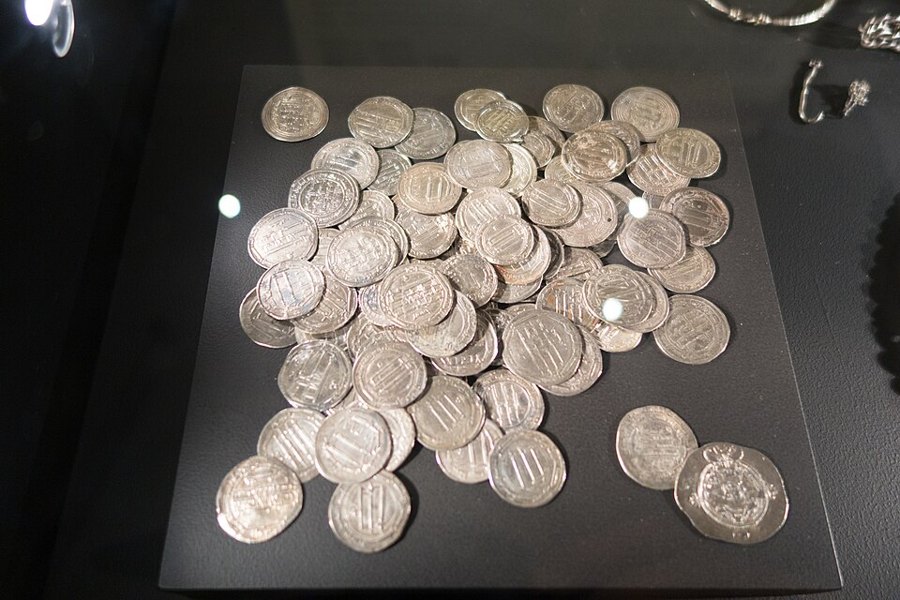

Silver beneath a building
Gotlands Museum describes approximately 67 kilograms of silver, including thousands of coins and numerous arm-rings and related pieces. The youngest coins belong to the 870s. A youngest coin supplies an earliest possible date for burial of the deposit; it does not by itself establish the exact day or year when the silver entered the ground.
Coins did not travel by one route
Much of the coinage came from the Islamic world. This demonstrates the far-reaching circulation of silver, but does not prove that the owner personally visited every place named on a coin. Objects could pass through trade, gifts, payments, conflict, and repeated transactions before reaching Gotland. A coin origin and a human itinerary are different kinds of information.
A local place in a connected island
The scale of the deposit is exceptional, while its setting within an island rich in silver finds makes comparison essential. Ask what was selected, how pieces could be valued, and why silver was not recovered. The last question has no single demonstrated answer. Museum display allows close study of the objects; the modern findspot explains their geographical setting rather than recreating the original building.
Explore more Viking-Age places →
The Evidence
The sources below support this article. Interpretations and limits are explained in the text; this is not an exhaustive research review.