
Journeys & Encounters · Place profile
Tjørnuvík: Burial evidence in the valley
In Brief
Tjørnuvík, at the northern end of Streymoy, combines a dramatic coastal setting with early burial evidence. The graves make it an important place in the Norse settlement history of the Faroes, not simply an attractive village with Viking-themed associations.
Present-day location: Faroe Islands · North Atlantic
Names and search variants: Tjørnuvík · Tjornuvik · Streymoy burial
Browse places by country →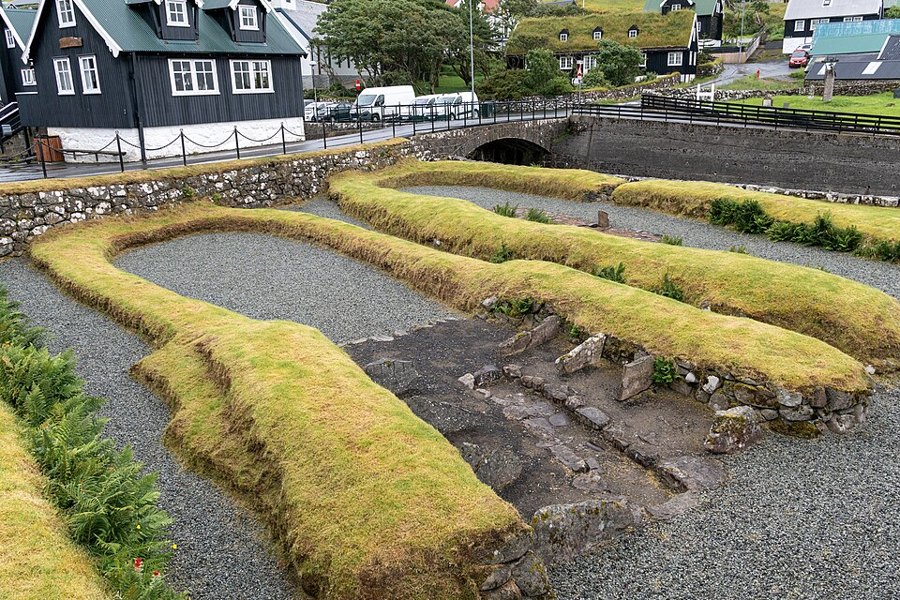

Burial evidence in the valley
Archaeological discoveries in the eastern part of the valley establish an early Norse presence. Burials offer a different kind of evidence from household walls: they show choices made by survivors about bodies, objects and the placement of the dead. Those choices can illuminate connections and status without giving a complete account of the deceased person’s life.
Landscape and landing
The exposed bay helps explain why maritime geography must be considered alongside settlement archaeology. Access from the sea could connect an island community while also making landings dependent on conditions. The spectacular offshore stacks belong to later folklore and landscape interpretation; their stories should not be used as direct evidence for the beliefs of the buried individuals.
A place still lived in
Modern Tjørnuvík remains a village and farming landscape. The standing houses, road and visitor facilities are not a preserved Norse settlement. Early graves do not justify treating every field as an archaeological attraction open to wandering. Read the official heritage interpretation, respect local land use and distinguish what has been excavated from what is inferred. The most useful question here is how people established a lasting community in a demanding coastal location.
Explore more Viking-Age places →
Explore this record and its sources in the map collection →
This entry is searchable by place and country. No verified burial-site coordinate is supplied, so it has no map marker or directions.
The Evidence
The sources below support this article. Interpretations and limits are explained in the text; this is not an exhaustive research review.