
Journeys & Encounters · Place profile

Tui: An episcopal centre under pressure

In Brief

Tui, beside the Miño River in Galicia, experienced Scandinavian attacks that disrupted an established religious and urban centre. Its history is a reminder that the Viking world included communities coping with recurring insecurity, not just the destinations of celebrated voyagers.

On this page

An episcopal centre under pressureAvoid a single dramatic explanationThe river and the later citySources

Present-day location: Spain · Iberia

Names and search variants: Tui · Tuy · Miño · Minho · Galicia

Browse places by country →
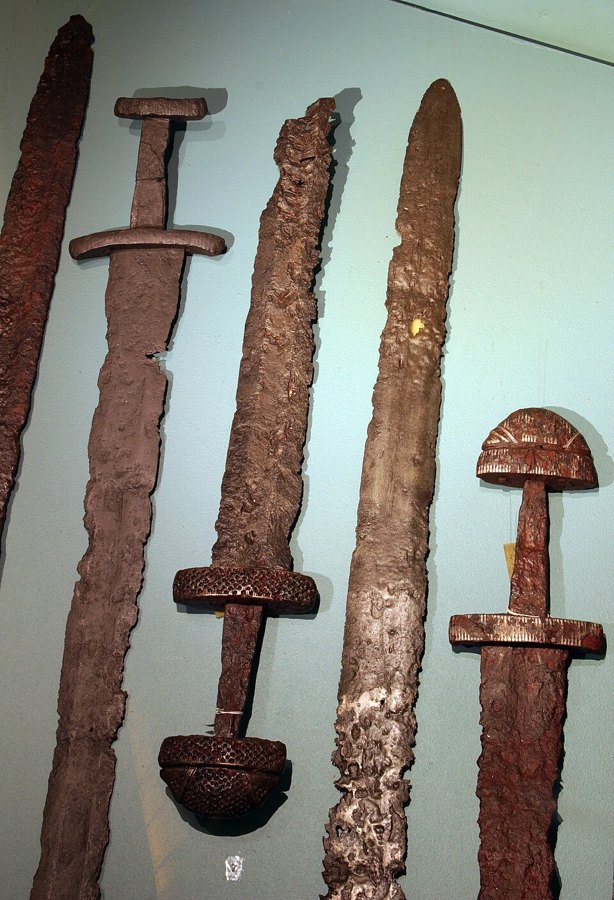
Viking-Age swords
Swords displayed as Viking-Age weapons. Differences in preservation, blade construction and fittings matter when comparing them. Comparative weapons: surviving Viking-Age swords displayed in a museum. They are not finds from Tui and do not identify the leaders or equipment of particular attacks on the town.Image: Arild Finne Nybø · CC BY-SA 2.0

An episcopal centre under pressure

The municipal history identifies repeated Viking plundering and a prolonged interruption in the presence of bishops. The episcopal seat was restored around 1067, followed by developments that helped shape the later medieval city. This sequence is more secure than assigning every disturbance to one famous northern leader or one precisely dated expedition.

Avoid a single dramatic explanation

Accounts of the attacks are often attached to named Scandinavian rulers in popular retellings. Those identifications require separate scrutiny. Repeated violence, political instability and institutional relocation can leave complicated evidence. A gap in episcopal history does not by itself prove that the entire population disappeared or that the same attackers controlled the area continuously.

The river and the later city

The Miño links the inland settlement with the Atlantic, helping explain why this place could be affected by maritime raiders. The imposing cathedral and much of the townscape visible today belong to later phases of recovery and growth. They should not be illustrated as buildings seen by the earliest attackers. Tui is most informative when its Viking-Age disruption is placed within its longer history as a local centre, rather than allowed to erase everything before and after.

Explore more Viking-Age places →

The Evidence

The sources below support this article. Interpretations and limits are explained in the text; this is not an exhaustive research review.

  1. Tui municipality: historical chronology ↗
  2. NOVA University Lisbon: western Iberian incursions research ↗
FacebookPinterestXEmail

Places & evidence

Locations and coordinate sources

These points identify the places described in the source notes. A regional, historical or museum reference is not a surveyed entrance, parking place or guarantee of public access. Check the linked institution or visitor information before traveling.

Tui

No verified coordinate supplied

The municipal history names Tui but does not locate an individual attack.

No verified object-reference coordinate is supplied. A separately verified visitor destination, if available, is listed below.

Original findspot: The raids concern the episcopal town. The municipal chronology does not identify a landing place or an individual building attacked. Concello de Tui

Current location: The cathedral visible in Tui today was begun in 1120 and consecrated in 1225, after the restoration of the see. Cross-border River Minho Tourist Guide, hosted by Concello do Rosal

Access information: The cathedral’s own website provides visitor contact details and directions. Catedral de Santa María de Tui

Location-source review: 2026-11-20. This is a source check, not a field survey.

Visitor / navigation point: Santa María Cathedral. The cathedral’s map link supplies the destination point. The cross-border visitor guide independently identifies the building.

42.046075, -8.644451 · WGS84 latitude, longitude

Open visitor location in Google Maps ↗

Visitor source: Catedral de Santa María de Tui. Last source check: 2026-11-20.

Visitor context: Cross-border River Minho Tourist Guide, hosted by Concello do Rosal — Cross-border River Minho Tourist Guide: Tui, Cathedral of Santa Maria.

Coordinate source: Concello de Tui — Historia ↗

Open Tui in Interactive Viking Map →