
Journeys & Encounters · Place profile
Urriðakot: Beyond the principal household
In Brief
Urriðakot, beside Urriðaholt in the Garðabær area, offers a useful contrast to the large hall at nearby Hofstaðir. Archaeology here investigates smaller-scale activity and the changing use of land outside the best-known settlement centres.
Present-day location: Iceland · North Atlantic
Names and search variants: Urriðakot · Urridakot · Urriðaholt
Browse places by country →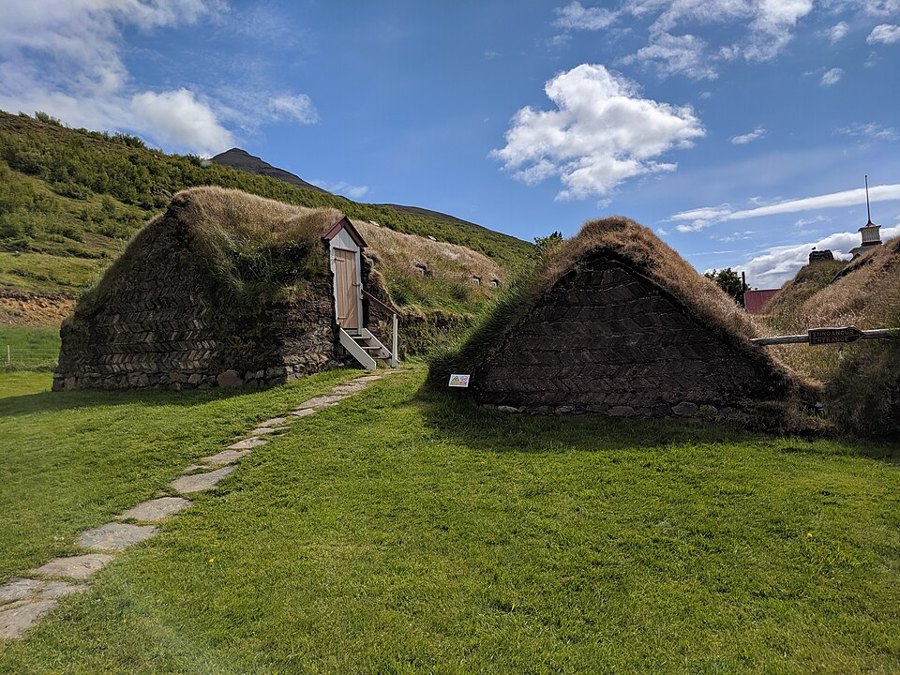

Beyond the principal household
Archaeological research identifies an early shieling, a place used seasonally for livestock and dairy work. Buildings dated broadly to the tenth through twelfth centuries included a small longhouse, a byre and a working building. This is evidence for tasks distributed beyond a principal household, rather than another grand residence belonging to a famous saga character.
A question of phases
The excavated longhouse was about fourteen metres long and lacked a fireplace. Researchers interpret the buildings in relation to limited seasonal stays. Later medieval structures represent another phase of use, not an expanded photograph of the tenth-century site. Volcanic ash layers and stratigraphy help distinguish the chronology; similar-looking turf walls cannot do that reliably on their own.
Read it with Hofstaðir
Comparing the two Garðabær sites encourages a practical question: which activities happened at the main residence, and which could be carried out elsewhere? The comparison should not assume a documented ownership relationship or identical dates without supporting research. The municipality’s interpretation is the starting point for identifying what was actually excavated. Modern streets and paths now divide an area whose earlier economic connections were organised very differently.
Explore more Viking-Age places →
The Evidence
The sources below support this article. Interpretations and limits are explained in the text; this is not an exhaustive research review.