
Journeys & Encounters · Place profile
Vendel: A cemetery across a boundary
In Brief
Vendel gave its name to the period immediately before the Viking Age, but the boat-grave cemetery itself continued into the Viking centuries. This distinction makes the site an excellent introduction to historical period labels: the name of a period is not a date for everything found at its namesake place.
On this page
A cemetery across a boundaryA boat as part of burialA later church above an older storySourcesPresent-day location: Sweden · Uppland
Names and search variants: Vendel · Vendels kyrka
Browse places by country →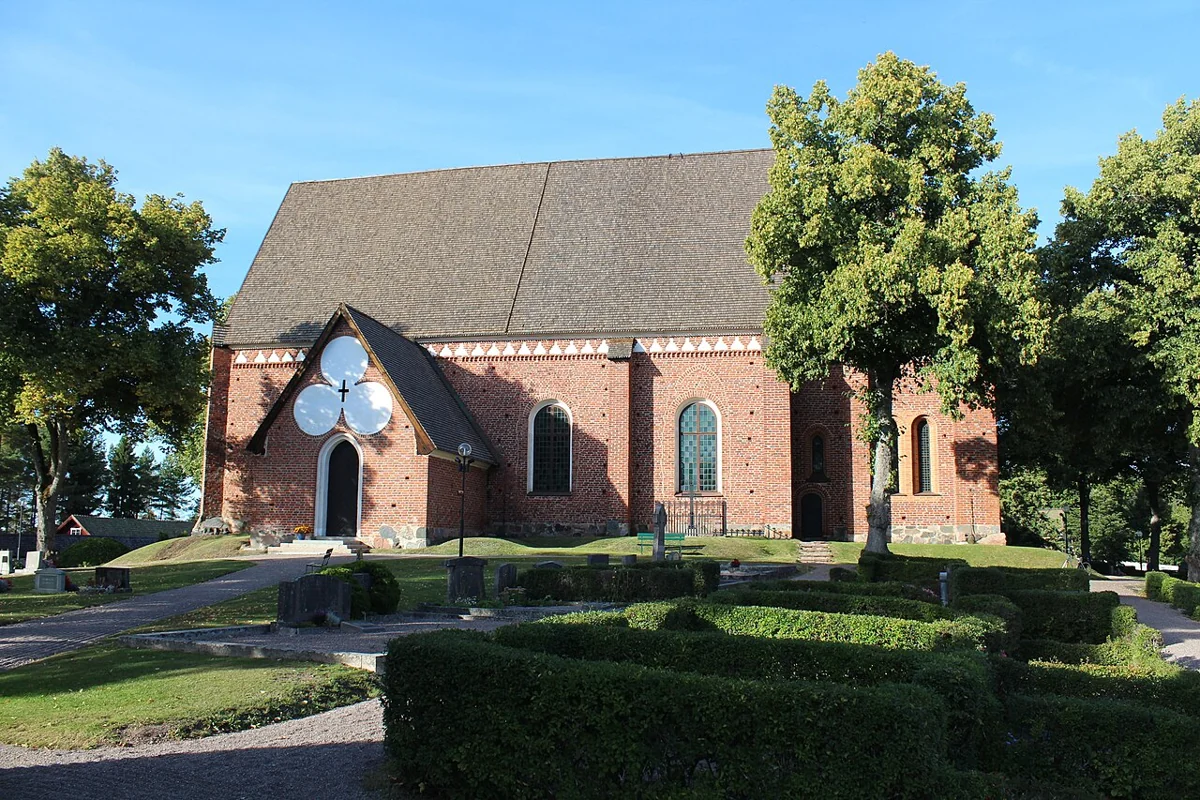

A cemetery across a boundary
Discoveries during work at the churchyard in 1881 brought the boat graves to attention. Tierp’s heritage account places the sequence broadly between about 550 and 1050. Rich equipment includes weapons and household objects, but the best-known ornate helmets belong to earlier phases rather than a standard Viking wardrobe.
A boat as part of burial
Here the dead were laid in boats with selected furnishings. That ritual involved materials, space, and labor, but the grave is not a transparent inventory of daily life. Equipment may express status, relationships, or ideas about death. These possibilities should be presented as questions unless a particular excavated context supports a narrower explanation.
A later church above an older story
The standing brick church and its paintings are medieval. They serve as a landmark for the cemetery’s location, not as Viking architecture. Pairing the landscape with museum interpretation is more useful than expecting an intact ship beneath every visible feature. Nearby legends about named rulers should also remain separate from securely dated finds and the identities of the excavated individuals.
Explore more Viking-Age places →
The Evidence
The sources below support this article. Interpretations and limits are explained in the text; this is not an exhaustive research review.