
Journeys & Encounters · Place profile

Vermoim: A Norse arrival in 1016

In Brief

On 6 September 1016, according to a medieval chronicle, a group of Norsemen reached the castle of Vermoim in northern Portugal. The entry places them inland, between the Douro and Minho rivers.

On this page

What the chronicle saysA castle in a regional conflictWhy the chronology needs careSources

Present-day location: Portugal · Iberia

Names and search variants: Vermoim · Castelo de Vermoim · Vila Nova de Famalicão · Alvito Nunes · 1016

Browse places by country →
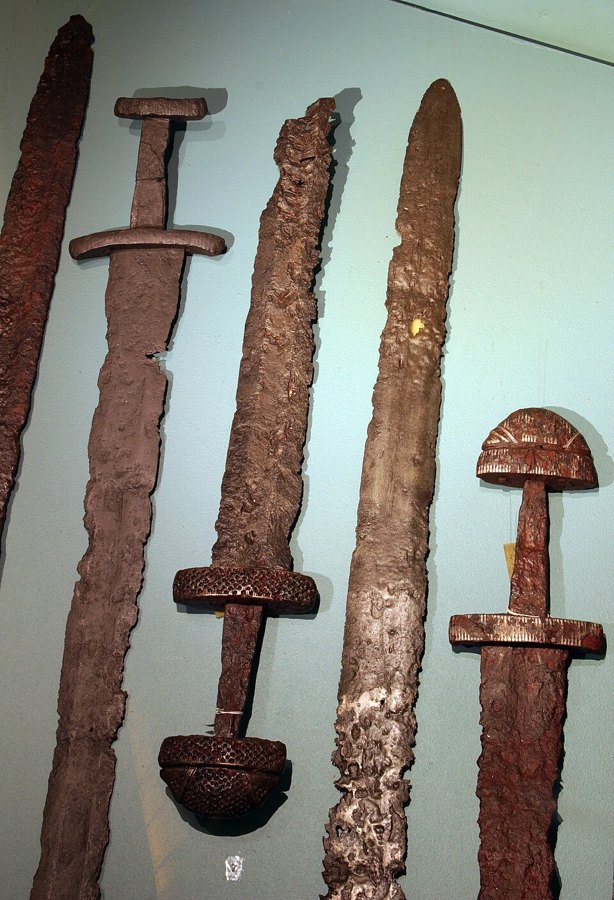
Viking-Age swords
Swords displayed as Viking-Age weapons. Differences in preservation, blade construction and fittings matter when comparing them. Comparative artefacts: surviving Viking-Age swords on museum display, not weapons excavated at Vermoim or attributed to the recorded attackers of 1016.Image: Arild Finne Nybø · CC BY-SA 2.0

What the chronicle says

The Chronica Gothorum says that the Norsemen came to the castle, which it locates in the district of Braga. It also names Count Alvito Nunes. As historian Hélio Pires explains, that brief mention leaves open whether the count was present. It does not establish that he died there on that date.

A castle in a regional conflict

Why did the Norsemen go to an inland castle? The reference to the count places the episode in the political world of northern Portugal, but the chronicle gives neither the route the group took nor the outcome of its arrival. Whether there was a fight, and who might have held the castle afterwards, remain open questions.

Why the chronology needs care

Medieval Iberian documents can use dating systems different from modern year numbering. The recorded era and its conversion should therefore be checked rather than copied mechanically. Likewise, archaeological remains on the site may belong to more than one phase. Vermoim’s value lies in the meeting of a specific historical notice with questions about regional defence, not in a claim that every visible stone can be assigned to the day recorded by the chronicler.

Explore more Viking-Age places →

The Evidence

The sources below support this article. Interpretations and limits are explained in the text; this is not an exhaustive research review.

  1. University of Porto: Vermoim and the 1016 incursion ↗
  2. NOVA University Lisbon: northern incursions in western Iberia ↗
  3. Hélio Pires: the limits of the Vermoim notice (2018, p. 118) ↗
FacebookPinterestXEmail

Places & evidence

Locations and coordinate sources

These points identify the places described in the source notes. A regional, historical or museum reference is not a surveyed entrance, parking place or guarantee of public access. Check the linked institution or visitor information before traveling.

Vermoim

Published reference point for the archaeological site

The inventory position marks the hillfort reused for the medieval castle. The place where the Northmen stood is unknown.

WGS84 · latitude, longitude
41.429600, -8.452458

Original findspot: The chronicle names Vermoim. The inventory locates the hillfort and medieval castle. It does not locate combat or the route taken by the Northmen. Câmara Municipal de Vila Nova de Famalicão, Boletim Cultural (2021) · Hélio Pires, CITCEM / University of Porto

Current location: The Castro or Castelo de Vermoim is one component of the Eiras archaeological group. The coordinate belongs specifically to Vermoim. Câmara Municipal de Vila Nova de Famalicão, Boletim Cultural (2021) · Património Cultural, I.P., Portugal

Access information: The inventory identifies the archaeological site but supplies no visitor entrance or public access arrangements. Câmara Municipal de Vila Nova de Famalicão, Boletim Cultural (2021)

Location-source review: 2026-11-20. This is a source check, not a field survey.

Visitor / navigation point: Not yet verified. The reference coordinate above must not be treated as a current visitor destination.

Coordinate source: Câmara Municipal de Vila Nova de Famalicão, Boletim Cultural (2021) — Inventário dos banhos castrejos em território português, inventory 11, p. 66 ↗

Open Vermoim in Interactive Viking Map →