
Journeys & Encounters · Place profile

Wedmore: A Place in the Viking World

In Brief

Wedmore in Somerset belongs to the aftermath of Alfred’s victory over Guthrum in 878. It is a place for examining diplomacy, Christian ceremony and royal hospitality rather than searching for a surviving Viking battlefield.

On this page

The Viking-Age connectionReading the evidenceUnderstanding the placeSources

Present-day location: England · Britain and Ireland

Browse places by country →
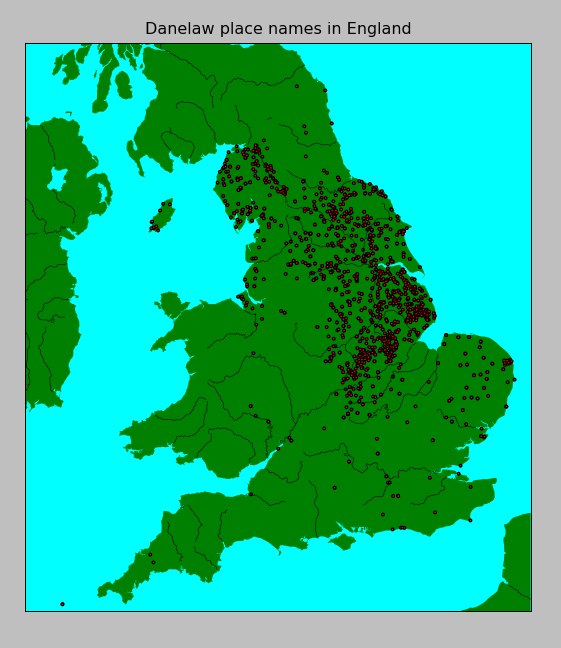
Scandinavian place names in England
A published distribution map of Scandinavian place names in England. Distribution patterns need linguistic and chronological interpretation; they are not a direct census of Viking settlers. Historical map of Scandinavian place names in England; contextual illustration, not a plan of this particular site.Image: Steven Kay from Edinburgh, United Kingdom · CC BY-SA 2.0

The Viking-Age connection

The historical accounts connect Wedmore with the completion of Guthrum’s baptismal ceremonies and his reception by Alfred. The estate was a royal center, although archaeology has not securely located every building implied by the narrative. A substantial residence is not the same thing as a surviving palace.

Reading the evidence

Local archaeological assessment considers the relationship between the later manor and church sites and the earlier royal estate. Coins demonstrate early medieval activity, but they cannot by themselves identify Alfred’s hall. The topography and later history support proposals that remain partly conjectural.

Understanding the place

Wedmore shows that the consequences of a battle could be negotiated through ritual and personal relationships. Baptism, gifts and entertainment were political acts as well as religious or social ones. Read it alongside Edington and Athelney to follow a process: military crisis, recovery, surrender and a new relationship between rulers. Ceremony, hospitality and legal agreements are related but different kinds of evidence.

Explore more Viking-Age places →

The Evidence

The sources below support this article. Interpretations and limits are explained in the text; this is not an exhaustive research review.

  1. Site history and archaeological evidence ↗
FacebookPinterestXEmail

Places & evidence

Locations and coordinate sources

These points identify the places described in the source notes. A regional, historical or museum reference is not a surveyed entrance, parking place or guarantee of public access. Check the linked institution or visitor information before traveling.

Wedmore

No verified coordinate supplied

The sources identify the royal estate of Wedmore. They do not locate the building where Guthrum’s post-baptismal ceremony took place.

No verified coordinate is supplied. No map pin or navigation destination has been invented.

Original findspot: Asser distinguishes Guthrum’s baptism at Aller from a subsequent ceremony at the royal estate of Wedmore. Asser, translated in J. A. Giles’s edition, hosted by Fordham University

Current location: The county survey discusses possible continuity with the later manor. Its reconstruction of an earlier royal centre remains conjectural. Clare Gathercole, Somerset County Council and English Heritage

Access information: The sources identify the modern settlement but provide no verified visitor destination for the 878 ceremony. Asser, translated in J. A. Giles’s edition, hosted by Fordham University · Clare Gathercole, Somerset County Council and English Heritage

Location-source review: 2026-11-20. This is a source check, not a field survey.

Visitor / navigation point: Not yet verified. The reference coordinate above must not be treated as a current visitor destination.

Coordinate source: Clare Gathercole, Somerset County Council and English Heritage — An archaeological assessment of Wedmore ↗

Open Wedmore in Interactive Viking Map →