
Life & Society · Deep dive
Animal Companions and the Human-Animal Household
In Brief
Dogs, cats, and horses had varied relationships with people, revealed through their bodies, journeys, equipment, and treatment at death.
On this page
Dogs with different bodies and historiesA leash beside a dog at Gamla UppsalaDogs moving around the BalticCats between household usefulness and exploitationHorses selected for burialCompanionship and sacrifice could coexistReconstructing a household with animalsSourcesDogs with different bodies and histories
Dog bones from Valsgärde in central Sweden show why a single familiar modern breed cannot stand for Viking Age dogs. Christopher Nichols's study identified at least twenty animals among the examined Vendel Period and Viking Age inhumations, with several body types represented and medium-to-large animals predominating. Viking Age graves contained fewer dogs on average than earlier graves at the site, as funerary assemblages became less extensive. Their continued inclusion nevertheless shows an enduring place in mortuary practice. These are selected animals from a particular cemetery, not a census of farm dogs. Comparing their size and skeletal form provides evidence of variation; assigning a modern pedigree label would imply a breeding history that the measurements alone cannot establish.
Sources for this section: 1
A leash beside a dog at Gamla Uppsala
At Gamla Uppsala Prästgården, Nichols examined dogs from three Viking Age boat graves. Two had the large, slender proportions associated with sight hounds; a third was smaller and could not be assigned a clear type. In grave 1, dated approximately to 900, a leash lay near the dog on the boat's starboard side. This association offers a concrete link between an animal and equipment used to manage it. It also matters spatially: an isolated chain would be harder to identify than one found beside a dog. The study compares these burials with nearby elite cemeteries, where similar selections appear. Such a pattern may express shared funerary preferences, rather than the full range of dogs living around the settlements.
Sources for this section: 2
Dogs moving around the Baltic
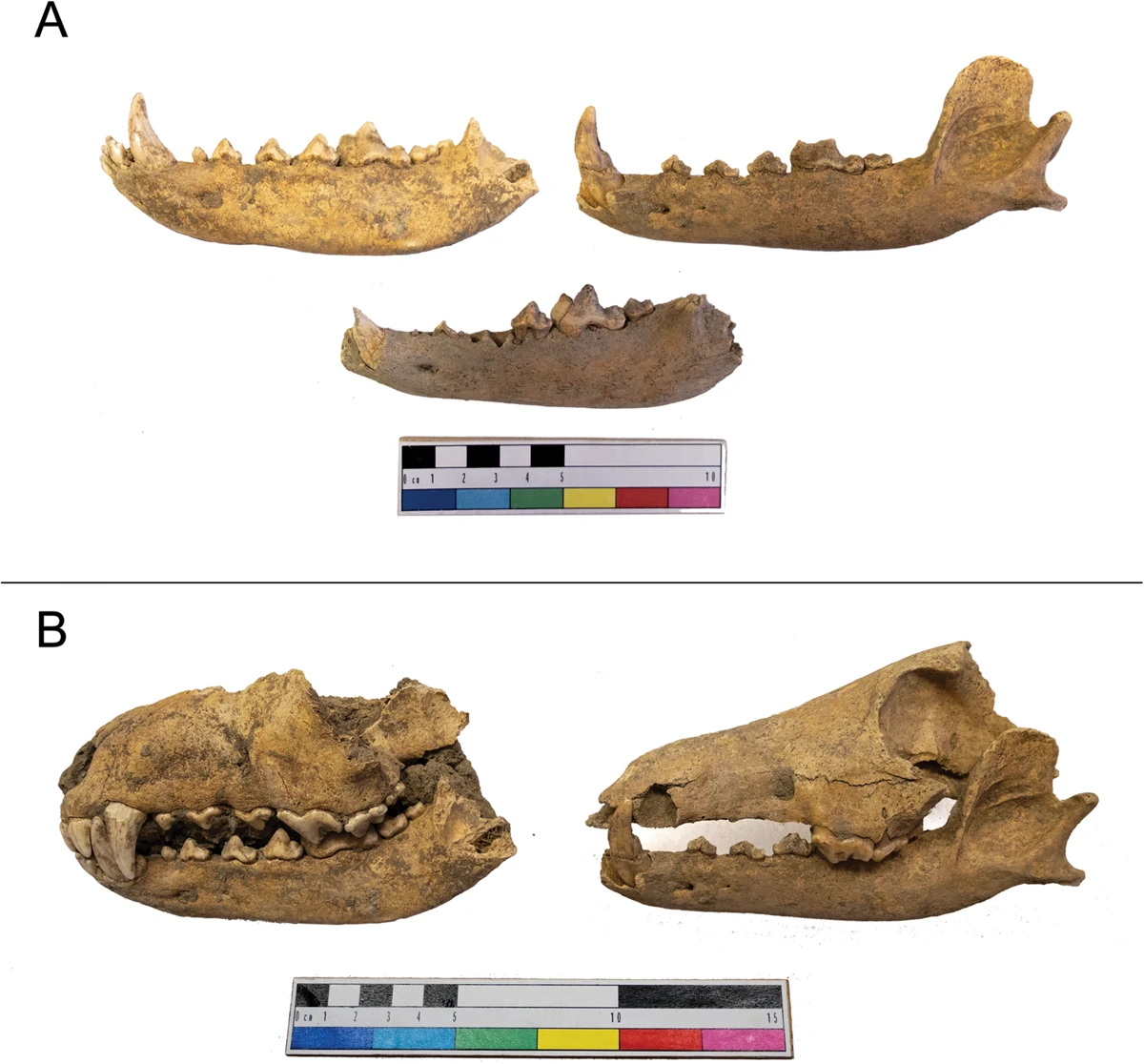
Research at Luistari in southwestern Finland adds movement to the picture. A 2025 study analyzed oxygen and strontium isotope evidence from Viking Age dogs. Oxygen values in all thirteen studied animals were compatible with local waters, while two of the four dogs tested for strontium had values consistent with a likely origin in southern Scandinavia. The contrast illustrates why different measurements can be useful together: one environmental signal may fit several places, while another narrows the possibilities. The researchers connect the results with exchange and social networks around the Baltic. The evidence does not reveal whether a particular dog arrived as a gift, a traded animal, or a companion traveling with a person. It does show that an animal's history could extend beyond the community where it was buried.
Sources for this section: 3
Cats between household usefulness and exploitation
Julie Bitz-Thorsen and Anne Birgitte Gotfredsen's study of Danish cats complicates a simple picture of ancient pets. Their evidence becomes more abundant in the Viking Age, especially in towns and in contexts connected with fur production. The study then follows changing size through medieval and modern material, finding that modern cats were generally larger. The authors discuss improved food availability and changing human treatment as possible explanations. Neither the modern comparison nor the presence of cats in a town proves that every Viking household kept a pampered companion. An animal could be useful for its behavior and exploited for its body, and different people could relate to the same species differently. The archaeological context is essential for distinguishing those relationships.
Sources for this section: 4
Horses selected for burial
Ancient DNA analysis of Icelandic horses provides an unusually direct test of mortuary selection. Heidi Nistelberger and colleagues examined twenty-two animals from burial and non-burial contexts. Among nineteen from graves, eighteen were genetically male and one female; the three from non-burial settings were female. The sample demonstrates a strong preference within the examined graves while also disproving an absolute rule that only male horses were buried. It cannot be converted into the sex ratio of the living horse population. That distinction is important for household history: the animals visible in ceremonies were chosen from a broader world of breeding, keeping, and using horses. A burial's apparently representative animal may instead embody a carefully selected identity.
Sources for this section: 5
Companionship and sacrifice could coexist
Rúnar Leifsson's study of Icelandic animal burials emphasizes differences between horses and dogs. Horses were normally deposited as whole bodies, sometimes without human remains, while dogs could be represented only partly and shared graves with people. Some horses were equipped with riding gear even though they were too young to have been ridden. Leifsson therefore argues that their symbolic role could matter more than a particular bond with the deceased. For some dogs, skeletal evidence of care during life makes companionship a plausible interpretation. These findings resist an easy division between valued animals and sacrificed animals. Care before death and deliberate killing in a funeral are separate observations that can belong to the same social world. Burial beside a person is not automatically evidence of an animal's natural death.
Sources for this section: 6
Reconstructing a household with animals
Together these studies allow a more specific account of human-animal relationships. Body measurements distinguish animals that would otherwise be grouped under one species name; a leash links handling equipment with an individual; isotope evidence identifies possible movement; and contrasting burial with non-burial remains exposes selection. None of those methods directly measures affection. They can, however, reveal investments and decisions around an animal's life and death. A useful reconstruction asks about feeding, restraint, movement, work, and final deposition separately, rather than allowing the word pet to answer every question at once. The resulting household contains animals with different histories and different values to people. Some could be companions, but usefulness, status, exchange, and ritual all helped shape which animals were kept and which traces of them survive.
Sources for this section: 1, 2, 3, 4, 5, 6
The Evidence
The sources below support this article. Interpretations and limits are explained in the text; this is not an exhaustive research review.
- Nichols, Domestic Dog Skeletons at Valsgärde ↗
- Nichols, Three Dogs from Gamla Uppsala Prästgården ↗
- Nordfors and colleagues, Viking Age Dogs at Luistari ↗
- Bitz-Thorsen and Gotfredsen, Domestic Cats in Denmark ↗
- Nistelberger and colleagues, Sexing Viking Age Horses ↗
- Leifsson, Ritual Animal Killing and Burial Customs ↗