
Research & Sources · Deep dive
Archaeological Sampling: When an Absence Means Very Little
In Brief
A missing seed, fish bone, or insect can reflect ancient behavior, preservation, excavation, or laboratory choices. Sampling determines which explanations can be tested.
On this page
The archaeological sample is not the ancient populationChoose a question before choosing a sampleCoppergate’s exceptional preservationRecovery changes what can be countedA small assemblage deserves a modest conclusionCounts need a denominatorIndependent evidence can narrow the alternativesReport the negative result preciselySourcesThe archaeological sample is not the ancient population
The material recovered from a Viking settlement has passed through several filters. People originally selected what to bring into the settlement, discarded only some of it, and reused other things. Buried material then survived unevenly. Excavation exposed only part of the site, and researchers collected and processed only a portion of its deposits. The final list of identified remains therefore represents a selected residue of a selected residue. Environmental archaeology makes these stages explicit because interpretation depends on knowing which losses and selections are likely to matter for the question being asked.
Sources for this section: 1
Choose a question before choosing a sample
A study of food preparation requires a different comparison from a study of flooding or building materials. Sampling should cover the relevant types of deposits and preserve information about where each sample came from. Historic England’s environmental guidance emphasizes planning, recovery, processing, reporting, and storage as connected stages. Decisions made during excavation constrain later analysis. If only spectacular deposits are sampled, ordinary activity may become invisible. If every sample combines several distinct layers, the quantity of material may increase while the ability to distinguish successive events decreases. A large bag is not automatically a more informative sample.
Sources for this section: 1

Coppergate’s exceptional preservation
The biological report for Anglo-Scandinavian Coppergate describes a large corpus of samples from organic, oxygen-poor deposits. Researchers examined building floors, backfills, external layers, pits, gullies, and some construction materials. Plant remains, insects, other invertebrates, and parasite eggs provided different perspectives on living conditions and activity. The range matters: a conclusion about a floor could be checked against material from outside a building or from a pit. Coppergate’s richness should not be treated as a normal baseline that every Viking farm must match. Its burial environment preserved categories of evidence that are absent from many drier sites.
Sources for this section: 3
Recovery changes what can be counted
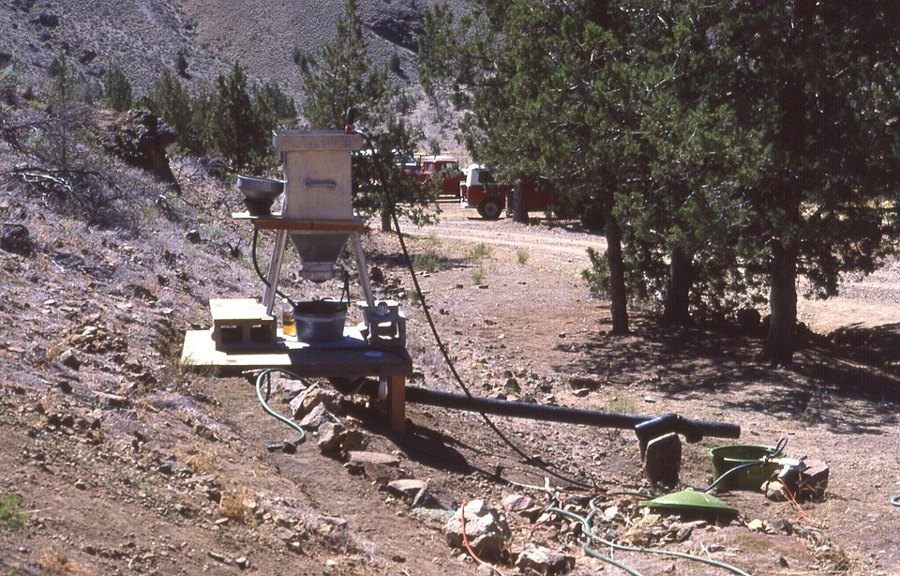
Sieving and sorting separate small remains from sediment, but the recovered assemblage still depends on the procedure. Small fragments are easier to overlook than large recognizable objects. A report must therefore describe how samples were processed before its counts can be compared meaningfully with another excavation. Historic England’s Runnymede sampling report, although concerning a different archaeological context, provides a useful methodological comparison: it describes representative material from individual contexts alongside samples through stratigraphic sequences. The two approaches answer different questions. Context samples compare deposits; a sequence can investigate changes through their formation.
Sources for this section: 2
A small assemblage deserves a modest conclusion
The detailed Coppergate environmental report repeatedly records sample size and the limits of particular identifications. One small insect group is discussed with explicit attention to its limited size. Possible sources include structural wood, firewood, vegetation brought into the building, and habitats nearby. Such alternatives prevent a species list from becoming a literal inventory of the room. An insect found on a floor may have arrived with building material rather than lived there. Absence is even harder to interpret: failure to recover a rare species from a small subsample offers little basis for ruling it out.
Sources for this section: 4
Counts need a denominator
Consider a hypothetical comparison between two Viking-age pits. One yields twenty seeds from a small processed sample, while the other yields thirty from a much larger one. The raw totals cannot establish that the second pit contained more concentrated plant material. Nor does concentration alone establish how often a food was eaten: a single disposal event could dominate the result. The practical lesson from representative sampling is to preserve both the amount examined and the kind of deposit examined. Comparing like with like is more important than presenting a long list of impressive numbers.
Sources for this section: 1, 2
Independent evidence can narrow the alternatives
Coppergate’s biological synthesis brings together different classes of remains rather than asking one taxon to explain every activity. Plants might indicate material brought indoors, insects might suggest the conditions in which it accumulated, and parasite evidence addresses another set of biological processes. Agreement strengthens a particular interpretation, while disagreement may identify mixing or different routes of deposition. The detailed report’s discussion of grassland plants and insects potentially transported with vegetation illustrates why context remains essential. A group of remains can describe transported bedding or fodder rather than a patch of grass growing exactly where it was excavated.
Sources for this section: 3, 4
Report the negative result precisely
A defensible statement says that a specified material was not identified in a stated set of samples using stated methods. It does not silently expand that result into “the inhabitants never used it.” Stronger claims require evidence that the material would probably have survived, been sampled, and been recognized if it had been present at a meaningful frequency. Recording empty or unproductive samples is therefore useful, especially when their selection and processing are documented. These records let later researchers distinguish an investigated absence from an unasked question and avoid repeating uncertainty as if it were established historical behavior.
Sources for this section: 1, 2
The Evidence
The sources below support this article. Interpretations and limits are explained in the text; this is not an exhaustive research review.