
Beliefs & Stories · Deep dive
Dwarfs, Craftsmanship, and the Price of Treasure
In Brief
Dwarf-made objects give gods and heroes extraordinary power, but their makers rarely behave like anonymous suppliers. Poems and sagas connect craftsmanship with bargaining, coercion, family loyalty, and revenge.
On this page
Start with the kind of sourceAlvis knows the words but loses the encounterTreasure begins a chain of obligationsForcing a maker does not guarantee a safe weaponA forge-stone and a proposed identificationFamily affection creates another route to giftsSourcesStart with the kind of source
A dwarf in an Eddic poem, a name in a mythological catalog, and a helper in a late medieval romance do not provide identical kinds of evidence. In the introduction to his 2005 study of medieval dwarfs, Ármann Jakobsson separates these categories. Individual characters who act within a story must be distinguished from general statements about dwarfs and from the long lists of names that survive in mythological writing.
The distinction changes how the evidence can be used. A character's conduct may serve a particular plot, while a catalog preserves vocabulary without supplying that character with a biography. Later romances can develop established motifs or introduce new literary expectations. Combining all three categories into one profile risks giving every medieval dwarf attributes assembled from texts that were never intended to agree. The useful question is consequently specific: what work does this dwarf perform in this narrative? Craftsmanship is a recurring answer, but it is not an explanation of every appearance.
Sources for this section: 1
Alvis knows the words but loses the encounter
Alvíssmál survives in the medieval Codex Regius collection. Its central dwarf, Alvis, approaches Thor seeking a promised bride. Thor disputes the agreement and makes the marriage depend on a display of knowledge. What follows is an extended catalog of names: Alvis explains how different groups describe earth, heaven, the moon, fire, wood, night, and other familiar things. The dwarf possesses an impressive command of language rather than simply a magical tool.
His success at answering does not win the bride. Thor keeps him speaking until daylight arrives, and the final stanza announces that day has caught him. The poem ends at that revelation; its last lines do not narrate a detailed physical transformation. The structure makes knowledge both an accomplishment and a vulnerability. Alvis can supply the requested vocabulary, yet fails to understand the practical danger of the exchange. Thor wins through delay and deception, making the encounter a striking alternative to his more familiar contests of physical force.
Sources for this section: 2

Treasure begins a chain of obligations
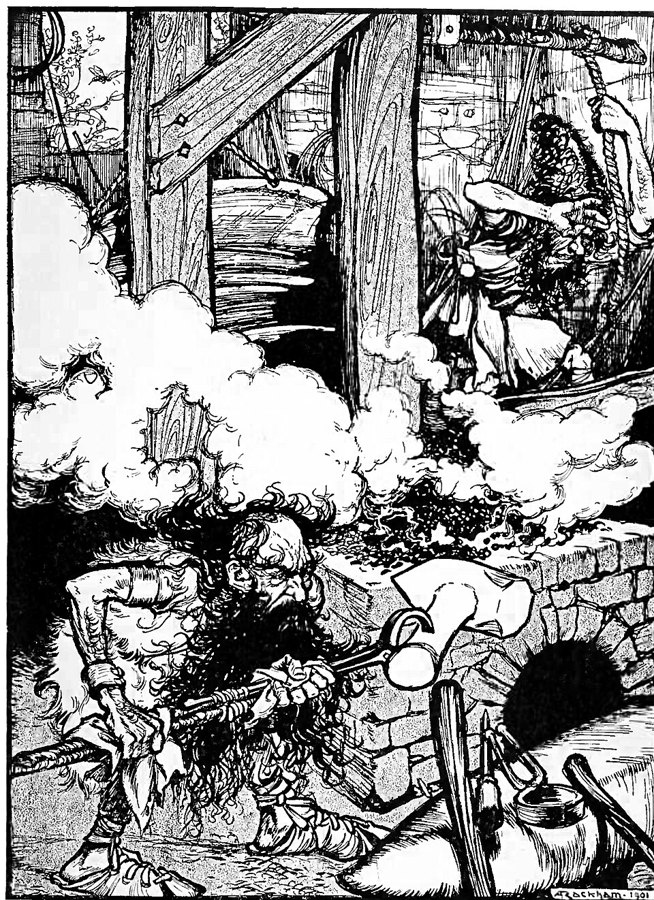
The prose and verse conventionally called Reginsmál connect a dwarf's treasure to the heroic story of Sigurd. In its opening narrative, Loki kills an otter that proves to be a member of Hreidmar's family. The gods must compensate the family by filling and covering the otter skin with gold. Loki obtains the payment by capturing Andvari, a dwarf living in the form of a pike, and forcing him to surrender his wealth.
Andvari attempts to keep one ring, but Loki takes that too. The resulting curse makes the acquisition a future danger rather than an uncomplicated success. When the treasure reaches Hreidmar, a single uncovered whisker requires the last ring to complete the payment. The meticulous fulfillment of one obligation therefore transfers another threat. Subsequent conflict over the wealth leads Fafnir to kill his father. The dwarf's role is small in narrative space but enormous in consequence: the manner in which treasure changes hands shapes the lives of its later possessors.
Sources for this section: 3
Forcing a maker does not guarantee a safe weapon
Ugnius Vizgirda Mikučionis's 2023 study examines how characters obtain dwarf-made objects. One case concerns the sword Tyrving in versions of the Saga of King Heidrek the Wise. Svafrlami encounters the dwarfs Durin and Dvalin and prevents them from entering their stone dwelling. He uses the threat to their lives to demand a magnificent sword with extraordinary cutting power. The object is delivered, but its delivery does not settle the relationship.
Dvalin places destructive conditions on the weapon, including death when it is drawn and doom for its first owner. Mikučionis emphasizes that the curse adheres to the object, allowing its consequences to continue across successive owners. That is a particularly effective device for a story about inherited trouble. The king can compel production without securing the maker's goodwill. Reading the episode through coercion also preserves the dwarfs' agency: their workmanship supplies the desired power, while their response undermines the purchaser's assumption that possession guarantees control.
Sources for this section: 4

A forge-stone and a proposed identification
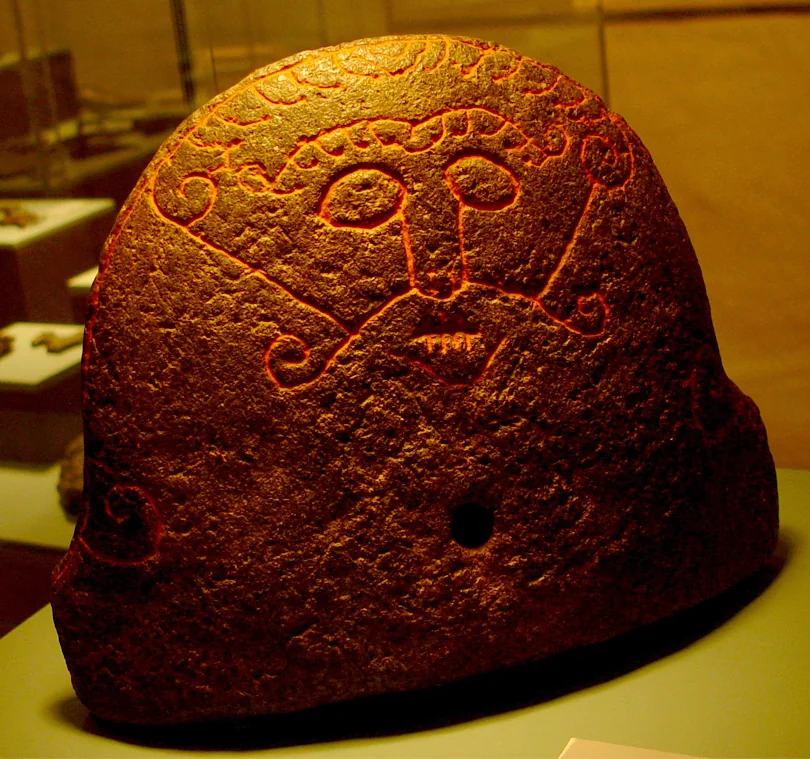
The carved face on the Snaptun forge-stone brings material evidence into the discussion. In a 1961 study, Gisli Gestsson connected marks across the depicted mouth with the story of Loki's sewn lips. The comparison draws on Snorri's account of a competition in which dwarfs make treasures for the gods. Loki loses a wager involving his head but argues that the agreement does not authorize cutting his neck. His mouth is sewn instead.
The identification is persuasive because it links an unusual facial feature with an unusually specific narrative detail, while the object's use at a forge creates an additional connection with craftsmanship. Nevertheless, the image contains no written label naming Loki. The comparison remains an interpretation, and the stone cannot by itself establish every episode or wording in Snorri's later account. Gestsson also brought later folklore about Loki and fire into his explanation. That additional argument should be distinguished from the directly observable object and the medieval literary parallel.
Sources for this section: 5
Family affection creates another route to gifts
Dwarfs in later saga literature can also be parents and foster-parents. Mikučionis's 2014 study of dwarf family life examines how these relationships affect encounters with human heroes in three sagas. A human may assist or give something to a dwarf's child, creating a relationship that the adult acknowledges through repayment. The article argues that affection and expectations of reciprocity help explain exchanges that otherwise look like automatic rewards from supernatural helpers.
This approach makes the family connection central rather than incidental. Offering help to a child can avoid the risk that an adult dwarf would refuse a direct gift, while still placing the household under an obligation. Generosity and calculated manipulation can therefore coexist in one act. These late medieval literary scenes should not be turned directly into descriptions of Viking Age ritual. They reveal how storytellers used dwarfs to explore the social costs of obtaining exceptional help. Across these narratives, access to treasure depends on relationships whose consequences outlast the moment of acquisition.
Sources for this section: 6
The Evidence
The sources below support this article. Interpretations and limits are explained in the text; this is not an exhaustive research review.
- Ármann Jakobsson, The Hole: Problems in Medieval Dwarfology (2005), reproduced introduction ↗
- Alvíssmál, Henry Adams Bellows translation (1923) ↗
- Reginsmál, Henry Adams Bellows translation (1923) ↗
- Ugnius Vizgirda Mikučionis, They Were Such Skilled Craftsmen: How to Manipulate a Dwarf (2023) ↗
- Gisli Gestsson, Billedstenen fra Snaptun (1961) ↗
- Ugnius Mikučionis, The Family Life of the Dwarfs (2014) ↗