
Life & Society · Deep dive
Sheep, Fleece, and the Choices Behind Wool Cloth
In Brief
A fleece was not a uniform raw material, and a flock was not necessarily managed for wool alone. Several kinds of research connect animals with finished textiles.
On this page
Start with a multipurpose animalOne fleece, different fibersModern breeds are comparisons, not time machinesHedeby textiles and a controlled reconstructionLöddeköpinge connects animals with a marketplaceDifferent datasets can support different emphasesFollowing a textile back toward the flockSourcesStart with a multipurpose animal
Sheep supplied more than one product. A research synthesis in Textiles of the Viking North Atlantic places wool alongside milk, meat, and hides and follows the animal as a living resource within Scandinavian settlement. This matters because the importance of cloth does not automatically establish a specialized wool farm. Keeping an animal for repeated fleece harvests, selecting replacements, and obtaining food from the flock were potentially overlapping concerns. An archaeological account must therefore distinguish the usefulness of wool from evidence that wool alone governed decisions. It must also separate Viking Age arrangements from later medieval systems in which cloth could serve as a payment for rents or other obligations. Economic importance did not require one unchanging institutional form.
Sources for this section: 1
One fleece, different fibers
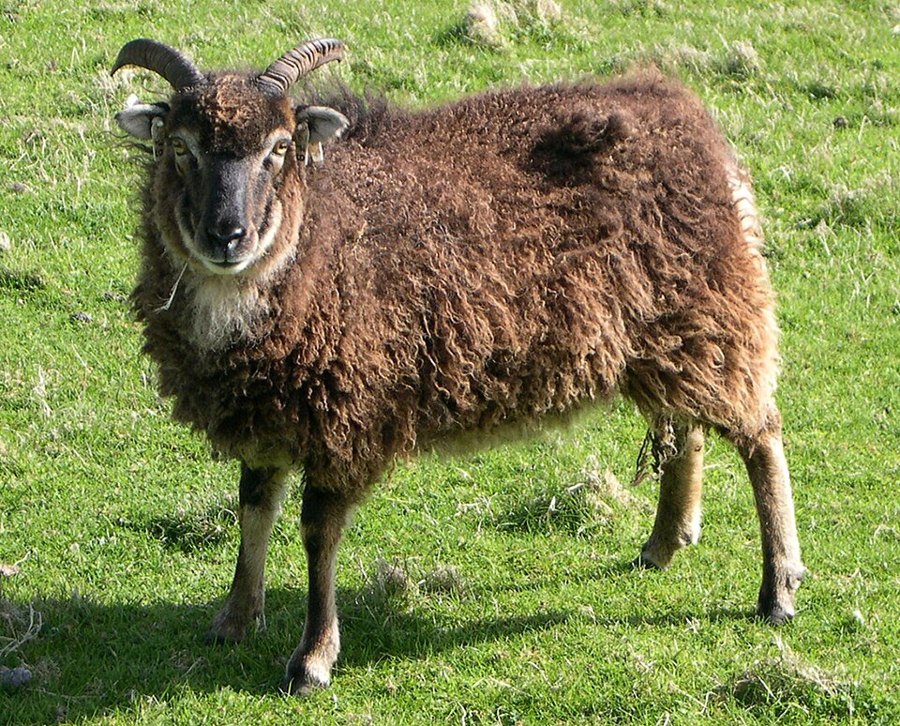
The National Museum of Denmark’s Viking Age Wool Fibres study compares archaeological material with modern sheep wool. Its discussion of primitive sheep distinguishes a fine undercoat from coarser outer fibers. These components can be separated or combined for different purposes. Consequently, naming the animal does not fully describe the textile material. A worker’s selection within a fleece may be as important as the fleece’s overall character. Washing, sorting, and combing transform what is available for spinning. This is an active stage of manufacture, not simply cleaning dirt from an otherwise ready-made thread. A cloth’s texture can therefore reflect husbandry, the part of the fleece selected, and subsequent preparation, all operating together.
Sources for this section: 1, 2

Modern breeds are comparisons, not time machines
The same fiber study examined wool from a range of modern breeds, including Spelsau and several Swedish sheep populations. Their usefulness lies in measurable properties that can be compared with surviving archaeological yarns. A close match does not demonstrate that a modern named breed existed unchanged in the Viking Age. Modern samples also have their own collection histories: the study notes limitations about where some samples came from within the fleece and how they had been treated. This turns breed comparison into a testable material question. It avoids the circular argument that a sheep looks ancient, therefore all cloth made from its wool must reproduce an ancient textile accurately.
Sources for this section: 2
Hedeby textiles and a controlled reconstruction
The Fashioning the Viking Age project selected three Hedeby textiles representing different structures: tabby, a two-over-two twill, and patterned twill. Fiber analysis informed the choice of wool, while replica tools reproduced archaeological examples. The researchers made small cloth samples through controlled sorting, spinning, and weaving. They concluded that the textiles could have been produced using tools known from Hedeby. That is a finding about technical possibility, not proof that every surviving fragment was manufactured there. The exercise also showed that using related techniques did not remove the need for different solutions for different fabrics. The preparation of wool belongs to those choices rather than being a single universal preliminary step.
Sources for this section: 3
Löddeköpinge connects animals with a marketplace
A 2024 study investigated sheep from Viking Age Löddeköpinge in Scania using eighteen mandibles, age assessment, and several isotope systems. The authors interpreted the remains as a mixed assemblage drawn from different living flocks. Some likely origins lay north and east of the settlement. Their results support the movement of animals into a place associated with exchange and textile work. The researchers discuss possible connections with a growing demand for suitable wool, including sailcloth, but treat specialized management as an interpretation rather than a direct observation. The study is especially useful because it links animals to distribution without assuming that every sheep consumed at a textile-producing settlement was raised immediately beside its looms.
Sources for this section: 4
Different datasets can support different emphases
The University of Copenhagen’s public description of Jonas Holm Jæger’s research on Late Iron Age and Viking Age Denmark emphasizes flexible, multipurpose sheep management rather than a straightforward specialized wool economy. This does not automatically overturn the Löddeköpinge interpretation. The datasets, regions, and questions differ, and the marketplace study itself discusses specialization conditionally. Together they argue against turning rising textile demand into a single explanation for all flocks. Some communities could meet demand through exchange, others through adjustments within existing husbandry. The published thesis description is a summary, not a substitute for examining the complete underlying analyses, so its conclusion should be reported at that level of precision.
Sources for this section: 4, 5
Following a textile back toward the flock
The productive comparison runs in both directions. A yarn can reveal selected fibers; animal remains can reveal age profiles, feeding environments, and movement. Neither provides the entire missing sequence. To connect them, researchers need a dated context and an account of the choices between fleece and cloth. An abundance of sheep bones does not directly measure wool output, while a fine textile does not identify the farm that supplied it. The case studies nevertheless establish that quality was constructed through several decisions. It began with living animals and available fleece, continued through selection and preparation, and depended on matching material to the intended fabric. Viking textile skill therefore rested partly in recognizing differences within wool, not merely in possessing large quantities of it.
Sources for this section: 1, 2, 3, 4, 5
The Evidence
The sources below support this article. Interpretations and limits are explained in the text; this is not an exhaustive research review.