
Archaeology · Women · Viking Age
Kata of Varnhem
A name carved in stone. An exceptional grave. A great estate in a changing world. Meet the woman remembered at Varnhem.
Evidence, interpretation and open questions
A name preserved in stone
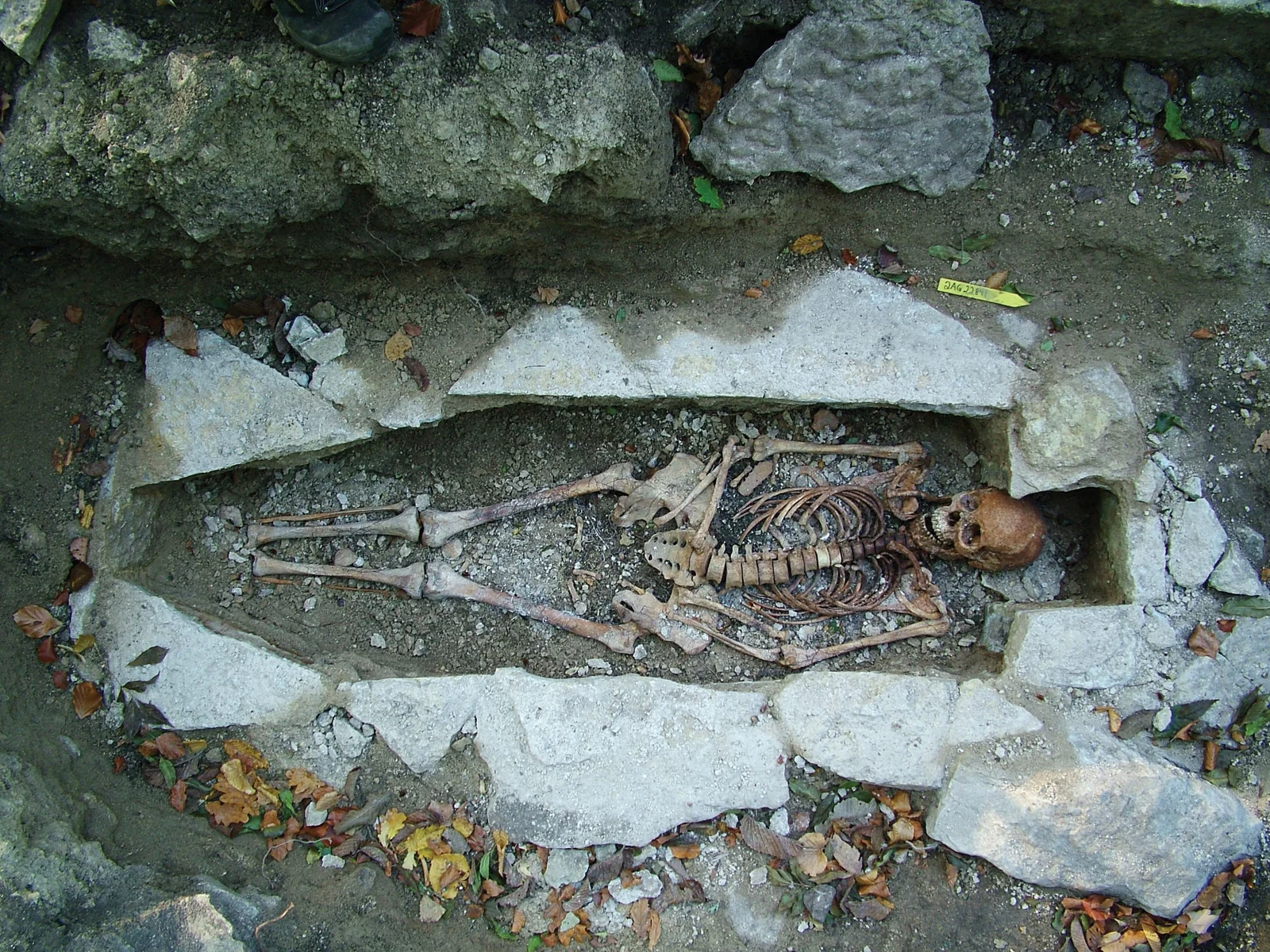
Archaeologists found Kata's grave in 2006. Its runic memorial records that Kättil commissioned the stone for his wife Kata, identifying her also as Torgils's sister. Those few words preserve a small family network across a thousand years. They give the burial a personal connection that an anonymous skeleton cannot offer, while leaving most of her biography unknown. The excavators named the visitor site Kata Gård after her. [3]
What her grave tells us
Kata was buried in a carefully built limestone coffin beside the church's northern side, around the middle of the eleventh century. The grave's position, construction and memorial indicate elite status. Västergötlands museum considers her the probable owner of the Varnhem estate during the first half of that century. [1]
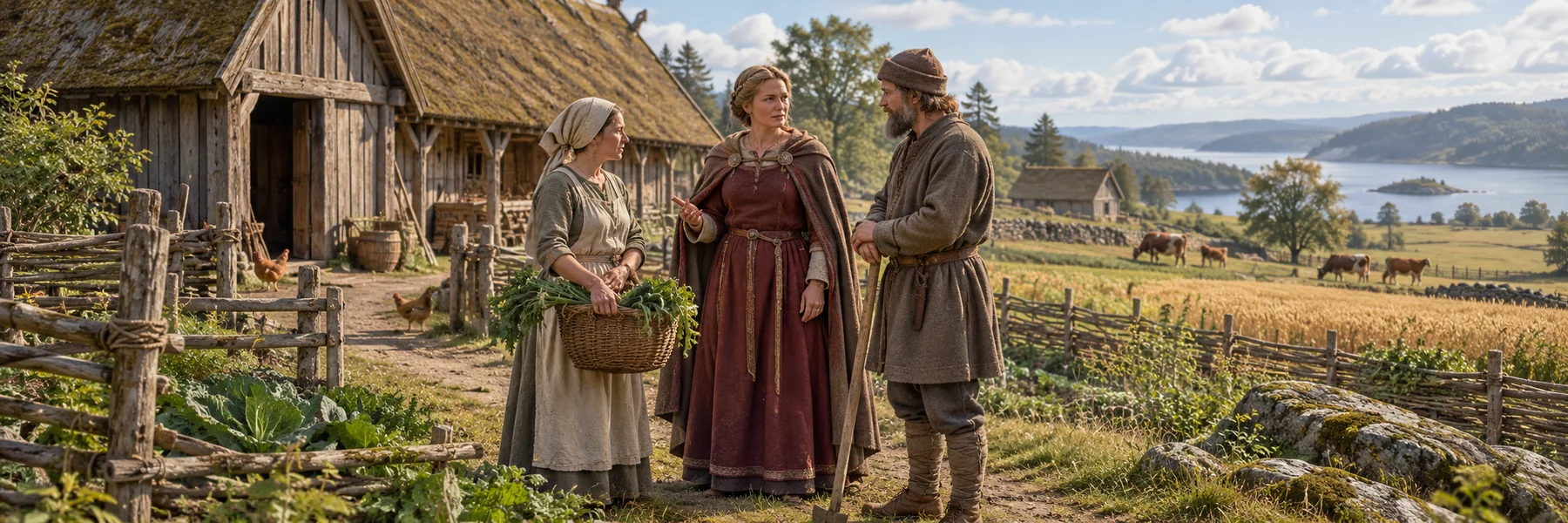
Analysis suggests that she died at about 30–35 years old. Her teeth and skeleton showed little wear, consistent with a privileged life. A modern reconstruction by Oscar Nilsson draws on skeletal and DNA analyses; Mari Wickerts reconstructed her clothing using textile fragments and dress details found at Varnhem. It is an informed interpretation of her appearance. [1]

A Christian community before the monastery
The cemetery reaches further back than Kata's lifetime. The museum dates its earliest Christian burials to the first half of the tenth century. A wooden estate church followed towards that century's end and was subsequently replaced in stone, with a crypt. These remains place a Christian community here generations before the monastery was established. [2]
The estate was given to monks in the middle of the twelfth century. Their new monastery did not immediately erase the older church: archaeological evidence indicates that parts of it were reused for other activities. Remembering this sequence helps separate Kata's world from the later buildings that dominate Varnhem today. [2]
An estate full of lives
Research at Varnhem also follows everyday life. Excavators have investigated building traces and finds such as pottery, food remains and antler. In a University of Gothenburg account, archaeologist Maria Vretemark explains that agriculture sustained this community. [3]
Kata's probable ownership invites wider questions about women's authority: how did land, kinship and households shape influence? Her grave makes those questions tangible. It does not reveal every decision she made or stand for every woman's experience. [1]
Explore Kata Gård
The visitor building brings the ancient church remains into view, with information about Christian Vikings at Varnhem. Older Iron Age burial mounds nearby add another layer to the landscape. Start with the museum's official Kata Gård guide for current visiting information, directions and accessibility details. [4]
At the site, try following the evidence in order: landscape, church, grave, inscription. Each reveals something different about the community and the woman remembered here.
Frequently asked questions
How do we know Kata's name?
The runic memorial names Kata, her husband Kättil and her brother Torgils. It preserves family relationships, rather than a complete life story. [3]
Was she certainly the estate owner?
The museum describes ownership as probable. Her elite status is supported by the burial, but ownership remains an archaeological interpretation. [1]
Did Kata found Varnhem Abbey?
No. The monastery followed in the twelfth century, well after her lifetime. The earlier estate church should not be confused with the later abbey. [2]
Sources and further reading
Sources checked 20 October 2026.
- Västergötlands museum. Kata – rekonstruktion av en vikingatida kvinna.
- Västergötlands museum. Innan munkarna kom.
- University of Gothenburg (2017; updated 2020). På jakt efter vikingatidens vardag.
- Västergötlands museum. Kata Gård – Varnhem: official visitor information.