
Life & Society · Introduction
Music and Instruments: Recovering a Lost Soundscape
In Brief
Surviving instruments reveal possible sounds, but they do not preserve a Viking playlist.
On this page
A small surviving orchestraThe Coppergate panpipeA listener’s judgmentWhat a reconstruction can recoverSourcesA small surviving orchestra
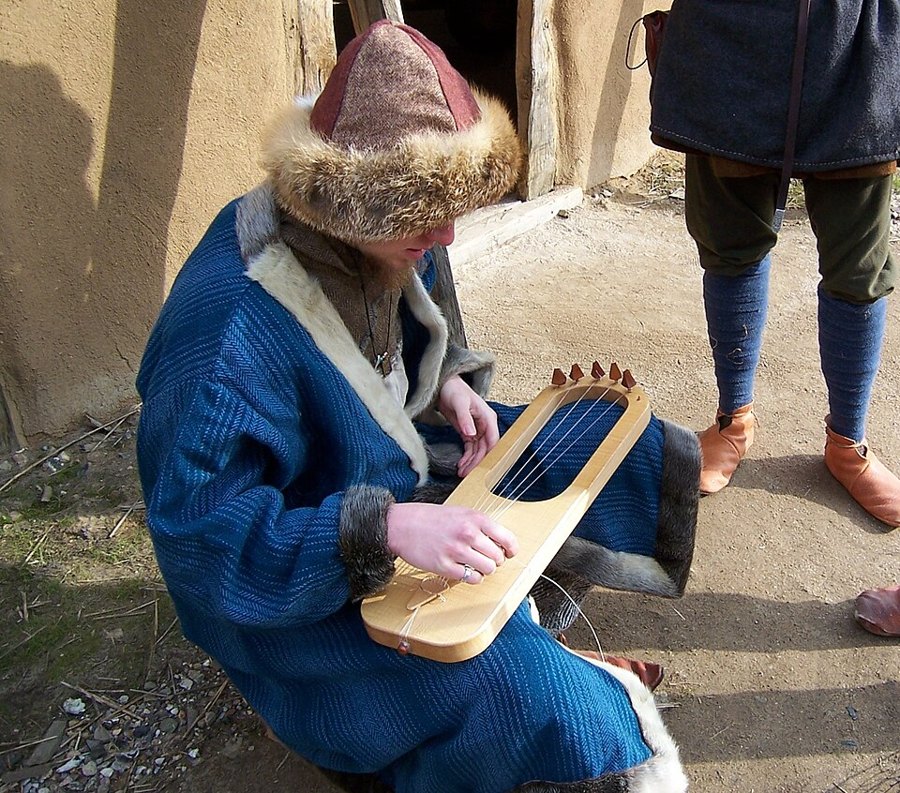
The National Museum of Denmark describes bone and wooden flutes and fragments associated with lyres. These are different ways to make sound: air set vibrating in a pipe and strings resonating on a frame. The fragmentary survival of an instrument can still establish parts of its construction, even when its full body is lost. Reconstructing the object begins with those physical constraints. Questions about who played it and what listeners expected require other evidence.
The Coppergate panpipe
An exceptional find from York is a tenth-century boxwood syrinx, or panpipe. JORVIK Viking Centre reports that its surviving holes can produce a five-note range, described using modern note names from high A to E. The instrument may originally have included more holes. This gives an unusually direct connection to playable sound, but its damaged state matters. The surviving range is not necessarily the complete original range, and it cannot identify the tunes a performer chose.

A listener’s judgment
The traveler al-Tartushi supplied a sharply negative description of singing in a Baltic town generally identified as Hedeby. The Danish museum uses the account as evidence that singing formed part of the soundscape. His dislike tells us something about the observer as well as the performance. It is not musical notation and cannot settle its melody, rhythm, or quality for modern listeners. An unfamiliar sound can be memorable precisely because a visitor lacks the local expectations that make it meaningful.
What a reconstruction can recover
A replica instrument can test which sounds a proposed construction permits. A modern performance adds choices about breath, rhythm, tuning, and accompaniment. Those choices should be stated rather than hidden behind a claim to reproduce an unchanged ancient song. The combination of objects and accounts nevertheless offers a substantial picture: people made specialized instruments, used their voices, and encountered performances that drew reactions from outsiders. The missing melodies invite investigation, while the surviving materials set useful limits on imagination.
The Evidence
The sources below support this article. Interpretations and limits are explained in the text; this is not an exhaustive research review.