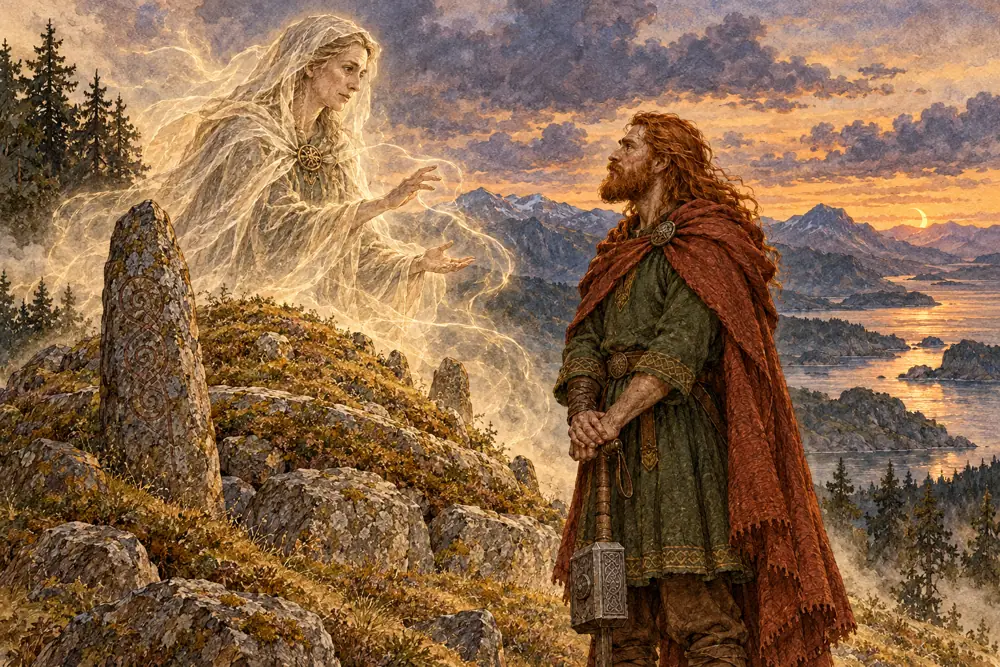
Gods & companions
Eir
A healer known through a very small surviving trace
Eir is named among the goddesses and praised as an outstanding healer. That concise statement is the firm starting point; a detailed cycle of her medical adventures has not survived here.
Explore the stories ↓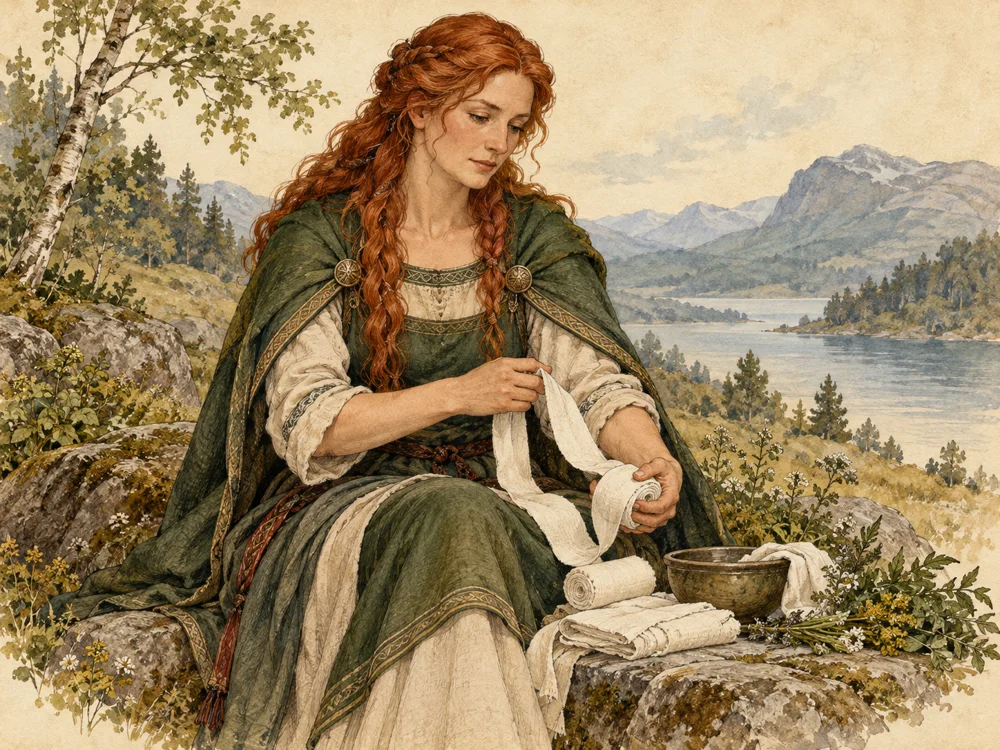
What the source actually says
In Gylfaginning’s list of goddesses, Eir receives an exceptionally brief description: her distinction is healing. There is no accompanying story explaining how she learned the art, what tools she used, or which particular plants she prescribed. Some online copies of the older English translation misread her name as “Fir”; that is a transcription problem, not a separate goddess.
A name in another setting
An Eir is also named among the women around Menglod in Fjölsvinnsmál. The shared name invites comparison with the healer in Snorri’s list, but the poem does not explicitly explain that they are the same figure. The related Groa and Svipdag story keeps that uncertainty visible.
How to read a fragment
A short notice can preserve an important association without preserving a biography. It is reasonable to introduce Eir as a divine healer. It is not reasonable to turn that sentence into an ancient medical handbook or to attribute modern herbal recipes to her without further evidence. The lack of a long story also means that most richly detailed modern portraits are imaginative interpretations.
Why this page is shorter
A useful mythology collection should include figures who are only briefly named, while allowing their pages to remain brief. Eir’s presence reminds us that the surviving texts are selective. They preserve some themes at length and others in a few words. Completeness of coverage does not require pretending that completeness of evidence exists.
Eir among the women on the healing hill
In Fjölsvinnsmál, Svipdag questions a watchman about the marvelous place where Menglod waits. He asks the name of the hill and learns of Lyfjaberg, associated with relief for the sick. He then asks about the women sitting around Menglod, and Eir appears among their names. The scene places a figure called Eir in a healing setting, making the comparison with Snorri’s healer understandable. Nevertheless, Eir does not step forward to speak or perform a named cure. She is one member of the company revealed through Svipdag’s questions.
Help promised to those in danger
The next exchange asks whether these women aid people who make offerings. The reply presents them as helpers who protect people when danger threatens. That is more substantial than a bare list of names, but it concerns the group rather than a separate adventure of Eir. It also belongs to a literary dialogue preserved in late manuscripts. The passage can illuminate an imagined relationship between need, offerings and supernatural help without supplying a historically verified medical ritual or identifying particular herbs.
Read behind the retelling
Sources & limits
The Eddic notice is extremely short. Specific healing rituals, herb lists and personal adventures attributed to Eir need separate evidence.
- Gylfaginning, chapter 35, list of goddesses
- Svipdagsmál / Fjölsvinnsmál, stanza 54 in Bellows’s combined numbering: women surrounding Menglod
Retold in contemporary English. Dialogue is summarized, not presented as a translation. How to read our sources and versions.
Follow the thread