Gods & companions
Var
The witness to promises and agreements
Var is linked with promises and agreements, especially those made between women and men.
Explore the stories ↓
Promises are heard
Gylfaginning says Var listens to oaths and agreements and acts against those who break them. Her brief description places social commitments within the sphere of divine attention. It does not preserve an independent courtroom scene or a long list of punishments.
A name in the wedding poem
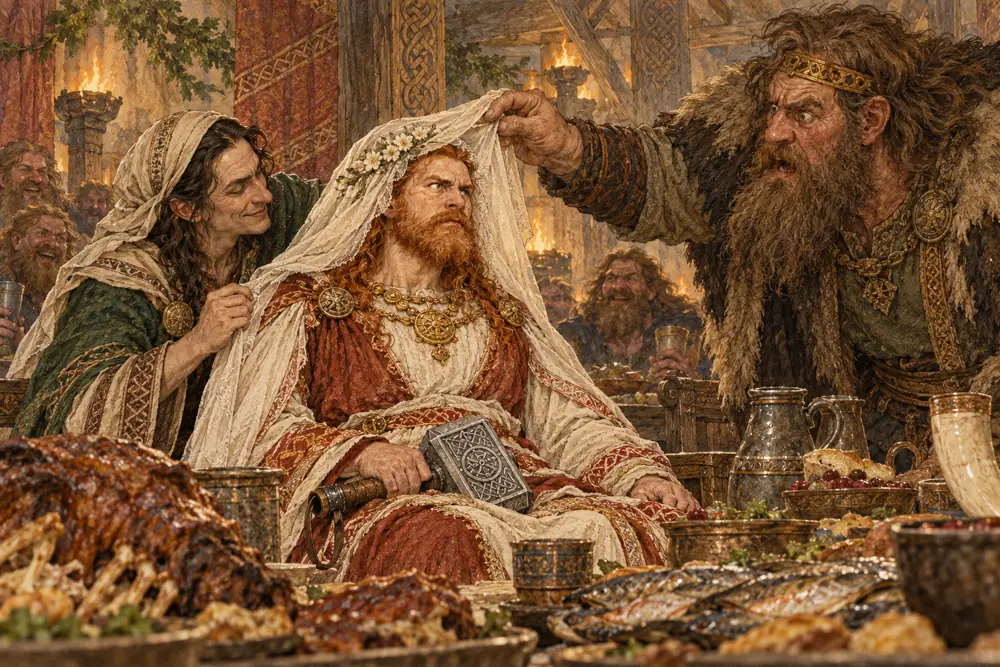
In Þrymskviða, Var is invoked during the supposed marriage ceremony for the disguised Thor. This places her in an actual narrative setting as well as a list of goddesses. The comic deception surrounding the ceremony does not make the reference meaningless, but neither does one poem supply a complete reconstruction of every historical Norse wedding.
The hammer arrives at the wrong wedding
In Þrymskviða, Thrym believes that the veiled visitor is Freyja, the bride he demanded in exchange for Thor’s stolen hammer. He orders the hammer brought in to consecrate the supposed bride and invokes Var’s involvement in the marriage. The ceremony instead returns Mjöllnir to its owner. Thor recognises the weapon, grasps it and kills Thrym and the assembled giants. Var is named at the turning point, but the poem does not have her appear bodily or speak.
A witness invoked inside a deception
The reference is more specific than the general description of Var as attending to agreements: it places her name within a marriage formula. Yet the entire scene depends on mistaken identity and concealed intentions. The poem’s use of ritual language does not establish that Var approves the deception, causes Thor’s victory or enforces a valid marriage. It shows how an audience could recognise a divine name in a ceremonial setting while the plot overturns the ceremony’s intended result.
Read behind the retelling
Sources & limits
The wedding reference is literary evidence, not a complete universal Viking wedding ritual.
Retold in contemporary English. Dialogue is summarized, not presented as a translation. How to read our sources and versions.
Follow the thread