
Late 10th–early 11th century
Erik the Red
Leader associated with Norse settlement in Greenland
The person and the story
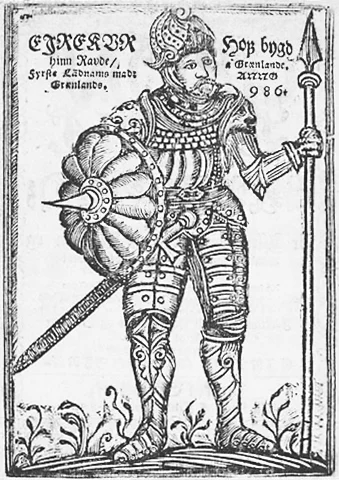

Erik the Red is remembered as the founder of the Norse settlements in Greenland. The Icelandic saga tradition places his life within a westward movement linking Norway, Iceland and Greenland. His story combines migration, conflict and the search for land, rather than the straightforward adventures of a solitary explorer.
Later accounts connect Erik’s departure from Iceland with outlawry following killings. They describe exploration of Greenland and a subsequent effort to recruit settlers. Those dramatic personal episodes come from narrative sources written later; archaeological evidence for Norse farms supports the settlement history without independently confirming each detail of Erik’s biography.
His significance also lies in what came next: Greenland became the starting point for voyages farther west, associated with his son Leif and other travellers. Reading Erik alongside the farm remains shifts attention from a celebrated name to the households, livestock, ships and continuing labour needed to establish an Atlantic community.
Erik den röde: exile as a beginning
In saga tradition, violence and outlawry push Erik away from Iceland. The narrative turns exclusion into an opening for exploration and settlement. It is a powerful reversal: a man who loses his place seeks to establish a new one. We can retell that story while identifying its source. The archaeological existence of Greenland’s Norse community does not separately prove the conversations and motives assigned to Erik.
Settlement required more than a famous leader
A colony needed more than a ship reaching land. Households had to establish shelter, maintain livestock and sustain work through successive seasons. Thinking about those requirements changes the scale of Erik’s story: his reputation rests within a collective history of settlement. The surviving farm landscape provides a different kind of evidence from an account of a leader’s quarrels. Each answers questions the other leaves open.
A Greenland generation and a Vinland generation
Erik is associated with establishing the Greenland community; Leif is associated with journeys farther west. Keeping those roles separate avoids turning father and son into interchangeable explorers. Greenland was a starting point for the Vinland narratives, not another name for Vinland. Following both biographies alongside Gudrid’s also restores family movement and settlement ambitions to a subject often reduced to a single heroic landing.
Follow the connected lives
Follow the evidence
Source check: October 17, 2026. The links below explain the evidence and interpretations behind this introductory profile.