
Active around 1000
Leif Eriksson
Atlantic explorer remembered in the Vinland sagas
The person and the story
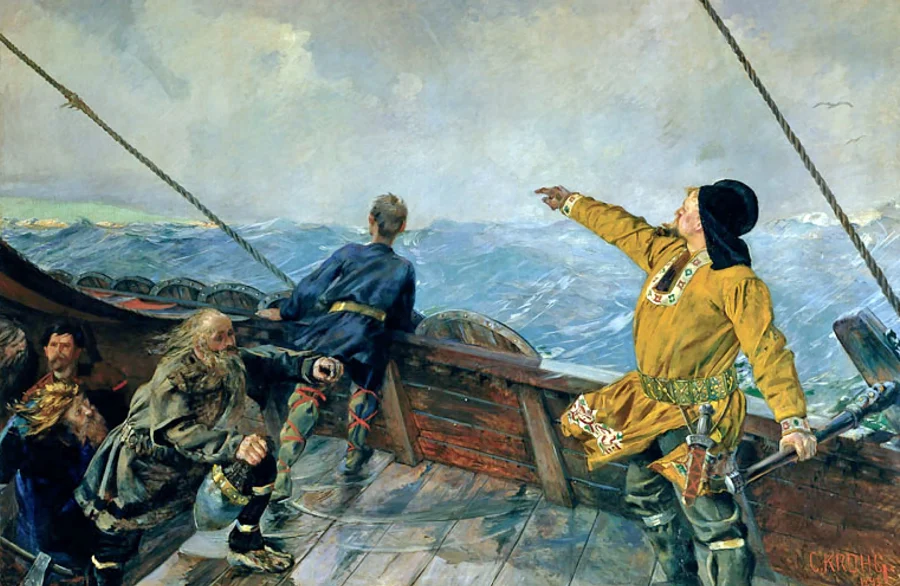

Leif Eriksson was a son of Erik the Red and belonged to the Norse community in Greenland. Medieval Icelandic narratives associate him with voyages to lands west of Greenland around the year 1000. His reputation as an explorer rests principally on the Vinland sagas, which preserve different accounts of how he reached those shores.
The Saga of the Greenlanders describes a deliberate voyage following information brought back by Bjarni Herjolfsson. The Saga of Erik the Red instead makes an unplanned landfall part of Leif’s return journey from Norway. These differences matter: the stories cannot simply be combined into one fully documented itinerary.
Archaeology at L’Anse aux Meadows confirms that Norse people reached North America. It does not identify Leif personally or establish every saga episode. The Americas already had Indigenous inhabitants and long histories; calling his voyage a discovery without that context hides the people whose homelands the newcomers entered.
Two stories of reaching the western lands
In the Greenlanders’ narrative, Bjarni’s report creates an opportunity: Leif follows information about land already sighted by another traveler. In Erik’s saga, a voyage associated with Norway and his return to Greenland produces a different sequence. Rather than choosing whichever detail makes the liveliest adventure, read the accounts side by side. They reveal different ways of allocating credit and organizing family memory.
What a camp can—and cannot—tell us
The remains at L’Anse aux Meadows include buildings and evidence of ironworking and boat repair. These material traces support a Norse presence and practical activities ashore. They are not a signature left by Leif. Identifying the site with a named saga camp remains an interpretation. A reconstruction can help a visitor imagine the labor involved while still leaving the identity of a particular occupant unresolved.
Explorer, not the first human in America
Leif’s importance is his place in the remembered Norse Atlantic voyages. It does not require an empty continent awaiting arrival. Indigenous histories belong at the center of the geographical context. A responsible account distinguishes the Norse arrival, the later saga record and the much later celebration of Leif as a national or cultural symbol. Those are related histories, but they happened at different times.
Follow the connected lives
Follow the evidence
Source check: October 17, 2026. The links below explain the evidence and interpretations behind this introductory profile.
Test the evidence
How well do you know Leif Eriksson?
Ten questions on the Vinland sagas, the voyages and the archaeology. Follow the explanations, use a hint and try again.
Take the Leif Eriksson quiz →