
Associated with the later 9th century
Ivar the Boneless
Army leader whose identity and later legend are debated
The person and the story
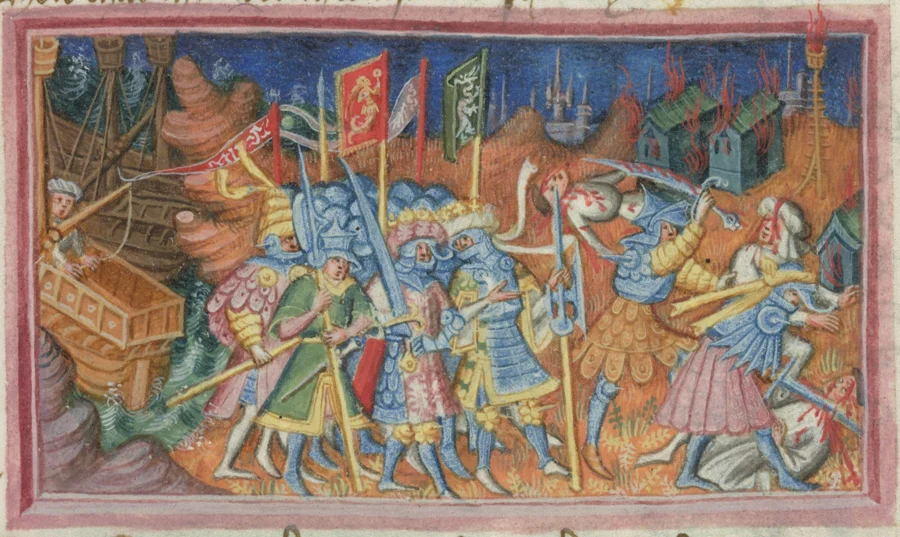

Ivar is associated with the Scandinavian army that transformed the political map of England in the later ninth century. The historical setting is real, but the familiar biography combines different kinds of evidence. Later traditions identify him as a son of Ragnar Lothbrok and give the campaigns a powerful story of family revenge.
An important difficulty is whether the Ivar of English and Scandinavian traditions should be identified with Ímar, the ruler known from Irish annals. The identification is influential, but it should be presented as an interpretation rather than used to combine every recorded event into an unquestionable personal itinerary.
The nickname Boneless is another uncertainty. Proposed explanations include physical conditions and figurative meanings, but a retrospective medical diagnosis cannot be established from the name. A careful account can explain his association with conquest and dynastic power while leaving his body, parentage and the boundaries of his biography unresolved.
Ivar Benlös: a nickname is not a diagnosis
The saga depicts Ivar as unable to walk and carried by others, while giving him exceptional intelligence and authority. That is evidence for the literary character. It cannot establish a modern medical diagnosis for the historical commander. A depiction in television, or an explanation involving a particular bone disorder, must not be presented as a clinical finding.
The commander and the army
The Great Army was a changing force that negotiated, overwintered, fought and established control. The Chronicle’s Northumbrian account concerns divided kingship and a disastrous attempt to recover York. This political setting is more secure than the claim that every participant had joined to avenge Ragnar. A famous commander’s biography should not replace the broader history of the people who supplied and suffered from the army.
Was Ivar the same man as Ímar of Dublin?
Irish annals record the death of Ímar in 873 and describe a ruler associated with Northmen in Ireland and Britain. Identifying him with Ivar is an important historical argument, not an equation supplied by a contemporary identity document. A careful timeline therefore labels 873 as Ímar’s recorded death rather than giving it unconditionally as the death of the saga’s Ivar. The question changes how we connect the Irish Sea and English campaigns.
Follow the connected lives
Follow the evidence
Source check: October 17, 2026. The links below explain the evidence and interpretations behind this introductory profile.