
Journeys & Encounters · Place profile
Hagia Sophia: Northern Names on Byzantine Marble
In Brief
Hagia Sophia offers unusually personal evidence for northern visitors to Constantinople: runes scratched into marble. These small inscriptions belong beside the grander history of emperors and Varangian service. They reveal people using a northern writing tradition inside a major Byzantine religious building, without giving us complete biographies.
On this page
What can actually be read?Were the writers imperial guards?Read the building in layersSourcesPresent-day location: Turkey · Byzantium and the Mediterranean
Names and search variants: Hagia Sophia · Hagia Sofia · Ayasofya · Halfdan · Halvdan · Istanbul runes
Browse places by country →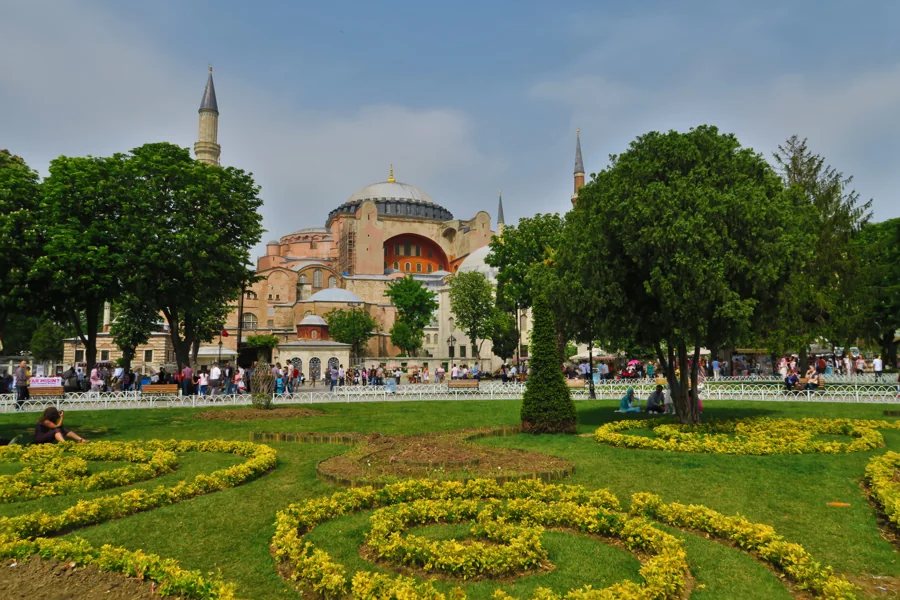

What can actually be read?
The Swedish National Heritage Board's educational account identifies northern names including Halfdan and Are. Its inscription record for the well-known Halfdan text preserves a fragmentary reading rather than a fully certain sentence. The familiar claim that it simply says 'Halfdan was here' is a convenient explanation, not a literal complete translation of clearly preserved words.
Were the writers imperial guards?
Varangian service provides a plausible context for northern people in Constantinople, but the inscriptions themselves do not establish every writer's occupation. A name scratched on a railing is not a service record. Merchant, traveler and soldier are possibilities to assess against wider evidence, not interchangeable labels automatically proved by runes.
Read the building in layers
Modern exterior photographs include later architectural additions. The existing site photograph therefore identifies Hagia Sophia while distinguishing Byzantine fabric from Ottoman minarets. This is the same discipline required for its inscriptions: show what survives, specify which historical phase is relevant, and avoid reconstructing a complete episode from a very small fragment.
Explore more Viking-Age places →
The Evidence
The sources below support this article. Interpretations and limits are explained in the text; this is not an exhaustive research review.