
Journeys & Encounters · Place profile
Hvalsey / Qaqortukulooq: An impressive but later church
In Brief
Hvalsey is one of Greenland’s most recognisable Norse ruins, but its standing church is not a building erected by the first Viking-Age settlers. It belongs to the later history of a community established centuries earlier across the North Atlantic.
On this page
An impressive but later churchA famous written eventWhat a ruin can and cannot saySourcesPresent-day location: Greenland · North Atlantic
Names and search variants: Hvalsey / Qaqortukulooq · Qaqortukulooq · Hvalsey church
Browse places by country →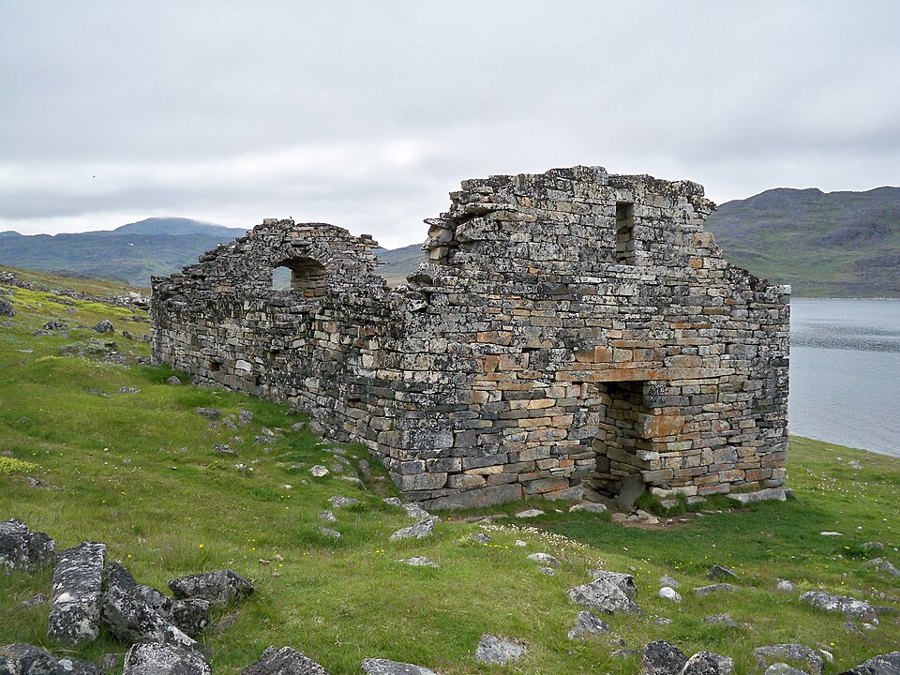

An impressive but later church
Visit Greenland dates the surviving stone church broadly around 1300. Its walls demonstrate medieval Norse construction in Greenland, not an unchanged tenth-century religious landscape. The distinction matters because photographs of Hvalsey are frequently used to illustrate the entire settlement period, compressing several hundred years into a single image.
A famous written event
A wedding held here in 1408 supplies one of the best-known written references to Greenland’s Norse inhabitants. It is a dated event, not a record that every settlement vanished immediately afterwards. Archaeological evidence and radiocarbon dating indicate a longer and more complex final history. A last surviving document is a limit of documentation rather than a universally applicable date of disappearance.
What a ruin can and cannot say
The roofless building allows close attention to wall construction, openings and its relationship with surrounding farm remains. It does not reveal by itself how many people attended a service or why the wider community eventually ended. Read the site alongside evidence for farming, hunting, trade and changing environmental conditions. Hvalsey is compelling precisely because a durable building survives while many details of the people’s final generations remain unresolved.
Explore more Viking-Age places →
The Evidence
The sources below support this article. Interpretations and limits are explained in the text; this is not an exhaustive research review.