
Journeys & Encounters · Place profile
Käräjämäki: A burial place before a court story
In Brief
Käräjämäki in Eura demonstrates why a picturesque name or stone circle should not be accepted as a complete historical explanation. Although its name and tradition suggest legal assemblies, the archaeological landscape is fundamentally a cemetery with a long late Iron Age sequence.
On this page
A burial place before a court storyAn earlier warrior graveCompare methods of remembranceSourcesPresent-day location: Finland · Satakunta
Names and search variants: Käräjämäki · Karajamaki · Käräjämäki Osmanmäki · Eura Käräjämäki
Browse places by country →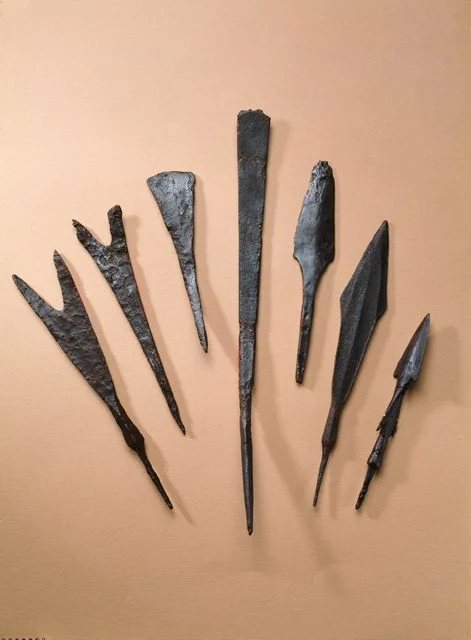

A burial place before a court story
Eura municipality explains that the supposed court circle originated as a prehistoric burial feature and describes late Iron Age graves dated approximately AD 600–1200. The Finnish Heritage Agency also records earlier Iron Age phases alongside Viking-Age evidence. The traditional judicial interpretation should not replace the documented burial context.
An earlier warrior grave
A particularly well-furnished grave displayed through reconstruction belongs to the beginning of the Merovingian period, before the conventional Viking Age. Its weapons are important but must be dated correctly. Their presence at a cemetery used later does not make them Viking-Age equipment.
Compare methods of remembrance
Käräjämäki allows several kinds of memory to be compared: prehistoric burial, later stories about judgment, and modern heritage presentation. Each is historically interesting, but they answer different questions. Look for which conclusions depend on excavated objects and which depend on names or oral tradition. The distinction is especially useful when visiting other northern stone circles often popularly called courts. That distinction makes the site especially instructive for readers comparing archaeological findings with traditional place-names.
Explore more Viking-Age places →
Explore this record and its sources in the map collection →
This entry is searchable by place and country. No verified burial-site coordinate is supplied, so it has no map marker or directions.
The Evidence
The sources below support this article. Interpretations and limits are explained in the text; this is not an exhaustive research review.