
Journeys & Encounters · Place profile

Old Scatness: A Place in the Viking World

In Brief

Old Scatness in southern Shetland is not a Viking-built broch. It is a much older settlement whose later Pictish and Norse phases show how Scandinavian arrival fitted into an already inhabited and worked island landscape.

On this page

The Viking-Age connectionReading the evidenceUnderstanding the placeSources

Present-day location: Scotland · Britain and Ireland

Browse places by country →
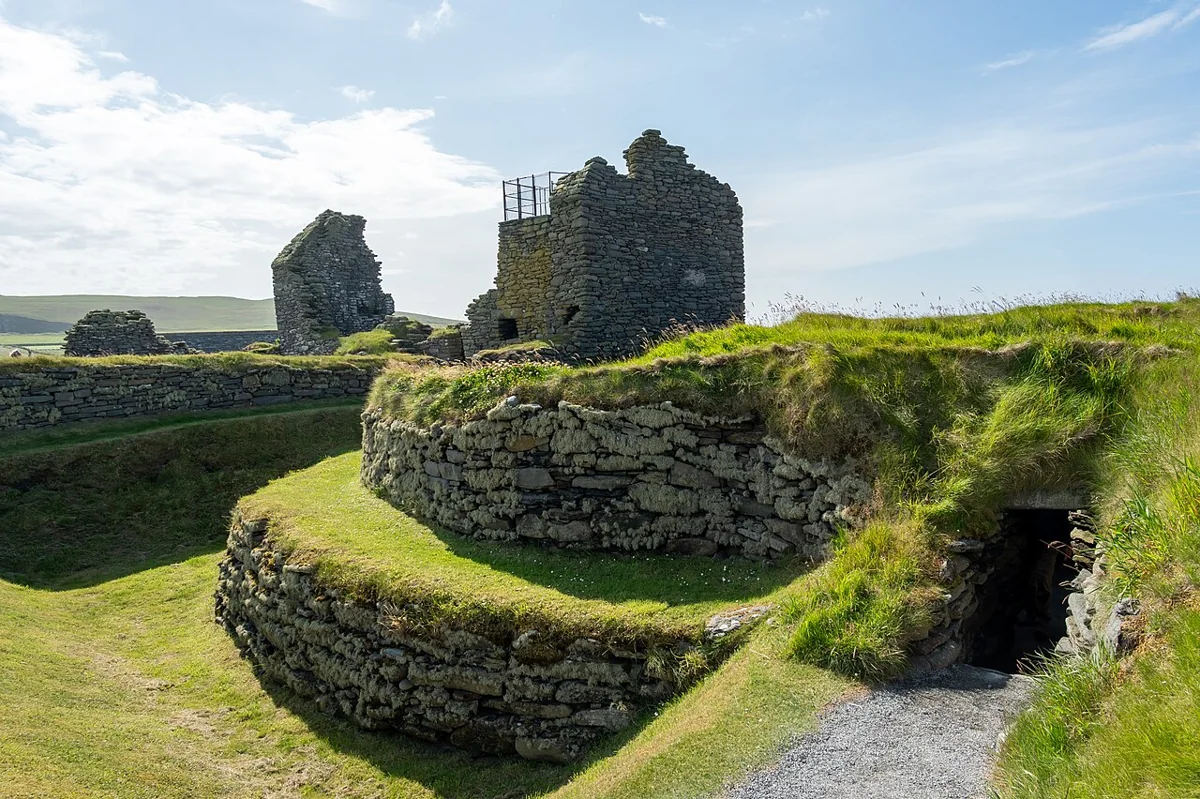
Jarlshof archaeological site with a prehistoric round structure and remains from several periods
Jarlshof in Shetland, photographed in 2026. This layered settlement includes Norse longhouses as well as much earlier and later remains; not every visible wall belongs to the Viking Age. Nearby Jarlshof’s Norse settlement provides a Shetland comparison; this photograph does not show Old Scatness.Image: Ekrem Canli · CC BY-SA 4.0

The Viking-Age connection

The broch was constructed centuries before the Viking Age, with dating evidence placing it in the later first millennium BC. Subsequent buildings developed around and over the earlier settlement. Viking-period occupation is one part of a sequence extending across many generations.

Reading the evidence

Excavation exposed buildings, occupation deposits and evidence for craft activity. The relationship between different structural phases is crucial: a striking circular tower can attract attention while obscuring the later evidence nearby. Experimental demonstrations can help explain techniques, but modern reconstructions remain interpretations rather than excavated structures.

Understanding the place

Old Scatness is valuable because it prevents the story of Shetland from beginning with Norse settlers. Earlier communities had their own buildings, resources and skills. Compare what changed with what continued, and ask how later occupants made use of inherited space. Archaeological layers offer a more complicated history than a simple replacement narrative.

Explore more Viking-Age places →

The Evidence

The sources below support this article. Interpretations and limits are explained in the text; this is not an exhaustive research review.

  1. Site history and archaeological evidence ↗
FacebookPinterestXEmail

Places & evidence

Locations and coordinate sources

These points identify the places described in the source notes. A regional, historical or museum reference is not a surveyed entrance, parking place or guarantee of public access. Check the linked institution or visitor information before traveling.

Old Scatness

Published heritage-register reference point

The national designation gives a reference for the entire broch and settlement. Individual Viking Age deposits occupy only part of that complex.

WGS84 · latitude, longitude
59.878610, -1.305900

Original findspot: Excavation found a long hearth associated with Structure 34 above an earlier roundhouse. Its finds included soapstone and mica-schist loomweights. Scottish Archaeological Research Framework, Society of Antiquaries of Scotland · Gordon Noble and colleagues, Antiquity

Current location: The site contains remains from multiple periods, including the earlier broch and Pictish structures. Reconstructions and a visitor centre interpret parts of that sequence. Historic Environment Scotland · Scottish Archaeological Research Framework, Society of Antiquaries of Scotland · Promote Shetland

Access information: The published 2026 season of guided visits ended in September. The tourism listing locates the attraction as a whole. A separate visitor entrance and off-season admission have yet to be verified. Promote Shetland

Location-source review: 2026-11-20. This is a source check, not a field survey.

Visitor / navigation point: Not yet verified. The reference coordinate above must not be treated as a current visitor destination.

Coordinate source: Historic Environment Scotland — Old Scatness, broch and settlement SE of the Cletts (SM3813) ↗

Open Old Scatness in Interactive Viking Map →