
Journeys & Encounters · Place profile

Pskov: Chamber Graves and Connections across the Baltic

In Brief

Pskov's Viking-Age connections are visible in excavated objects and burials rather than only in stories about rulers. Chamber graves discovered in the modern city provide particularly valuable evidence. They bring clothing, household identities and burial choices into a history too often told entirely through campaigns and trade routes.

On this page

A burial chamber inside a modern cityWhat clothing can revealMovement without a simple ethnic mapSources

Present-day location: Russia · Eastern river routes

Names and search variants: Pskov · Pleskov · Pskov chamber graves

Browse places by country →
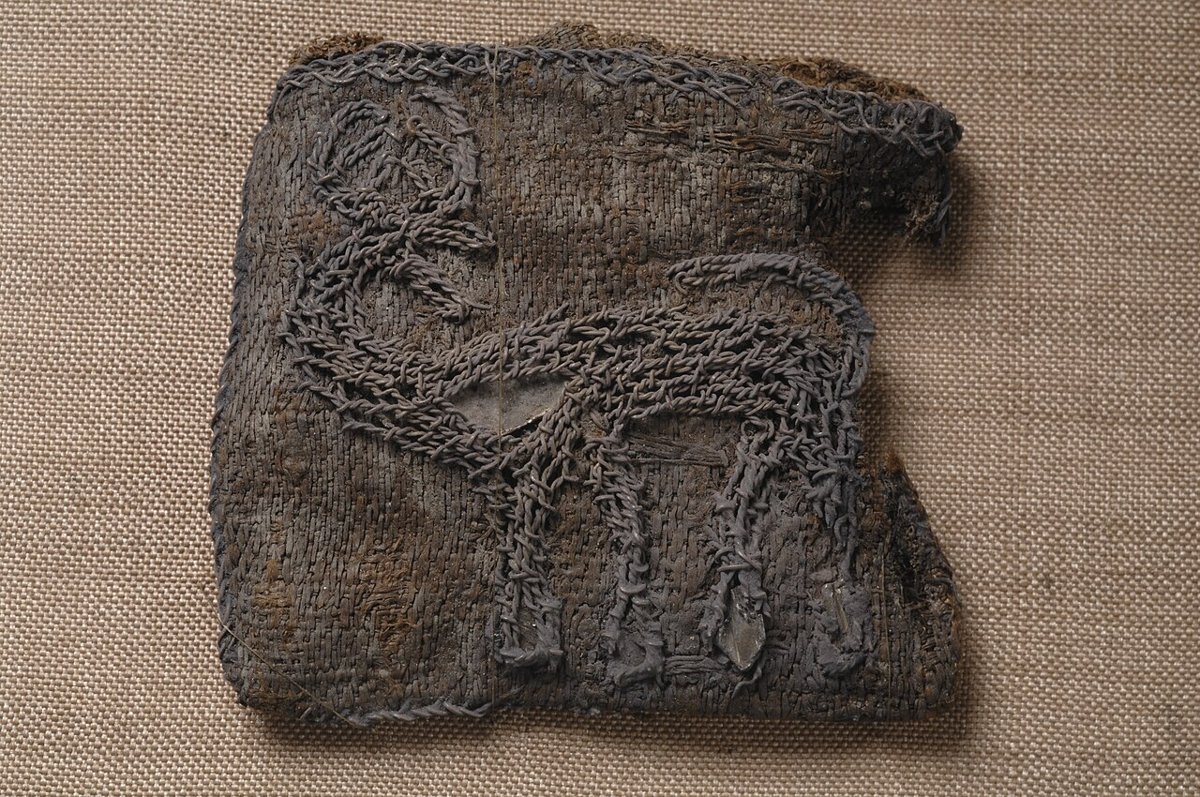
Silver embroidery on silk
Embroidery. Silver on silk textiles. The image shows a stag turning its head. Grave find, Björkö, Adelsö, Uppland, Sweden. SHM 34000:Bj 735 Comparative textile evidence: silver embroidery on silk from Birka grave Bj 735 in Sweden, showing a stag turning its head. This is not a textile from the Pskov chamber graves; it illustrates the kind of fragmentary dress evidence discussed across northern exchange networks.Image: The Swedish History Museum, Stockholm from Sweden · CC BY 2.0

A burial chamber inside a modern city

Research published in North European Symposium for Archaeological Textiles describes a wooden chamber grave uncovered during rescue excavation in 2006. It had been robbed in antiquity and no human remains survived. Nevertheless, surviving furnishings and textiles provided evidence for interpretation. An empty-looking grave can still preserve a substantial archaeological record.

What clothing can reveal

Pskov's regional library describes richly furnished tenth-century chamber burials and an exhibition interpreting a woman buried in Scandinavian-style dress. Such presentation can help explain an unfamiliar burial, but a reconstructed face or costume should be labeled as a modern interpretation. Grave goods do not preserve a person's full biography, occupation or legal independence.

Movement without a simple ethnic map

The importance of the Pskov material is that it adds people and practices to the routes joining northern communities. Several explanations must be considered when an object resembles a Scandinavian example: migration, marriage, gift exchange and local adoption need not leave identical evidence. Comparing complete burial assemblages is therefore more informative than assigning an identity from a single brooch.

Explore more Viking-Age places →

The Evidence

The sources below support this article. Interpretations and limits are explained in the text; this is not an exhaustive research review.

  1. North European Symposium for Archaeological Textiles: Pskov excavation study ↗
  2. Pskov regional library: the Varangian visitor exhibition ↗
FacebookPinterestXEmail

Places & evidence

Locations and coordinate sources

These points identify the places described in the source notes. A regional, historical or museum reference is not a surveyed entrance, parking place or guarantee of public access. Check the linked institution or visitor information before traveling.

Pskov

No verified coordinate supplied

The excavations uncovered several distinct chambers on the Starovoznesensky height. The plans do not supply a verified single coordinate for the group.

No verified coordinate is supplied. No map pin or navigation destination has been invented.

Original findspot: The group lay near the old Starovoznesensky monastery, separate from the main cemetery of the same period. N. V. Khvoshchinskaya, Institute for the History of Material Culture, Russian Academy of Sciences

Current location: Rescue excavations in 2003–2009 recovered the chambers within the modern city. A regional library account describes a later display of selected material. N. V. Khvoshchinskaya, Institute for the History of Material Culture, Russian Academy of Sciences · Pskov Regional Universal Scientific Library

Access information: The excavation and exhibition accounts document past work. Neither establishes that a particular chamber or display can be visited today. N. V. Khvoshchinskaya, Institute for the History of Material Culture, Russian Academy of Sciences · Pskov Regional Universal Scientific Library

Location-source review: 2026-11-20. This is a source check, not a field survey.

Visitor / navigation point: Not yet verified. The reference coordinate above must not be treated as a current visitor destination.

Coordinate source: N. V. Khvoshchinskaya, Institute for the History of Material Culture, Russian Academy of Sciences — On the interpretation of chamber burials on the Starovoznesensky height in Pskov ↗

Open Pskov in Interactive Viking Map →