
Journeys & Encounters · Place profile
Sebbersund: Craft, Exchange, and Christian Burials beside the Limfjord
In Brief
Sebbersund stood where waterways around Nibe and Halkær met, southwest of Aalborg. Archaeology identifies a place of craft and exchange used across the period approximately 700–1100. It belongs to a network of smaller centers that complicates a history focused only on Ribe and Hedeby.
Present-day location: Denmark · North Jutland
Names and search variants: Sebbersund · Sebber Sund · Sebbersund trading place
Browse places by country →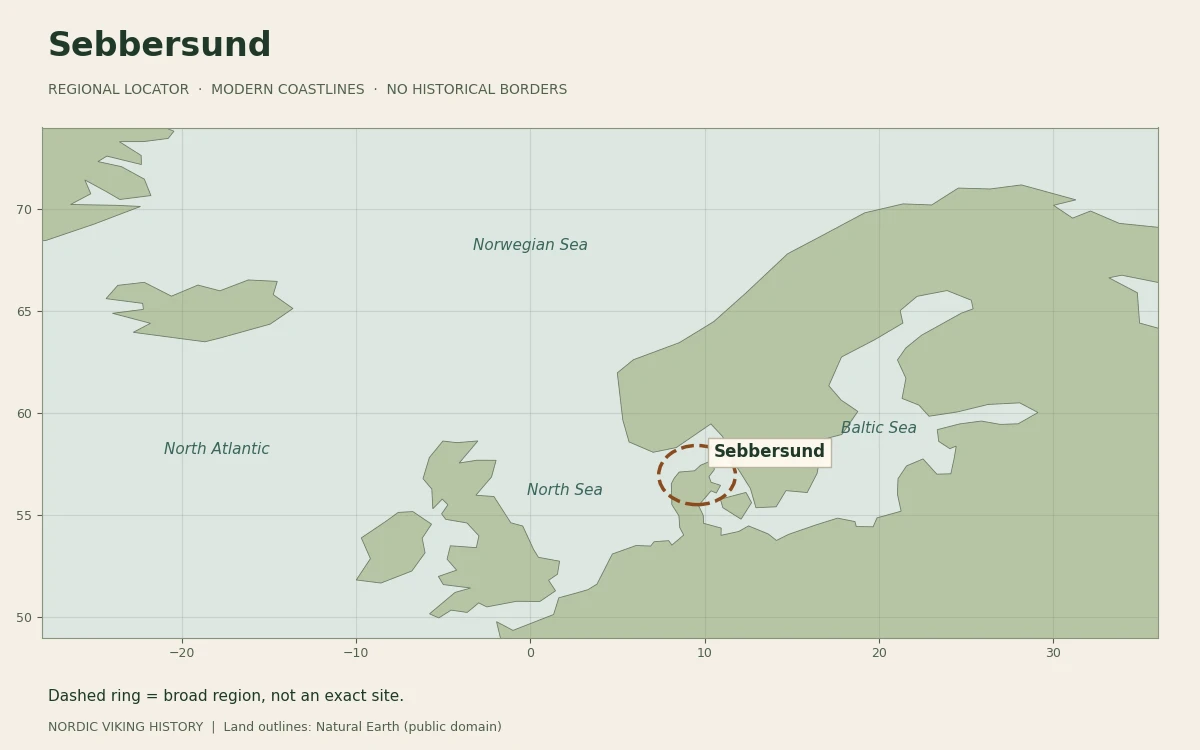
The historical setting
Workshops included sunken-featured buildings, often called pit houses. Ironworking waste and evidence of metal craft show production rather than merely the arrival of finished prestige objects. The Viking Ship Museum discusses iron from Norway and the working of bronze, silver, and gold, placing Sebbersund within connections across the northern sea routes.
What the evidence shows
The site also produced traces of wooden churches and a large Christian burial ground. A particularly unusual stone-lined burial has been interpreted as possibly belonging to a church founder, but that identification remains a proposal based on its position and form. It is not the recovery of a named benefactor’s biography.
How to read this place
Sebbersund’s strength is the combination of economic and religious evidence. Ask whether workshop activity, exchange, and church burial belong to the same phase before imagining a single busy scene. A market could change its role as institutions and travel patterns shifted. Reconstructed pit houses help communicate building scale, but should be labeled as modern interpretations rather than surviving Viking workshops.
Explore more Viking-Age places →
Explore this record and its sources in the map collection →
This entry is searchable by place and country. No verified burial-site coordinate is supplied, so it has no map marker or directions.
The Evidence
The sources below support this article. Interpretations and limits are explained in the text; this is not an exhaustive research review.