
Journeys & Encounters · Place profile
Stiklestad: A Defeat That Became a Sacred Victory
In Brief
Stiklestad is associated with the death of King Olaf Haraldsson in 1030. His defeat and subsequent sainthood made this place central to Norwegian religious memory. Understanding the site means separating a late Viking-Age political conflict from the powerful stories that grew around it.
Present-day location: Norway · Trøndelag
Names and search variants: Stiklestad · Stiklarstaðir · Stiklarstadir
Browse places by country →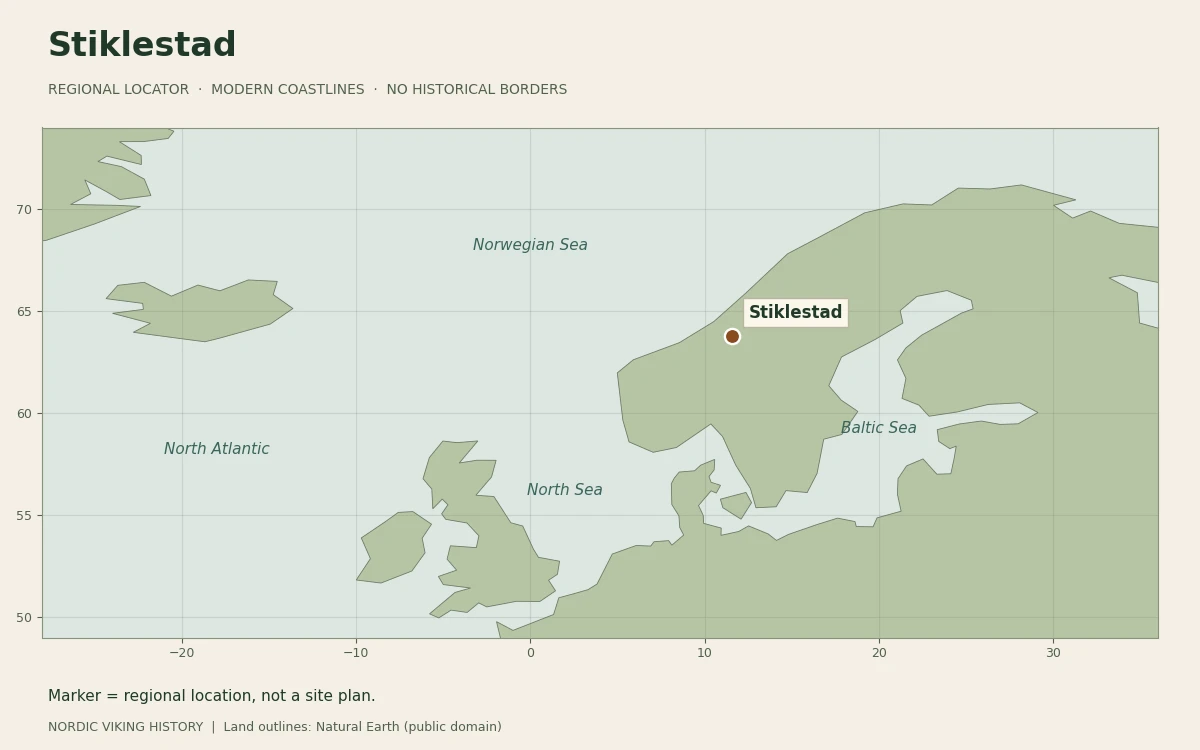
The historical setting
Olaf returned after exile and fought opponents in Trøndelag. He died in the battle; the cult of Saint Olaf developed afterward. The event was not simply a contest between an entirely Christian army and an entirely pagan population. Questions of kingship, local authority, alliances, and resistance are essential to its historical setting.
What the evidence shows
The cultural center presents the battlefield tradition and the subsequent religious heritage. The standing church dates to the later twelfth century. Tradition places its altar near the spot where Olaf fell, but that association is not an independently excavated map of the battle. Detailed accounts of his wounds and miracles belong to narrative and devotional transmission.
How to read this place
Look at how successive generations changed the meaning of the same death. A failed royal expedition became a saint’s martyrdom, then a national story, and later a subject for performance and public commemoration. This is not a reason to discard the event; it is a reason to distinguish the battle from its afterlife. Modern memorials and reconstructions illuminate remembrance rather than serving as eyewitness evidence.
Explore more Viking-Age places →
The Evidence
The sources below support this article. Interpretations and limits are explained in the text; this is not an exhaustive research review.