
Research & Sources · Deep dive
Ancient DNA: Separating Ancient Molecules from Modern Contamination
In Brief
A genetic result becomes historical evidence only after researchers establish whose DNA they recovered and whether the data can support the proposed conclusion.
On this page
An ancient bone contains more than ancient human DNAPreservation differs within a specimenDamage can be useful evidenceAncient-looking DNA does not prove a clean sampleBirka shows why specimen identity mattersLaboratory preparation and computation work togetherA better yield is not the only goalWhat a reader should expect to findSourcesAn ancient bone contains more than ancient human DNA
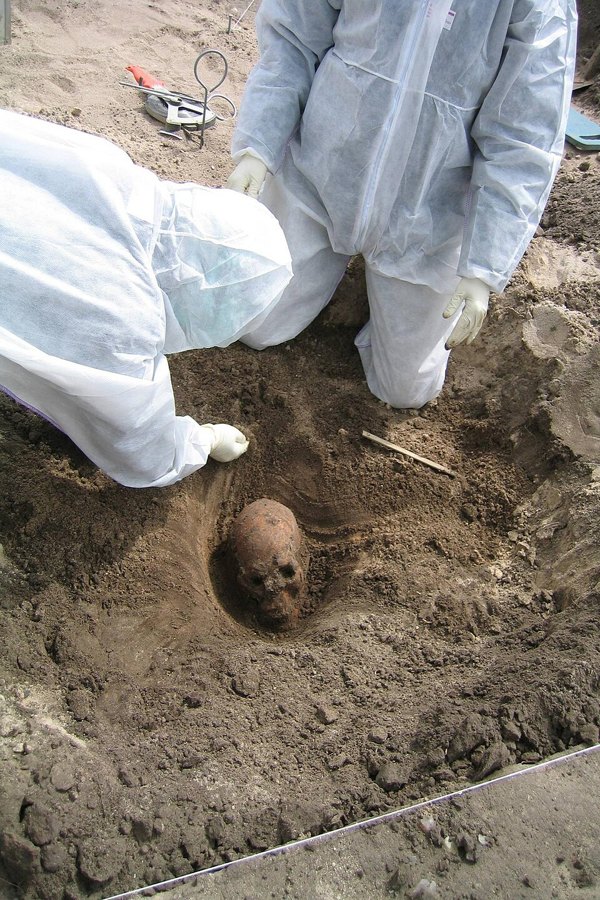
DNA extracted from an excavated human specimen can include molecules from the individual, microorganisms, and later human contamination. The laboratory does not receive a neatly labeled genome waiting to be read. Ancient molecules are commonly short and chemically damaged, so extraction and analysis require procedures designed for that condition. A methods primer by Orlando and colleagues treats authentication as an essential stage between recovering sequences and interpreting population history. This distinction matters when discussing Viking burials: an impressive number of sequencing reads says little by itself about how many reads reliably represent the buried person.
Sources for this section: 1
Preservation differs within a specimen
Damgaard and colleagues investigated ways to improve access to endogenous DNA, meaning DNA originating in the organism under study. Their experiments compared preparation approaches and different portions of teeth and bones. In some samples, preliminary treatment reduced contamination substantially, and dental cementum could perform differently from dentine. These findings do not establish one guaranteed treatment for every archaeological sample. They demonstrate why researchers evaluate material and preparation rather than assuming that all fragments from a skeleton will yield equivalent results. Sampling location can change both the quantity of useful DNA and the balance between authentic and contaminating molecules.
Sources for this section: 2

Damage can be useful evidence
After death, chemical changes can produce characteristic patterns in DNA sequences. A study by Skoglund and colleagues developed a way to evaluate whether fragments were more likely to reflect postmortem degradation than recent contamination. One important pattern involves apparent cytosine-to-thymine changes concentrated near fragment ends. The method was demonstrated on much older material than Viking-age remains, but its methodological relevance extends to ancient DNA authentication. Damage is therefore not merely an obstacle to be removed: its pattern can help researchers identify which molecules plausibly belong to an ancient sample.
Sources for this section: 3
Ancient-looking DNA does not prove a clean sample
The same study explicitly warns that observing damage does not establish that modern contamination is absent or negligible. A dataset can contain both authentic damaged molecules and contaminating sequences. Investigators must estimate contamination and examine whether it could alter the inference. A useful illustrative distinction is between finding some ancient DNA and showing that a specific ancestry comparison is trustworthy. The first is a question about presence; the second is a question about the quality and composition of the data used in an analysis. Treating them as identical would bypass the central authentication problem.
Sources for this section: 3
Birka shows why specimen identity matters
The 2017 study of Birka grave Bj 581 analyzed DNA from a tooth and an arm bone. Mitochondrial evidence supported the sampled elements’ attribution to one individual, while chromosome-based analysis supported a female biological sex. The study also assessed contamination. These are laboratory conclusions with particular evidential roles. The interpretation of the grave’s weapons and the individual’s social identity remains an archaeological argument; it is not a property directly sequenced from DNA. Keeping those levels separate makes both the molecular evidence and the historical discussion clearer.
Sources for this section: 4
Laboratory preparation and computation work together
Methods for retaining short authentic molecules must be paired with analytical procedures that recognize damage, errors, and contamination. The general ancient DNA primer describes both laboratory and computational stages as prerequisites for interpretation. Changing preparation can alter the data available for authentication, so a research report needs to explain the workflow rather than present only a final ancestry plot. The relevant question is not whether the study used advanced equipment. It is whether the procedures address the vulnerabilities of the particular material and whether the authors show enough evidence to evaluate their conclusions.
Sources for this section: 1
A better yield is not the only goal
The extraction experiments illustrate a tradeoff: useful results depend on the proportion and reliability of endogenous molecules, not simply on recovering more total DNA. An intervention that changes that balance needs testing. There is also a physical cost. Ancient remains are finite, and sampling can be destructive. A well-designed project therefore connects the planned sampling to a clear question, evaluates preservation where possible, and records what was removed. That documentation allows future work to interpret the analyzed fragment within the surviving collection rather than treating the molecular result as detached from its source.
Sources for this section: 1, 2
What a reader should expect to find
An accessible summary need not reproduce every laboratory parameter, but the underlying study should identify sampled elements, preparation, authentication, contamination assessment, and the amount of usable data. Separate questions should remain separate: whether two bones belong to one person, whether that person is biologically related to another, and what archaeological identity best explains the burial. A result can be strong for one question and less informative for another. For Viking history, confidence should follow that chain of evidence. A cleanly drawn genetic diagram cannot compensate for uncertainty about sample identity or for an inference that the genetic method was never designed to make.
Sources for this section: 1, 2, 3, 4
For the introductory context, read Ancient DNA and the Limits of “Viking Ancestry”.
The Evidence
The sources below support this article. Interpretations and limits are explained in the text; this is not an exhaustive research review.