
Beliefs & Stories · Deep dive
Skadi: Mountain Homes, Marriage, and a Settlement That Fails
In Brief
Skadi’s stories move from armed vengeance to an unhappy marriage. They explore the difficulty of making peace without erasing the claims of an outsider.
On this page
An armed claimant arrives in AsgardChoosing a husband with too little informationTwo homes and incompatible soundscapesSkis and a bow: skills embedded in a landscapeNorthern contacts without a simple origin storyWhat a place-name can and cannot establishSourcesAn armed claimant arrives in Asgard
In the thirteenth-century Skáldskaparmál, Skadi enters the story after the gods kill her father Thjazi. She brings a helmet, mail, and weapons to Asgard to seek vengeance. The gods answer with an offer of reconciliation and compensation. Her presence changes the narrative: the death of an enemy is no longer simply a victory, because a surviving relative has a claim that the victors must address.
The settlement has several parts. Skadi may choose a divine husband, but can look only at the candidates' feet. The gods must also make her laugh, a condition she thinks they cannot fulfill. Loki accomplishes that through a grotesque performance involving a goat and his own genitals; Odin additionally makes stars from Thjazi's eyes. These elements combine alliance, bodily humiliation, and remembrance. The account does not erase her father's death. It converts the conflict into a negotiated relationship while preserving his presence in a transformed, celestial form.
Sources for this section: 1
Choosing a husband with too little information
Skadi selects the most beautiful feet because she assumes they belong to Baldr. They belong to Njord. John Lindow's study of the episode asks what this restricted choice would mean within a world where marriage established political relationships. Physical attractiveness supplies a poor substitute for knowledge of the person and the alliance being created. The compensation looks generous while withholding information necessary to assess it.
Lindow cautions that familiar comparisons with Cinderella do little to explain the scene. The crucial issue is not simply that a foot helps identify a spouse, but that Skadi's identification fails. Her own decision formally determines the result, although the imposed procedure shapes her mistake. That tension makes the episode more than a comic mismatch. It asks how much freedom a choice contains when one party sets the terms and the other cannot see what matters. Skadi gains a husband without obtaining the particular relationship she intended.
Sources for this section: 2

Two homes and incompatible soundscapes
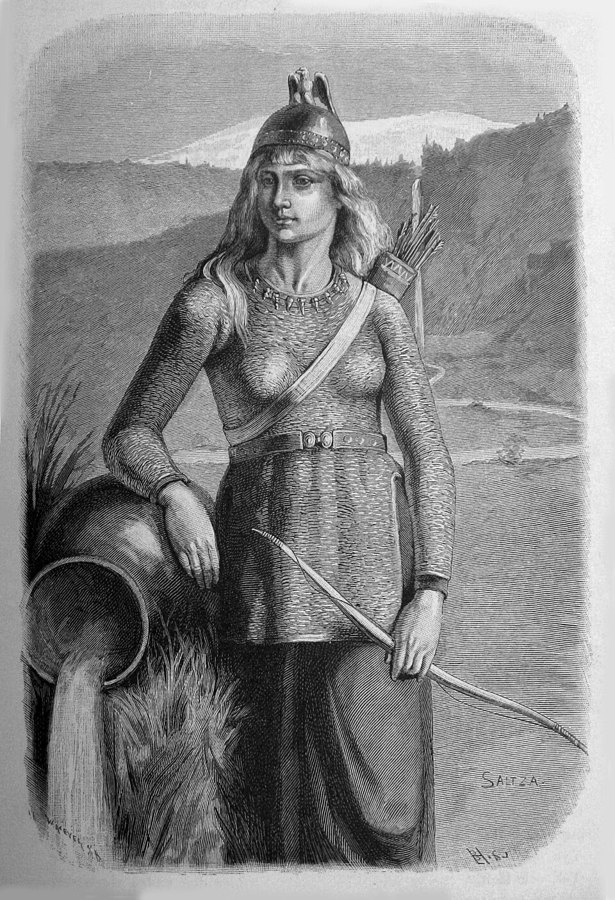
The Swedish History Museum's account emphasizes the marriage's practical difficulty. Njord belongs by the sea at Noatun, while Skadi favors the mountain home associated with her father. The arrangement of alternating stays cannot make each partner comfortable in the other's landscape. Their disagreement is expressed through sound: coastal birds disturb Skadi, while the mountain environment is unwelcome to Njord.
This is an unusually tangible portrayal of difference. The problem is not an abstract opposition between two divine categories; it is the inability to sleep and feel at home. A negotiated schedule can distribute time equally without making either place suitable. Skadi's eventual preference for living separately preserves her relationship to her own landscape. Modern retellings sometimes turn this into a universal lesson about incompatible couples. The older story is more particular: marriage does not automatically absorb a woman with a strong paternal inheritance and an established home into her husband's preferred way of life.
Sources for this section: 3
Skis and a bow: skills embedded in a landscape
Tommy Kuusela, writing for Sweden's Institute for Language and Folklore, connects Skadi's skiing and hunting with the literary traditions preserved by Snorri. Her designation as a ski goddess gives a specific kind of movement an enduring place in her identity. Skis are practical equipment for reaching and working in snowy terrain, and the bow connects that mobility with hunting rather than with modern recreational skiing.
The comparison with Ull, another divine skier and archer, also warns against assigning every attribute exclusively to one figure. Kuusela places the myths beside a much longer history of skiing, including archaeological finds and the skier with a bow pictured on the Böksta runestone. Such evidence supplies a technological and cultural setting for the stories. It does not identify the runestone figure as Skadi. The strongest connection is between familiar skills and mythic characterization: audiences could understand what exceptional travel and hunting in a winter landscape involved.
Sources for this section: 4
Northern contacts without a simple origin story
Jurij Kusmenko examines possible relationships between Skadi's attributes and Sámi traditions. Skiing, archery, and hunting also appear in Scandinavian literary representations of Sámi people, and he compares Skadi with figures documented in Sámi religious traditions. His discussion distinguishes several possible explanations: borrowing, the mythologizing of neighboring populations, or resemblance produced by shared activities and environments.
Those alternatives matter more than a confident declaration that Skadi was originally Sámi. A parallel between attributes does not by itself establish the direction or date of transmission. Later documentation of a religious figure cannot automatically describe its form centuries earlier, and an outsider's literary stereotype is not a neutral portrait of a community. Kusmenko develops a substantial contact hypothesis, but it remains a reconstruction. Used carefully, the comparison restores northern cultural relationships to the discussion without treating either Norse or Sámi tradition as a sealed system or claiming that all similarities have one explanation.
Sources for this section: 5
What a place-name can and cannot establish
Andrew Hagen's study of giants in Norse mythology reviews proposed place-name connections with Skadi. Earlier scholars linked forms such as Skedju with elements associated with sanctuaries, halls, or groves. The argument opened the possibility that a figure classified as a giantess in literary sources could have received worship. Hagen also emphasizes that the linguistic interpretation and origin of these names remain disputed.
The methodological point is precise. If a name really combines a divine name and a ritual-place element, it can support an argument for local religious significance. If the first element is uncertain, building an extensive cult history upon it multiplies uncertainty. Nor should the literary category giantess be treated as a prohibition that makes worship impossible in advance. Skadi's stories already complicate the boundary between hostile outsiders and the gods' community. The surviving evidence allows us to describe that complication confidently while remaining cautious about the locations, chronology, and organization of any historical cult.
Sources for this section: 6
The Evidence
The sources below support this article. Interpretations and limits are explained in the text; this is not an exhaustive research review.
- Snorri Sturluson: Skáldskaparmál, translated by Arthur Gilchrist Brodeur ↗
- John Lindow: When Skaði Chose Njörðr (2008), pp. 165–182 ↗
- Swedish History Museum: Skade—vildmarkens gudinna ↗
- Tommy Kuusela, Institute for Language and Folklore: Skade och Ull (2022) ↗
- Jurij Kusmenko: Sámi and Scandinavians in the Viking Age ↗
- Andrew Hagen: The Roles of the Giants in Norse Mythology, section 5.8 ↗