
Jötnar & kin
Angrboda
The mother of three feared children
Angrboda is named as the mother, with Loki, of Fenrir, Jörmungandr and Hel. Her surviving description is far shorter than her modern prominence might suggest.
Explore the stories ↓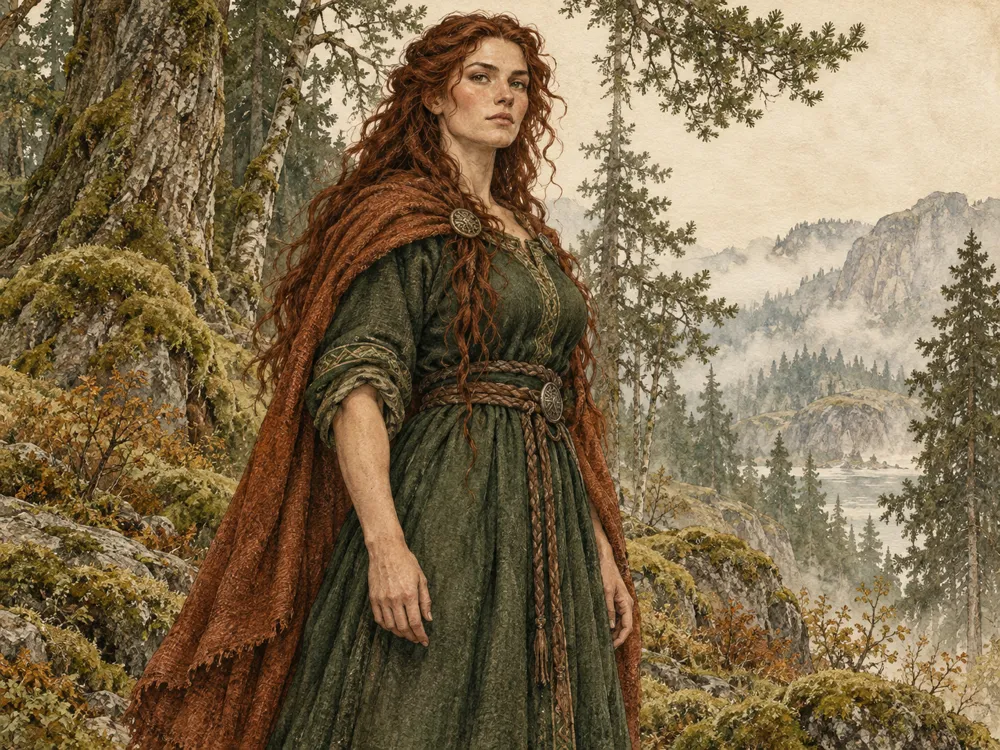
A family feared in advance
Gylfaginning locates Angrboda in Jötunheim. Prophecies about her children lead the gods to bring them into their power: the serpent is cast into the sea, Hel receives a realm, and the wolf is eventually bound. The narrative’s attention falls mainly on the children and on the gods’ response to them. It gives very little of Angrboda’s own voice or actions.
What cannot be recovered from the gap
A detailed romance with Loki, a complete account of her household and a long personal war against the gods are not supplied by this passage. Modern storytellers can create them, but a source-based guide should label the invention. Her importance lies in the family relationship and its consequences, not in a fabricated biography designed to match better-documented characters.
The children are taken from Jotunheim
Snorri says that the three children are growing up in Jotunheim when the gods learn of them. Prophecy makes the gods fear future harm, and Odin orders the children brought before him. Their treatment is unequal: the serpent is thrown into the sea, Hel receives authority over a realm of the dead, and the wolf is kept among the gods before they attempt to bind him. Angrboda’s family is thus divided through decisions made elsewhere. The passage does not give her a reply, a pursuit or a battle against those who take them.
Consequences that reach the last battle
The serpent grows until it encircles the land; Fenrir eventually becomes Odin’s opponent at Ragnarök; Hel’s domain shapes the story of Baldr’s attempted return. These are the consequences of the family relationship for which Angrboda is named. They do not amount to a narrated biography of the mother. Her page can follow those connections without assigning her responsibility for every later action of her children or inventing a secret plan behind their births. The surviving text gives the gods’ fearful assessment far more space than it gives Angrboda herself.
Read behind the retelling
Sources & limits
Much of Angrboda’s detailed personality in contemporary fiction is modern elaboration. The cited medieval account is brief.
Retold in contemporary English. Dialogue is summarized, not presented as a translation. How to read our sources and versions.
Follow the thread
Stories & related reading: Angrboda
2 min read
The binding of Fenrir
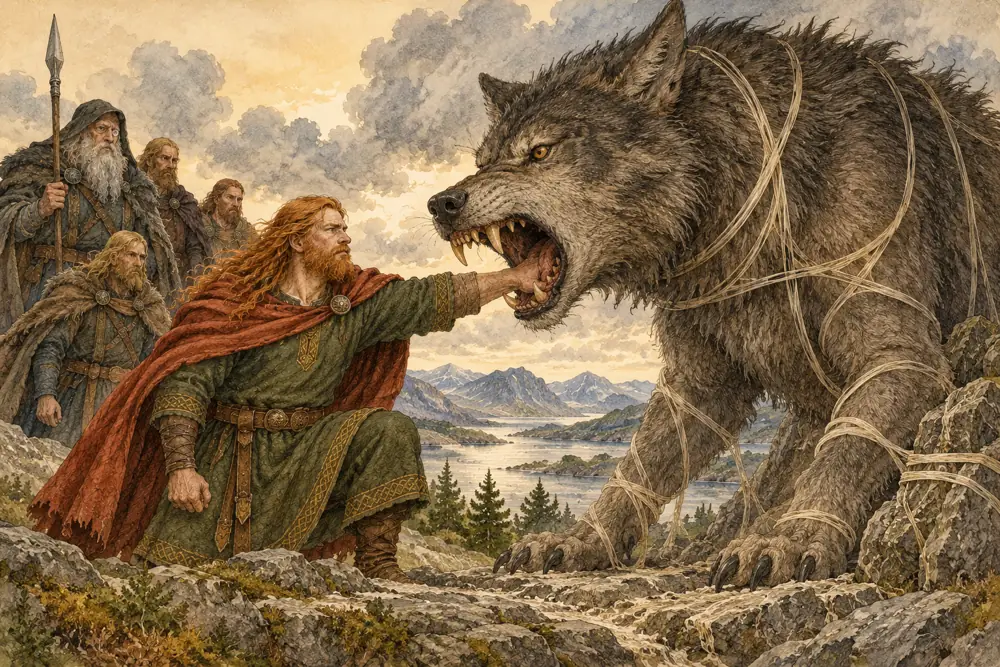
The gods fear Fenrir’s future strength. Tyr places his hand in the wolf’s mouth while they test a restraint they never intend to remove.
Read the story ↗
3 min read
Ragnarok: the breaking of the world
The end approaches through broken human bonds and broken cosmic restraints. The surviving texts also imagine a world that rises after the disaster.
Read the story ↗
2 min read
The death of Baldr
Frigg tries to protect Baldr from every danger, but Loki finds the one promise she did not obtain.
Read the story ↗