
Jötnar & kin
Bolthorn
A giant in Odin’s maternal ancestry
Bolthorn, Old Norse Bölþorn, is best known through family relationships rather than a preserved adventure. Gylfaginning names him as Bestla’s father; Bestla is the mother of Odin, Vili and Ve. He therefore belongs to the ancestry of the gods.
Explore the stories ↓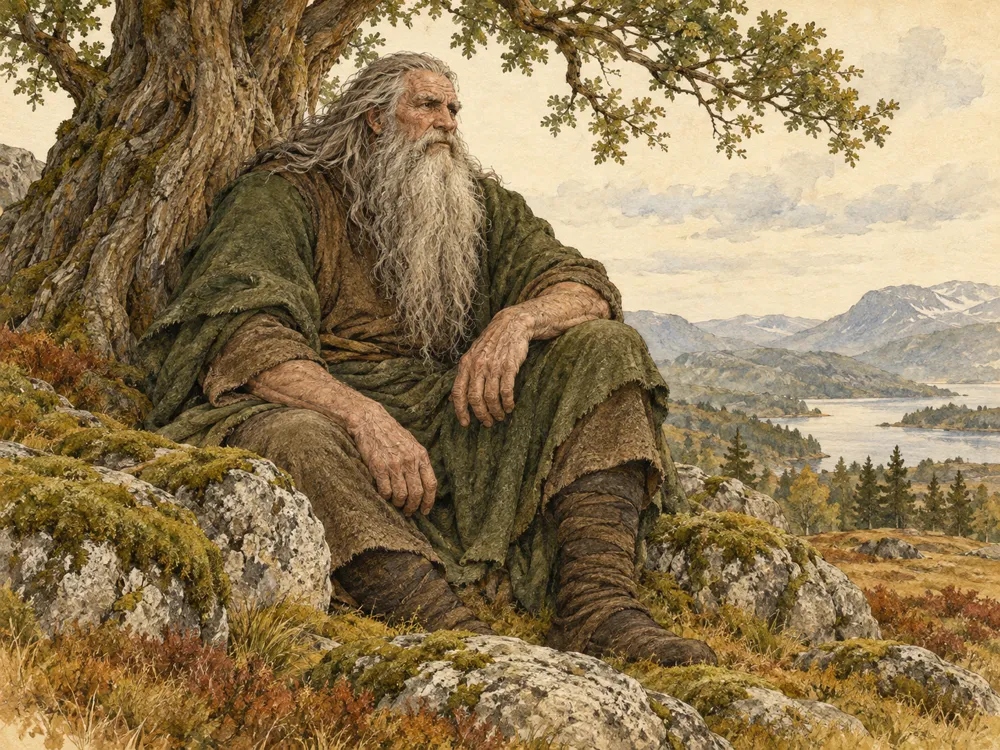
A connection with hidden learning
In Hávamál, Odin says he learned powerful songs from the renowned son of Bolthorn, Bestla’s father. The passage identifies the teacher by relationship, not by a personal name. It places Odin’s acquisition of wisdom within his maternal kin, but does not describe Bolthorn himself delivering the teaching.
Respecting the small amount of evidence
The surviving references do not establish Bolthorn’s appearance, dwelling, personality or fate at Ragnarök. They also do not provide a complete account of his children. Such details sometimes appear in expanded modern genealogies, where inference can harden into supposed fact. Here the important point is narrower: Odin’s family and learning are linked with beings beyond the immediate company of the gods. A short, accurate entry preserves that connection without creating an unsupported biography.
Two generations, two different roles
In Snorri’s family sequence, Bölthorn is Bestla’s father and thus the maternal grandfather of Odin, Vili and Ve. The named grandfather should be kept separate from the unnamed son of Bölthorn in Hávamál. That son, not Bölthorn himself, is the figure from whom Odin learns nine songs in the verse. Confusing the generations produces a different story from the one preserved.
What the wisdom passage actually adds
The surrounding Hávamál sequence links acquired knowledge with increasing wisdom: one word leads toward another, and one deed toward another. Bölthorn’s name helps locate the teacher within a family, but the poem does not pause to describe the grandfather’s home, appearance or behavior. A modern family portrait is therefore an imaginative aid, not evidence for a lost narrative about his personal adventures.
Read behind the retelling
Sources & limits
Bolthorn and his unnamed son are different figures in the cited passage.
- Prose Edda: Gylfaginning (Brodeur, 1916)
- Poetic Edda: Hávamál (Bellows, 1923)
- Prose Edda: Gylfaginning, Brodeur translation (1916)
- Poetic Edda: Hávamál, public-domain Bellows translation
Retold in contemporary English. Dialogue is summarized, not presented as a translation. How to read our sources and versions.
Follow the thread
Stories & related reading: Bolthorn
2 min read
How the world was made
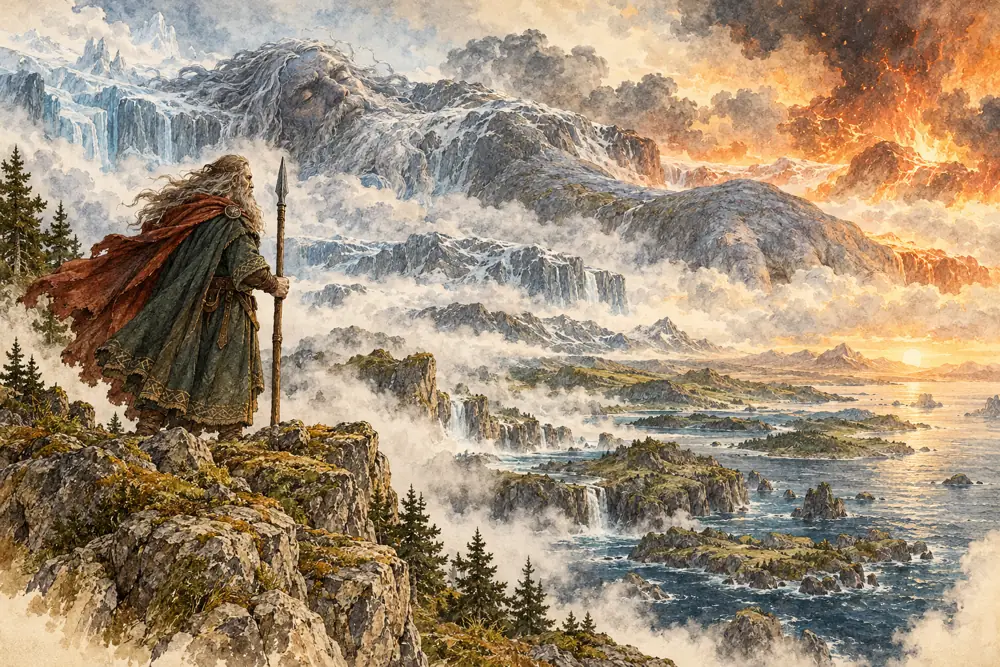
Several Eddic passages explain beginnings. Snorri combines them into an account in which the world is fashioned from Ymir’s body.
Read the story ↗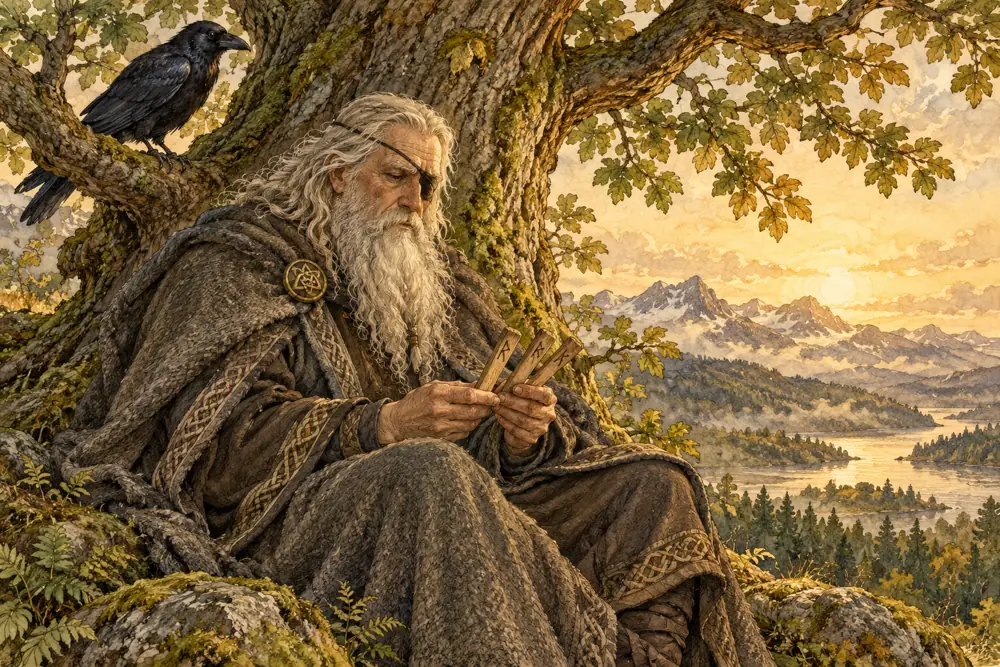
2 min read
Odin’s ordeal for the runes
Hávamál gives Odin a brief, disturbing account of sacrifice, deprivation and the gaining of runes.
Read the story ↗