
Gods & companions
Bragi
Eloquence, poetry and the telling of myth
Bragi is associated with eloquent speech and poetry. In Snorri’s account he also becomes a guide to the very stories and poetic expressions through which the gods are remembered.
Explore the stories ↓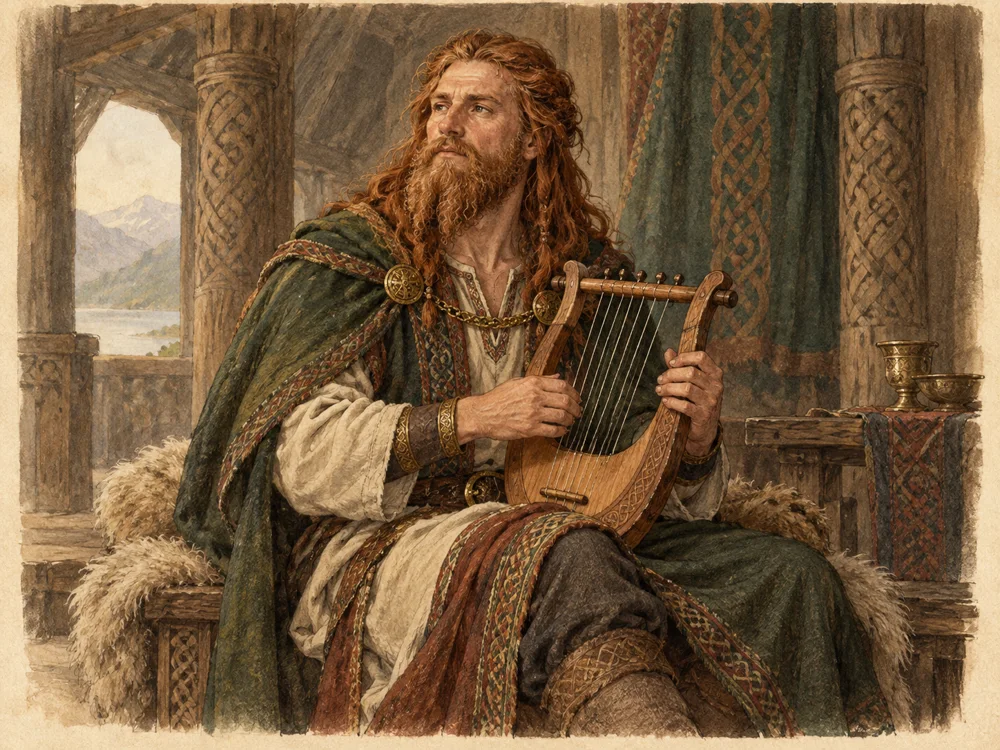
A poet among the gods
Gylfaginning presents Bragi as especially skilled in words and poetry and identifies Idunn as his wife. These concise statements carry much of his familiar profile. He does not receive an extensive independent cycle of adventures comparable to Thor’s, and we should not invent one merely to balance the lengths of a modern encyclopedia.
The voice of Skáldskaparmál
At the beginning of Skáldskaparmál, Bragi explains myths and poetic language to Ægir. He tells the story of Idunn’s abduction and the origin of the mead of poetry. This narrative role matters: he is not simply a character with a musical instrument, but the speaker through whom a medieval author teaches how stories make poetic phrases intelligible.
Poetry does not prevent conflict
In Lokasenna, Bragi clashes with Loki at the feast, while Idunn urges restraint. As elsewhere in that poem, insults belong to a competitive performance rather than a neutral biography. The god Bragi should also be distinguished from Bragi Boddason, the early skald whose verses Snorri quotes. Historical and divine names overlap, but their identity is not something the surviving material conclusively settles.
The price he offers for peace
At the beginning of Loki's quarrel, Bragi says that the gods will not give the intruder a place. Loki invokes an old agreement with Odin and obtains a drink anyway, then singles Bragi out for insult. Bragi changes tactics and offers a horse, a sword and a ring if Loki will stop stirring hostility among the company. Loki answers with an attack on his courage. Bragi then declares that outside the hall he would take Loki's head, prompting still more mockery and Idunn's attempt to restrain him. The sequence is more interesting than a simple claim that a poet cannot fight: Bragi tries exclusion, compensation and a threat, and none restores order. The occasion puts eloquence under pressure rather than presenting poetry as an automatic cure for conflict.
The storyteller seated beside the visitor
Skáldskaparmál opens with Ægir arriving at Asgard and finding a dazzling banquet. Bright swords provide the light, shields decorate the room and the guests drink mead. Bragi sits beside the visitor and begins explaining events among the gods. The first account leads into Idunn's abduction; another explains how the mead of poetry came into existence. This frame gives a reason for the stories to be told: a guest is learning the background needed to understand poetic language. Bragi is not shown inventing every tale or composing every poem. He is the knowledgeable speaker who connects an arresting phrase with the event behind it, turning the banquet conversation into a lesson for the book's readers as well as its fictional guest.
Read behind the retelling
Sources & limits
Do not automatically identify the god with the historical poet Bragi Boddason. The relationship remains a matter of interpretation.
Retold in contemporary English. Dialogue is summarized, not presented as a translation. How to read our sources and versions.
Follow the thread
Stories & related reading: Bragi
2 min read
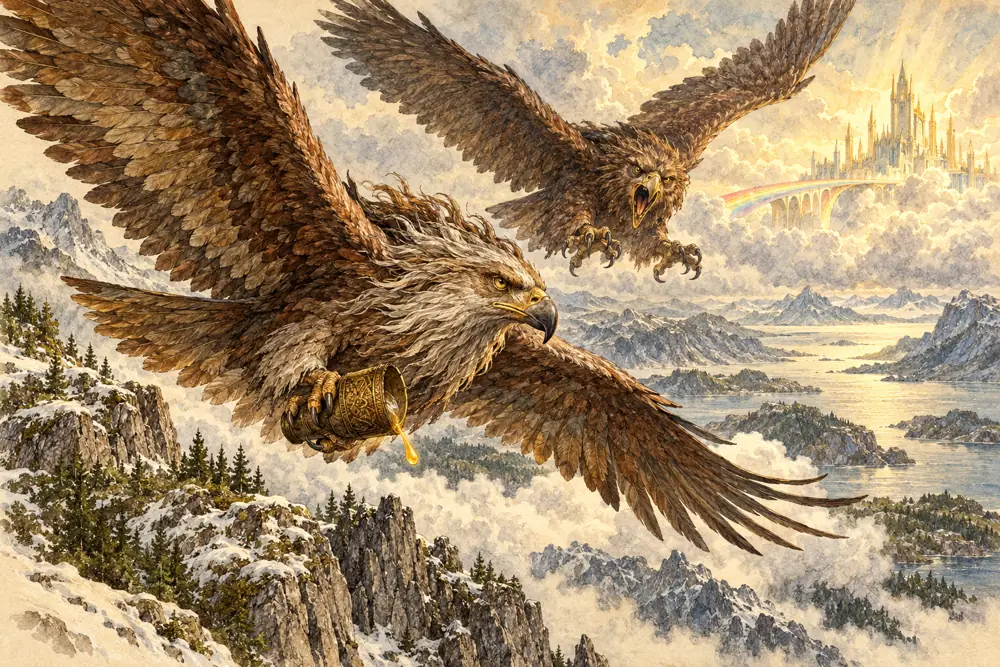
The mead of poetry
The blood of Kvasir passes through murder, bargaining and deception before the poetic mead reaches the gods.
Read the story ↗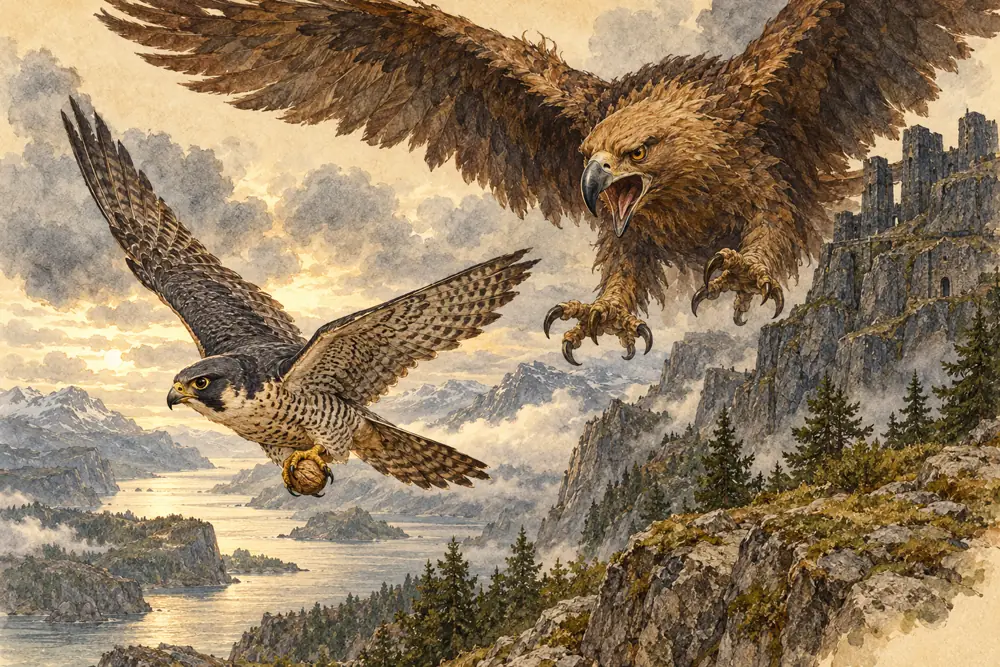
2 min read
Idunn and the stolen apples
A bargain forced from Loki delivers Idunn to Thjazi. Without her, the gods discover that their youth is not secure.
Read the story ↗
2 min read
Loki’s quarrel at Ægir’s feast
Loki enters the gods’ feast and attacks one guest after another in a formal exchange of insults.
Read the story ↗