Creatures
Huginn and Muninn
Odin’s ravens of thought and memory
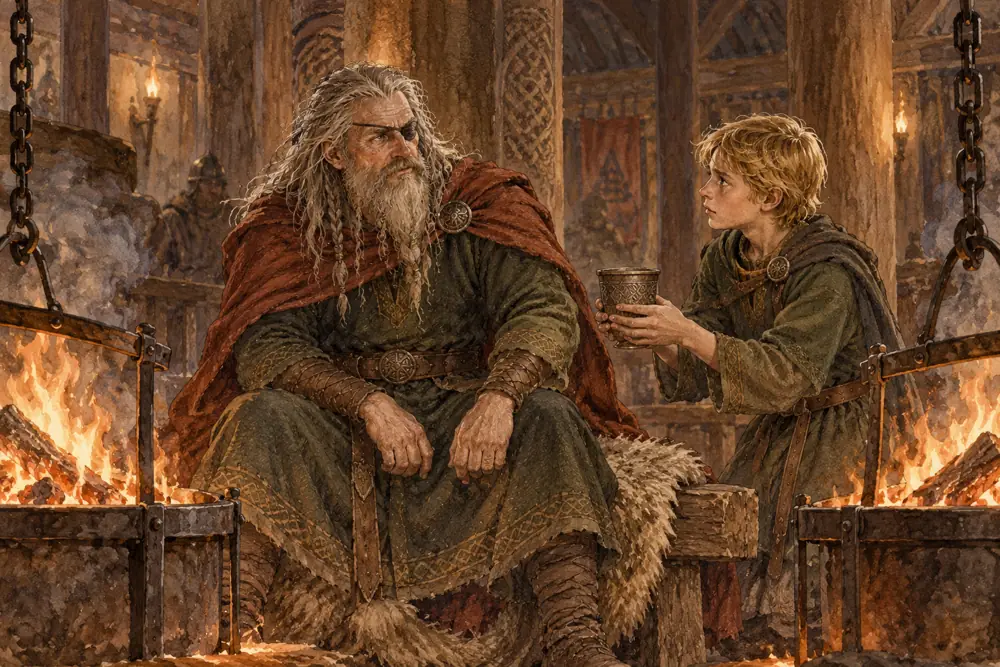
Huginn and Muninn are the ravens associated with Odin’s gathering of knowledge. Their names are conventionally rendered as Thought and Memory. Grímnismál describes their daily flight and Odin’s concern that they might not return.
Explore the stories ↓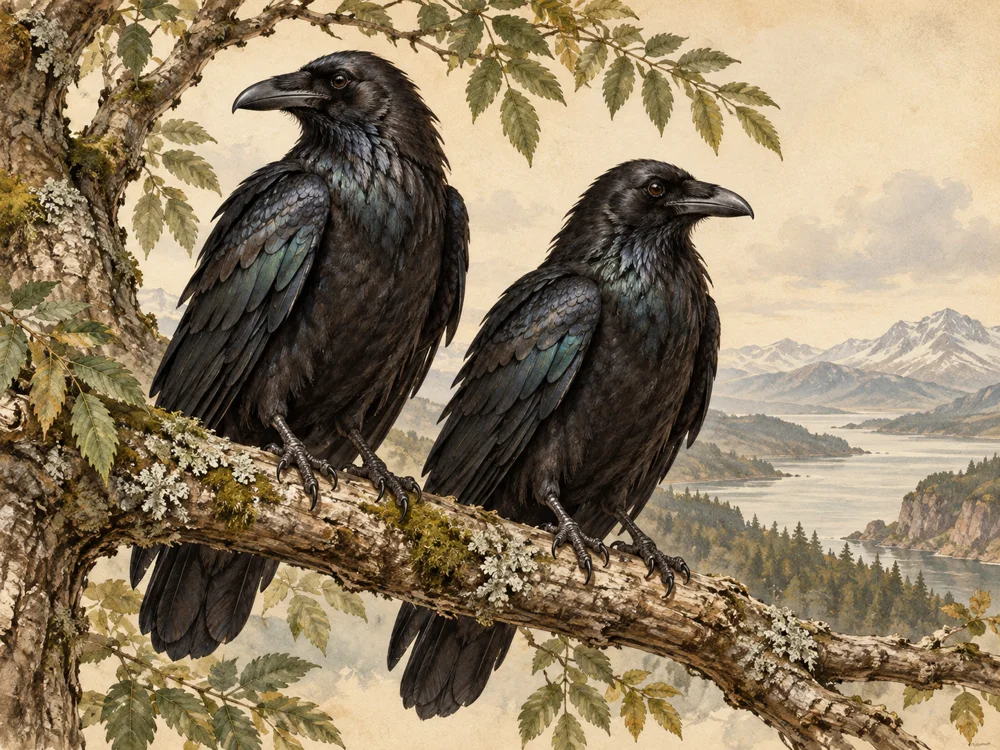
News from the world
Gylfaginning explains that they sit on Odin’s shoulders and report what they have seen and heard. He sends them out at daybreak and they return by the time of the meal. The image makes the acquisition of information active: knowledge travels, returns and must be received.
Anxiety beside power
The poem’s expression of worry is as important as the familiar picture of the two birds. Odin’s knowledge is accompanied by dependence and uncertainty, not effortless awareness of everything at every moment. Readers can interpret thought and memory symbolically, while keeping that interpretation distinct from the brief surviving description. The Eddas do not preserve a separate long series of adventures for each raven, nor a detailed account of how Odin first obtained them.
News gathered before the daily meal
In Snorri’s account, Odin sends the ravens out at daybreak. They travel over the world and return at mealtime, settling by him and reporting what they have seen and heard. This is an ongoing arrangement rather than one named spying mission with an enemy fortress and a rescue. It explains their relationship to Odin’s knowledge while leaving the birds’ individual journeys undescribed.
Ravens at a funeral, and Odin’s anxiety
Snorri includes Odin’s ravens in the company present at Baldr’s funeral. Their presence connects the familiar attendants to a major narrative, but they do not prevent the death or carry Baldr back from Hel. Grímnismál adds a more vulnerable note when Odin worries about their return, especially Munin’s. The names invite reflection on thought and memory, yet the verse does not explain that worry through a separate adventure in which one bird is captured. Such a story would be a modern elaboration.
Read behind the retelling
Sources & limits
Not every archaeological raven image can be identified as one of these named birds.
- Prose Edda: Gylfaginning (Brodeur, 1916)
- Poetic Edda: Grímnismál (Bellows, 1923)
- Prose Edda: Gylfaginning, Brodeur translation (1916)
- Poetic Edda: Grímnismál, public-domain Bellows translation
Retold in contemporary English. Dialogue is summarized, not presented as a translation. How to read our sources and versions.
Follow the thread