
Other powers
Mani
The moon and the children who accompany him
Mani is the male personification of the moon, paired with his sister Sol in Snorri’s account of the heavenly lights.
Explore the stories ↓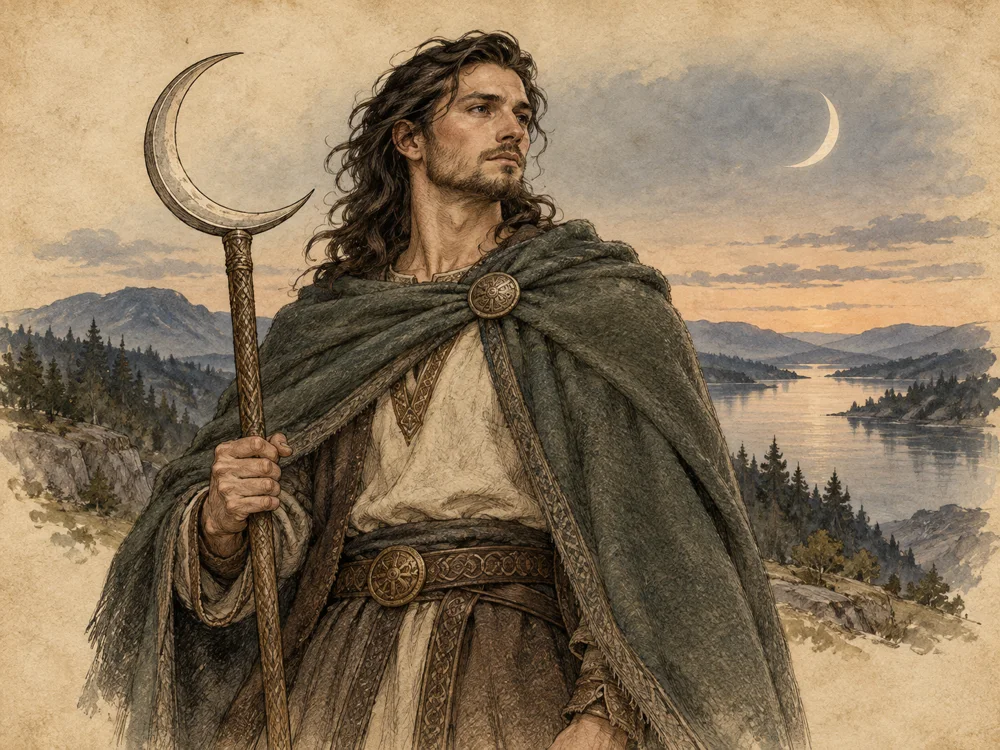
The moon’s course
Gylfaginning makes Mani a son of Mundilfari and gives him responsibility for the moon’s movements and phases. The sky is described through named figures, vehicles and pursuit. The narrative does not provide a catalogue of Mani’s adventures or a detailed account of personal relationships comparable to the stories surrounding Odin or Thor.
Bil and Hjuki
Snorri says Mani takes two children, Bil and Hjuki, from the earth while they are carrying water from a well, and they accompany him. The passage invites the listener to recognise figures visible in the moon. It is a small story of celestial explanation, distinct from the larger account of the wolves and Ragnarök. Later folklore comparisons may be interesting, but they should not be silently inserted into Snorri’s text as if every modern moon story derived directly from this one.
The water carriers become a sight in the sky
Bil and Hjuki are not introduced as warriors or divine messengers. They are children carrying water from a well called Byrgir, with a vessel named Sægr supported on a pole called Simul. Snorri also names their father, Vidfinn. Mani takes them from the earth, and the account says that they can be seen following him. The story turns an ordinary task into a celestial image. Its interest lies partly in that contrast: the equipment of daily work, carefully named, remains recognizable after the children have been moved into the moon’s company.
A heavenly duty imposed by the gods
Mani and Sol enter the sky because their father Mundilfari gives them names that the gods regard as presumptuous. Their exceptional beauty prompts his naming, but the gods respond by assigning them cosmic work. Mani determines the moon’s waxing and waning while Sol drives the solar chariot. The narrative therefore makes the changing sky a matter of appointed responsibility, not simply free wandering. Snorri also connects the celestial courses with pursuing wolves and the final crisis. Those larger events do not supply Mani with an independent sequence of earthly adventures; the surviving actions concern his work in the heavens and his taking of the two children.
Read behind the retelling
Sources & limits
The Mani narrative is brief. Modern claims about detailed lunar rituals or a large personal mythology need evidence beyond this passage.
Retold in contemporary English. Dialogue is summarized, not presented as a translation. How to read our sources and versions.
Follow the thread
Stories & related reading: Mani
2 min read
How the world was made
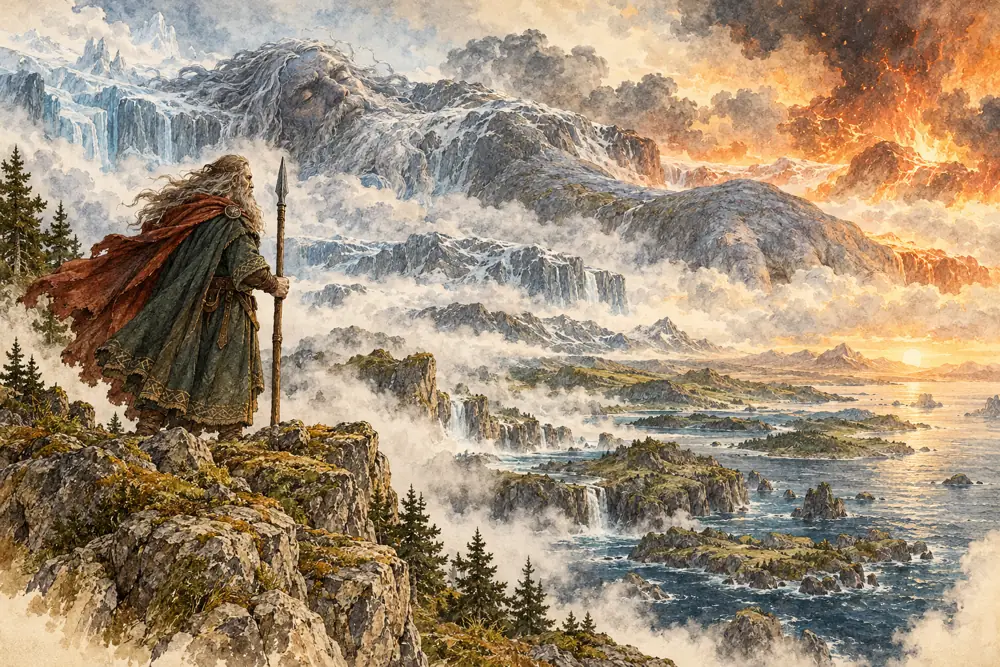
Several Eddic passages explain beginnings. Snorri combines them into an account in which the world is fashioned from Ymir’s body.
Read the story ↗
3 min read
Ragnarok: the breaking of the world
The end approaches through broken human bonds and broken cosmic restraints. The surviving texts also imagine a world that rises after the disaster.
Read the story ↗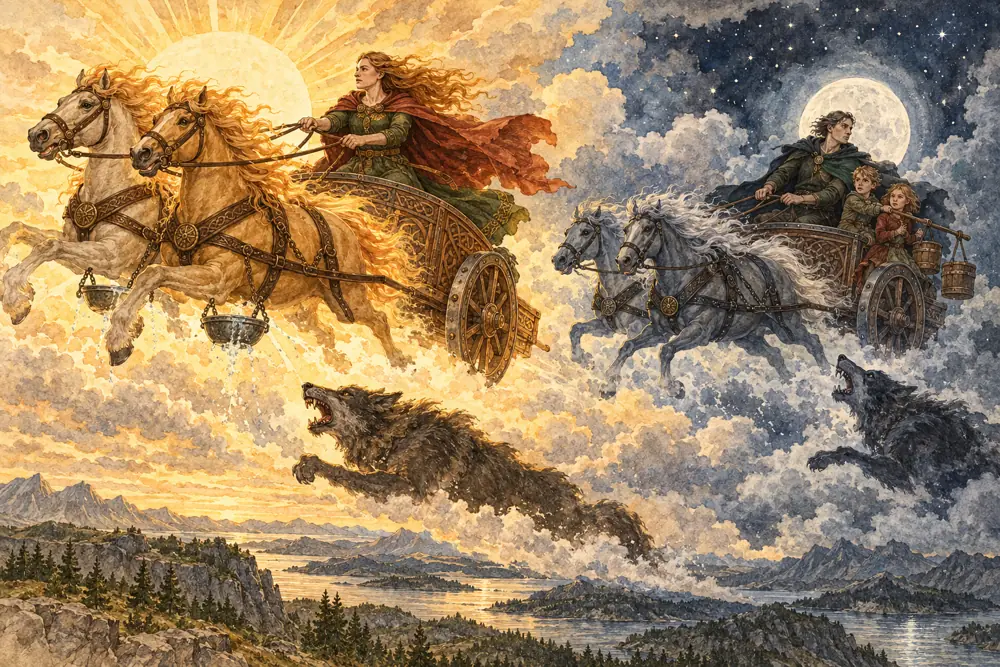
2 min read
Sun and Moon on their appointed paths
The lights of the sky become travellers with names, companions and enemies.
Read the story ↗